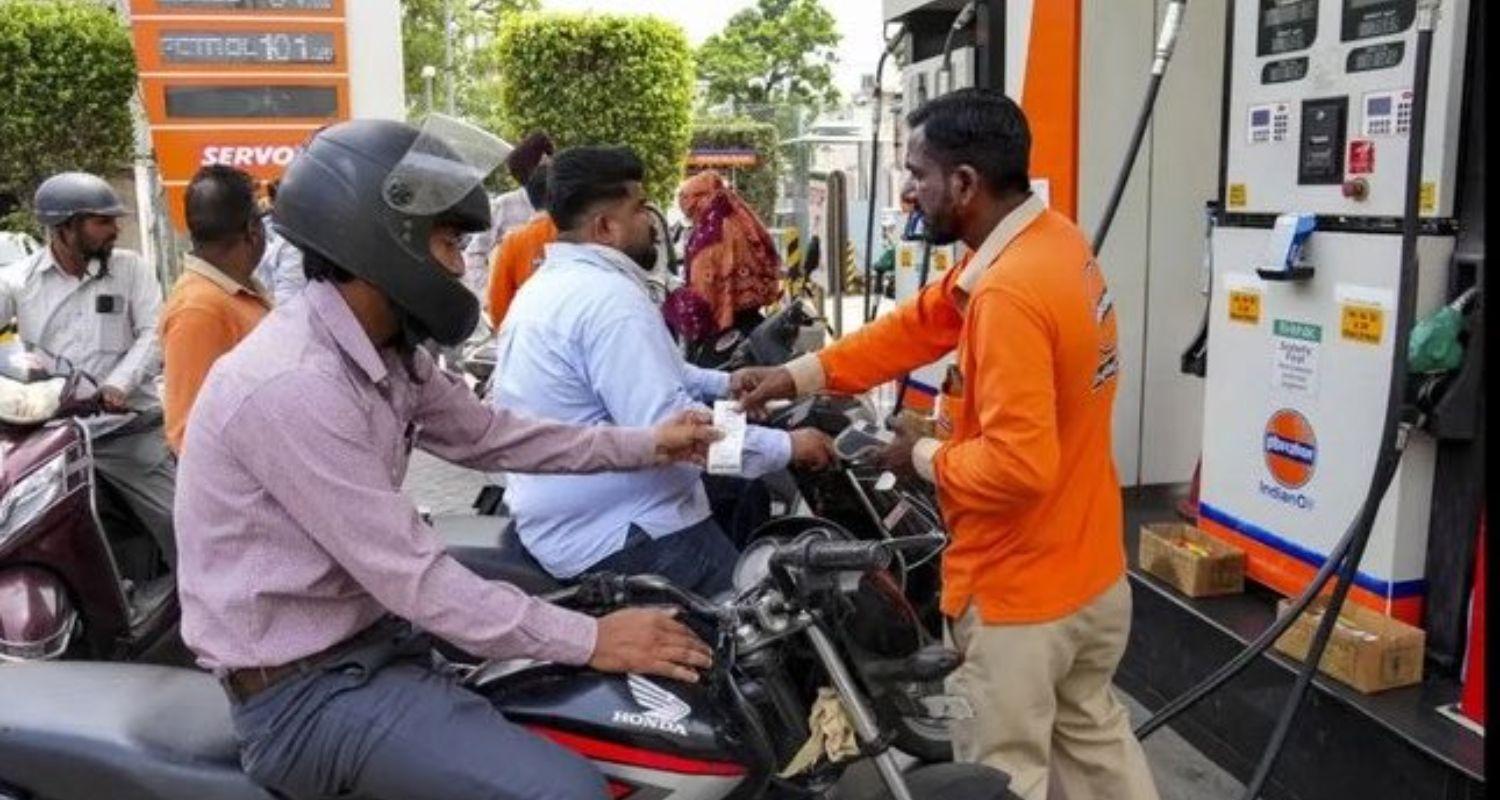
Fuel prices across India have risen once again, with petrol increasing by ₹2.61 per litre and diesel by ₹2.71. This latest adjustment represents the fourth hike in just two weeks, driven by state-run oil marketing companies attempting to recover severe financial losses. These companies had previously held retail rates steady even as global crude oil surpassed $100 per barrel, largely due to the escalating West Asian conflict between the United States and Iran, which recently triggered the closure of the strategic Strait of Hormuz.
With this latest revision, motorists in New Delhi are now paying ₹102.12 per litre for petrol and ₹95.20 per litre for diesel.
Sushma Rawat, the Director of Exploration at ONGC, noted that the ongoing conflict has introduced immense volatility into global energy markets. Speaking to the media, she explained that while any announcement of a potential peace accord temporarily cools oil prices, the lack of an immediate resolution inevitably pushes them back up. Rawat highlighted that the Indian government had successfully shielded consumers from the worst of these global spikes for 76 days without a single price increase. However, she pointed out that oil marketing companies were absorbing massive losses of nearly ₹1,000 crore every day, a situation that simply became unsustainable over the longer term.
Prior to this shift, the most recent adjustments occurred on May 23, when petrol and diesel rates rose by ₹0.87 and ₹0.91 per litre respectively. Interestingly, global crude prices have actually dipped by more than five per cent over the weekend, buoyed by the slim hope of a diplomatic breakthrough between Washington and Tehran, despite US President Donald Trump downplaying the chances of a quick resolution. In late trading on Sunday, North Sea Brent Crude dropped 5.1 per cent to settle around $98.22 per barrel, whilst West Texas Intermediate fell 5.2 per cent to $91.57 per barrel, before both recovered slightly.
The sudden series of hikes marks a sharp departure from a long period of price stability that stretched back to April 2022, interrupted only by a ₹2 per litre reduction in March 2024 ahead of the Lok Sabha elections. The upward trajectory began in earnest on May 16 with a sudden ₹3 increase that caught many consumers off guard.
Market analysts are warning that these repeated increases will inevitably heighten financial pressure on commuters and transport operators. Persistently rising prices will lead to higher transportation costs, which in turn will lead to an inflationary effect being passed down to the final retail price of basic necessities and food products. On the other hand, policymakers have continued to argue that adjusting retail prices is the most viable approach towards reconciling the rising cost of imports and securing stable sources of energy supply amidst turbulent geopolitics.
Also read: Gig workers call nationwide strike today

 Follow us