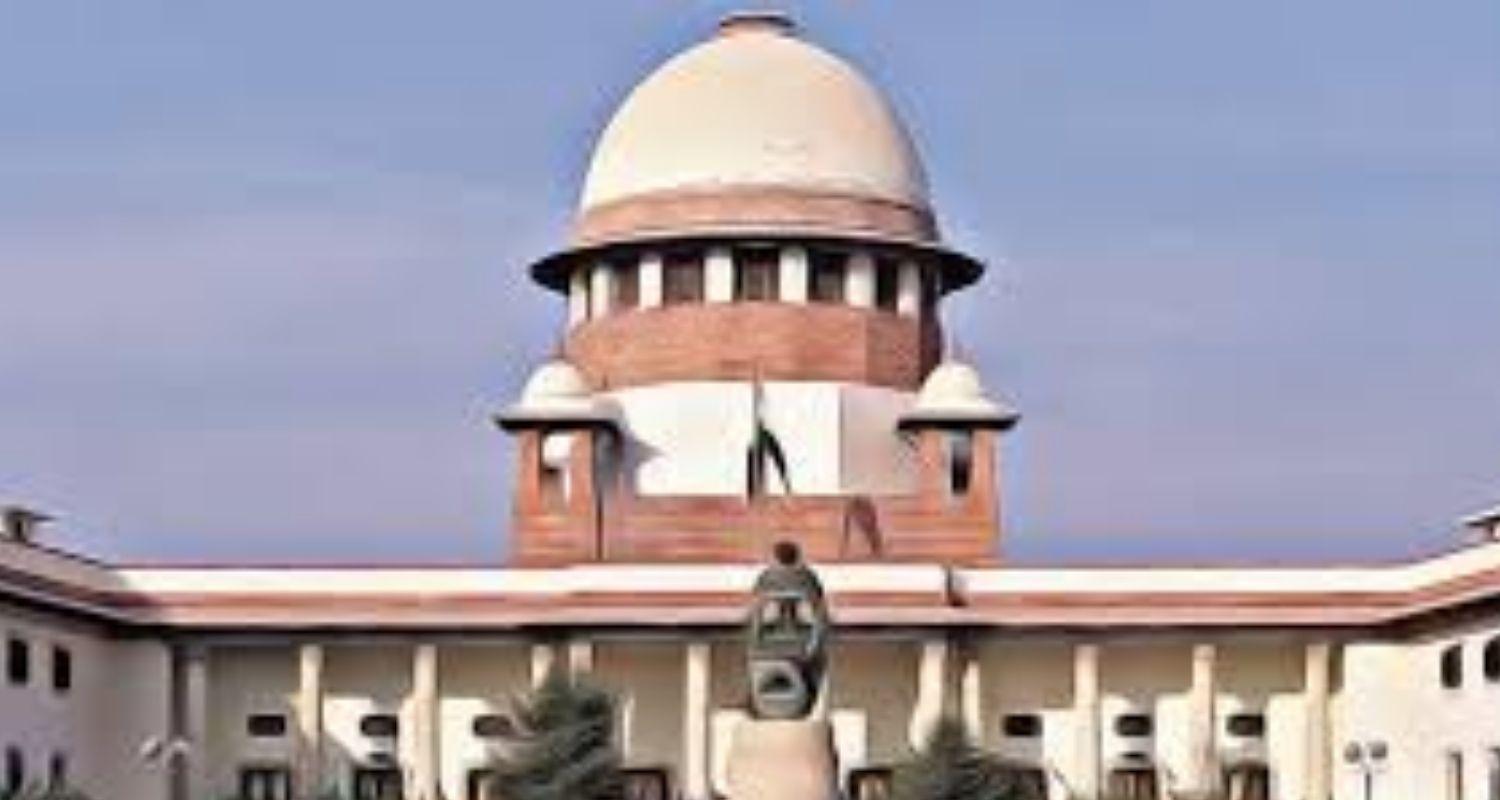
The Supreme Court on Wednesday declined the Centre’s request to postpone hearings on petitions challenging the constitutional validity of a 2023 law that removed the Chief Justice of India (CJI) from the panel responsible for appointing the Chief Election Commissioner and other election commissioners. The court remarked that the issue at hand was 'more important' than the ongoing Sabarimala-related proceedings.
At present, a nine-judge Constitution bench led by Chief Justice Surya Kant is examining matters concerning alleged discrimination against women in religious places, including the Sabarimala temple in Kerala, along with broader questions about the extent of religious freedom across different faiths.
However, a separate bench comprising Justices Dipankar Datta and Satish Chandra Sharma refused to grant adjournment when Solicitor General Tushar Mehta, representing the Centre, requested a delay. Mehta cited his involvement in arguments before the nine-judge bench in the Sabarimala reference case as the reason.
Highlighting the seriousness of the challenge to the Chief Election Commissioner and Other Election Commissioners (Appointment, Conditions of Service and Term of Office) Act, 2023, Justice Datta observed, “This matter is more important than any other matter.” He further instructed that the solicitor general’s team could take notes for the day while petitioners began their submissions. Justice Datta also pointed to media reports suggesting that the Sabarimala public interest litigation may not have warranted judicial consideration in the first place, noting that nine judges were engaged in a case that some believed should not have been entertained.
Also read: Akhilesh Yadav cuts ties with I-PAC for 2027 UP Polls
The bench directed petitioners to conclude their arguments by Thursday and indicated that the Centre would be given an opportunity to present its case on a later date. Proceedings in the matter are currently ongoing.
Earlier, on March 20, Chief Justice Surya Kant recused himself from hearing these petitions, stating that there could be a perceived conflict of interest. The law under challenge, passed by Parliament in December 2023, followed a landmark Supreme Court ruling that mandated the appointment of election commissioners through a committee consisting of the Prime Minister, the leader of the Opposition, and the Chief Justice of India.
The court had clarified at the time that this arrangement would remain in place until Parliament enacted a law on the subject. Subsequently, the 2023 legislation altered the composition of the selection committee, replacing the CJI with a Union minister nominated by the Prime Minister, alongside the Prime Minister and the leader of Opposition (or leader of the largest opposition party in the Lok Sabha).
Several petitions, including those filed by Congress leader Jaya Thakur and the Association for Democratic Reforms, argue that removing the CJI from the panel weakens the independence and neutrality of the appointment process.
In response, the Centre has defended the law in the Supreme Court, asserting that the independence of the Election Commission does not depend on the inclusion of a judicial member in the selection committee. In an affidavit, the Union law ministry also dismissed claims that the appointments of two election commissioners on March 14, 2024, were rushed to pre-empt a possible adverse court ruling the following day, when interim relief in the matter was to be considered.
The Apex Court has already declined to stay the appointments made under the 2023 law. Notably, in March 2023, a five-judge Constitution bench had ruled that the Chief Election Commissioner and election commissioners should be appointed based on the recommendation of a committee comprising the prime minister, the leader of Opposition in the Lok Sabha, and the Chief Justice of India.

 Follow us