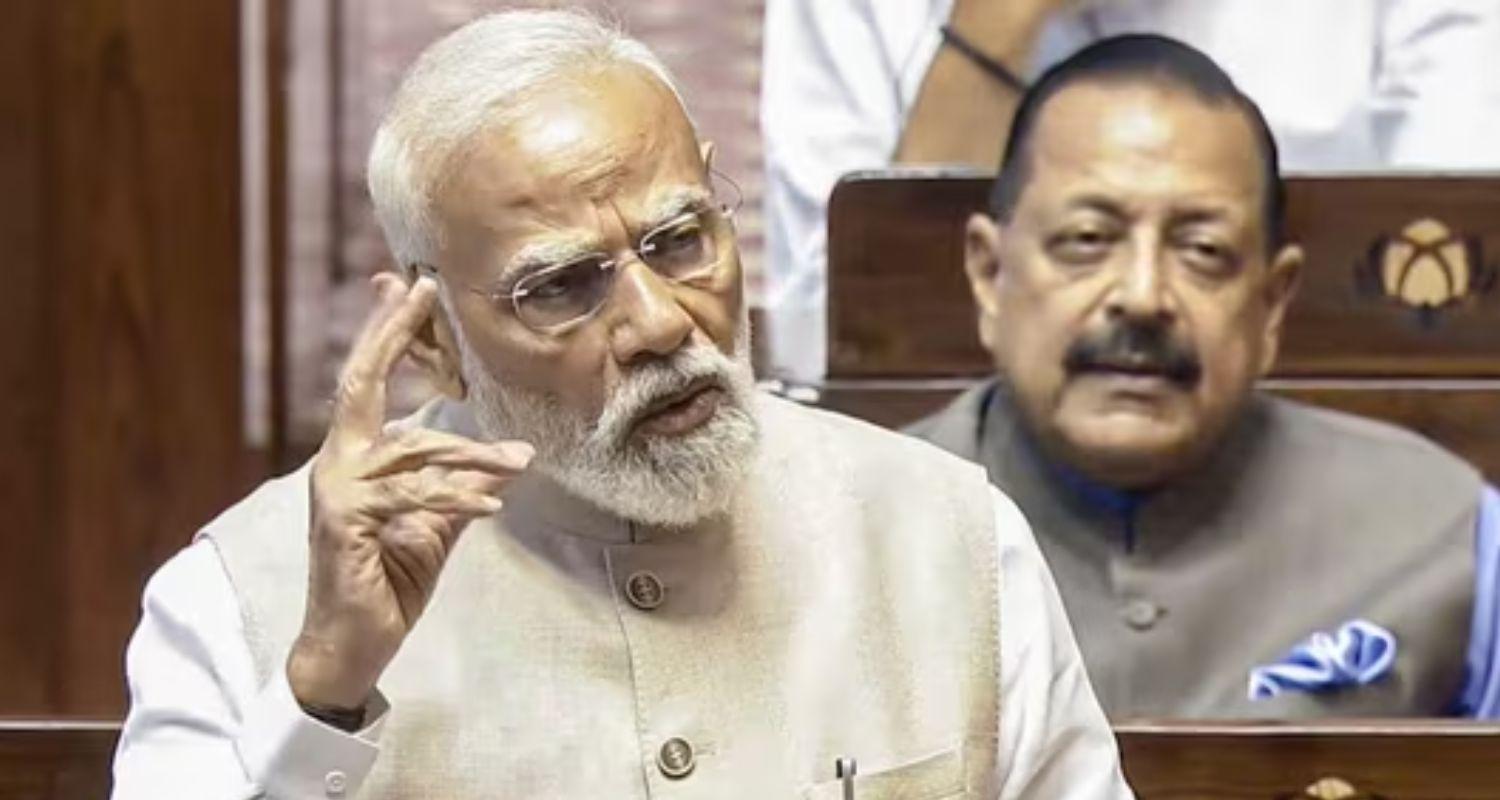
Prime Minister Narendra Modi took to social media on Friday to issue a final appeal for support for the amended women’s reservation bill, ahead of a pivotal vote in the Lok Sabha.
The Bharatiya Janata Party-led NDA government finds itself in a tight spot; while it is pushing an amendment to decouple the women's quota from the previously mandated census and delimitation timelines, it lacks the two-thirds majority required to pass constitutional changes independently. The current proposal has been met with fierce resistance from the Opposition, particularly parties from southern India, who fear that a rushed delimitation process — intended to redraw and increase the number of parliamentary seats — is being pushed through under the guise of women's empowerment.
In a post on X, the Prime Minister sought to settle the nerves of his critics, claiming that every apprehension had been addressed and "misconceptions" dispelled. He argued that after four decades of political maneuvering, it was finally time for women to receive their due rights. "Even after so many decades of independence, it is not right that Indian women have such minimal representation in the decision-making process," he wrote, urging MPs to listen to their consciences and vote in favour of "woman power".
However, the debate on the floor of the House told a different story. Southern states, which have been more successful in population control, worry that a population-based seat reallocation would see their political influence dwindle in favour of the more populous Hindi-belt states like Uttar Pradesh and Bihar.
Congress MP Shashi Tharoor delivered a stinging critique, comparing the government's "haste" to the 2016 demonetisation exercise. He warned that if handled poorly, this delimitation could turn out to be a "political demonetisation" for the South. Tharoor was particularly dismissive of Home Minister Amit Shah’s verbal assurance that every state would see a flat 50 per cent increase in seats to maintain the status quo.
The Kerala MP pointed out that this "precarious political assurance" is nowhere to be found in the actual text of the legislation. Without it being codified, Tharoor argued, the Delimitation Commission would have total freedom to alter the balance of power—a decision that cannot be challenged in a court of law. He maintained that a simple parliamentary majority in the future could easily discard Shah’s promise, leaving the southern states marginalised. Beyond the regional imbalance, Tharoor also questioned the wisdom of expanding the House at all, suggesting that a larger number of MPs would only serve to dilute the time available for individuals to raise meaningful issues.
Also read: Calm demeanour, sharp digs: Priyanka in Parliament

 Follow us