Prime Minister Narendra Modi on Saturday unveiled projects worth more than ₹1.05 lakh crore in Rajasthan before travelling to neighbouring Gujarat to inaugurate a semiconductor facility, using his twin-state visit to project the Centre's development agenda centred on energy security, infrastructure expansion and high-technology manufacturing.
During his Rajasthan visit, Modi inaugurated the Greenfield Refinery-cum-Petrochemical Complex at Pachpadra in Balotara district, the new terminal building at Jodhpur Airport, virtually laid the foundation stone for Jaipur Metro Phase-II, launched the next phase of the Modified UDAN regional connectivity scheme and handed appointment letters to around 54,000 newly recruited Rajasthan government employees.
Addressing a public gathering, the Prime Minister said India's handling of the global energy crisis triggered by the conflict in West Asia demonstrated the country's growing strategic and diplomatic strength.
He said while several countries faced severe fuel shortages, India expanded its energy sourcing from 25-26 countries to nearly 40, ensuring uninterrupted supplies despite global disruptions.
"While many countries struggled with fuel shortages, India assessed the crisis correctly, formulated an effective strategy and used diplomacy to safeguard the nation's energy security," Modi said.
LPG could have touched ₹2,000 without govt intervention: PM
He added that India had significantly enhanced its refining capacity and emerged as the world's fourth-largest refining nation, describing energy security as critical to India's long-term economic growth.
Modi said the government had protected citizens from the impact of soaring international fuel prices through timely intervention.
According to the Prime Minister, an LPG cylinder could have cost nearly ₹2,000 during the crisis but consumers continued to receive it at around ₹950. He also said oil marketing companies incurred losses of nearly ₹75,000 crore between April and June to cushion consumers from global price shocks.
Also read: PM unveils ₹29,000-cr UDAN plan, opens Jodhpur terminal
Referring to the global fertiliser shortage arising from conflicts in West Asia and Ukraine, Modi said Indian farmers continued to receive urea at around ₹300 per bag, even as prices in several countries climbed to nearly ₹3,000.
Calling the Pachpadra refinery a landmark national project, he said it would create thousands of jobs, attract fresh investments and accelerate industrial development across western Rajasthan.
New terminal at Jodhpur Airport inaugurated
The Prime Minister said the newly inaugurated terminal at Jodhpur Airport would strengthen tourism, trade and employment across the Marwar region, while the launch of the Modified UDAN scheme would improve regional air connectivity, particularly for smaller cities and remote areas.
He also said Jaipur Metro Phase-II would improve urban mobility, while ongoing water projects would help address the long-standing water scarcity in Rajasthan's Shekhawati region. Criticising the previous Congress government, Modi said the present dispensation was working with a "Nation First" approach focused on development across every region.
PM inaugurates semiconductor facility in Gujarat
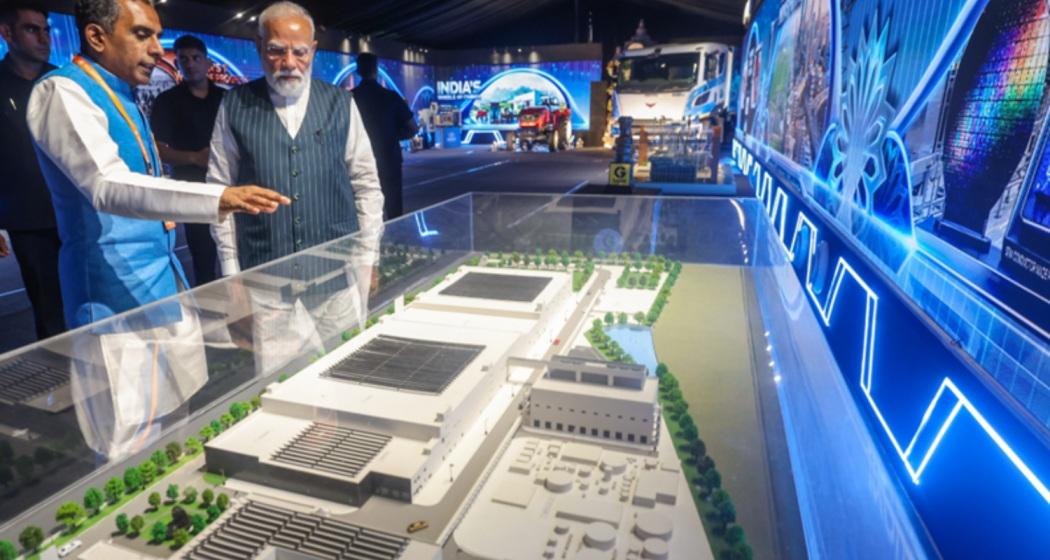
Later in the day, Modi travelled to Sanand in Gujarat, where he inaugurated CG Semi's Outsourced Semiconductor Assembly and Test (OSAT) facility, calling semiconductor manufacturing the next milestone in India's electronics revolution.
Receiving the first semiconductor chips manufactured at the facility, which will be exported to Japan, Modi said India was steadily building a complete electronics value chain.
"First products, then components and now semiconductors. India is building the entire electronics value chain. This is the roadmap to Viksit Bharat. This is the next phase of Make in India," he said.
"The Semicon India programme is gathering rapid momentum... step by step, brick by brick, chip by chip," the Prime Minister added, expressing confidence that India's youth would drive the global AI, robotics and next-generation technology revolution with Made in India semiconductor chips.

 Follow us