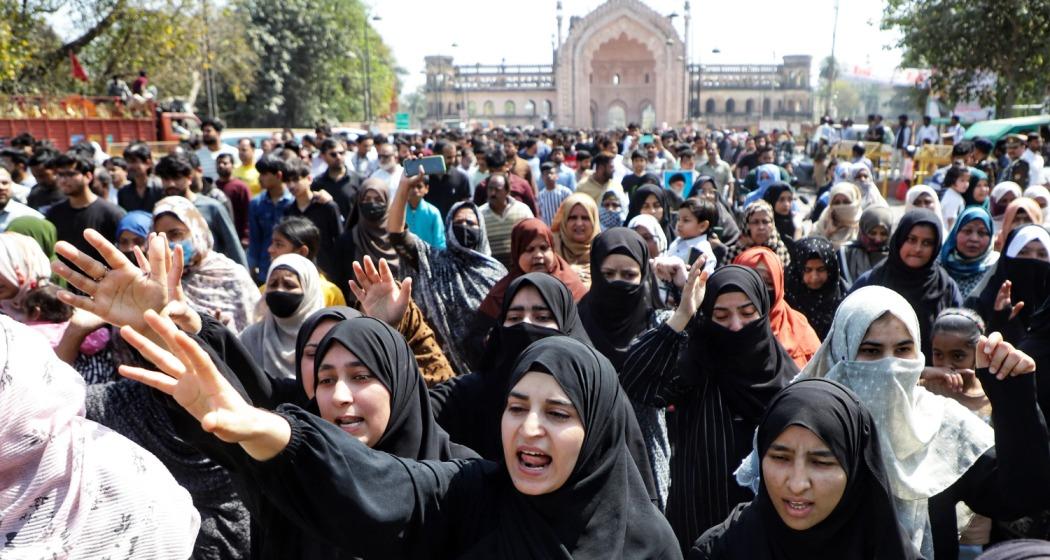
Protests and mourning gatherings were held across several states on Sunday after Iranian Supreme Leader Ayatollah Ali Khamenei was killed in a reported US-Israel airstrike in Tehran, triggering outrage among sections of the Shia community in India.
Demonstrations were reported from Jammu and Kashmir, Uttar Pradesh, Telangana, Maharashtra, Bihar, Madhya Pradesh, West Bengal, Delhi, Jharkhand, Punjab and Rajasthan, with community bodies announcing multi-day mourning and appealing for peaceful observance.
In Jammu and Kashmir, protests were held in parts of Srinagar and Budgam, with mourners raising slogans and staging processions.
Also read: Khamenei dead in Israel-US airstrikes; Iran vows 'revenge'
Chief Minister Omar Abdullah expressed concern over the developments and appealed for calm. “Chief Minister has expressed deep concern over the unfolding developments in Iran, including reports of the killing of Iran's Supreme Leader, Ayatollah Ali Khamenei. He has appealed to all communities to remain calm, uphold peace, and avoid any actions that could lead to tension or unrest,” the Office of the Chief Minister said in a post on X.
In Lucknow, large gatherings were seen near the Bara Imambara, where mourners carried photographs of Khamenei and shouted slogans. Maulana Yasoob Abbas, general secretary of the All India Shia Personal Law Board, announced a three-day mourning period. Effigies of US President Donald Trump and Israeli Prime Minister Benjamin Netanyahu are set to be burnt during protests scheduled for Monday, he said.
Hyderabad witnessed demonstrations near key Shia localities, while in Maharashtra, small but vocal protests were reported from Mumbai’s Dongri, Bhendi Bazaar and Mira Road areas. Prayer meetings and condolence gatherings were organised at several mosques, with police deployed in sensitive pockets.
In Bihar, mourning assemblies were held in Patna and Gaya, where clerics urged restraint and unity. Madhya Pradesh’s Bhopal saw gatherings near Iqbal Maidan and Peer Gate, with protesters condemning the strike.
West Bengal reported prayer meetings and small processions in parts of Kolkata, including Metiabruz and Park Circus. In Delhi, small groups gathered in Old Delhi areas such as Ballimaran for prayers and condemnation meetings, prompting heightened security.
Jharkhand’s Ranchi saw candlelight gatherings, while in Punjab, protests and effigy burnings were reported in Ludhiana. Shahi Imam Maulana Mohammad Usman Rahmani Ludhianvi, who led a protest there, demanded that the Centre declare a week-long national mourning.
In Rajasthan’s Ajmer, the Shia community announced a three-day mourning period. Condolence meetings were held at Dargah in Dorai and Taragarh, where prayers were offered for the departed leader.
In Karnataka’s Chikkaballapur district, villagers in Alipura, which locals said Khamenei had visited in 1986, observed silence, voluntarily closing shops and suspending public events as a mark of tribute.
Authorities in multiple states maintained a close watch and appealed for peace, as community leaders emphasised that protests would remain peaceful and confined to symbolic demonstrations and prayer meetings.

 Follow us