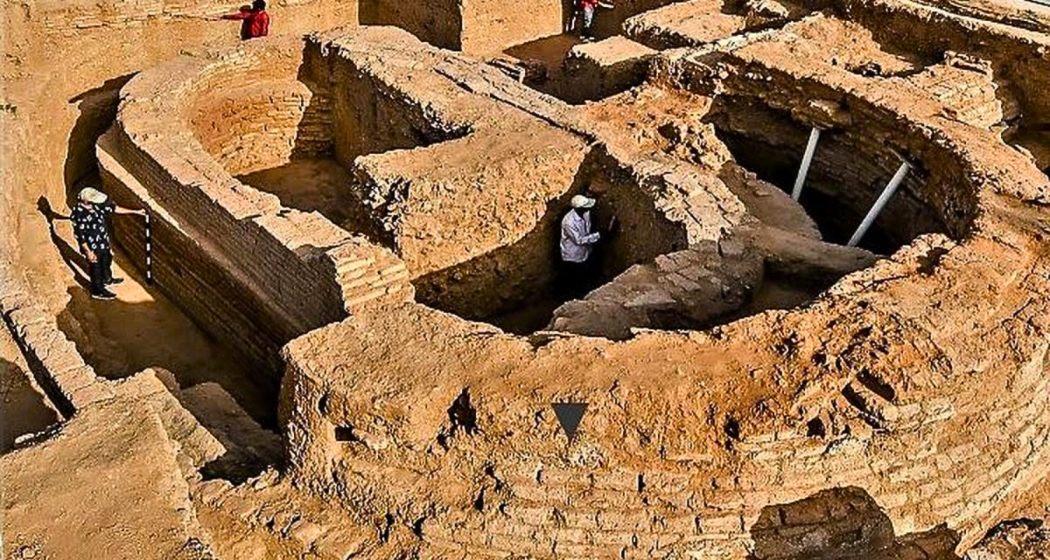
At a quiet mound nestled outside Pachkhed village in Maharashtra’s Yavatmal district, archaeologists believe they may have unearthed echoes of a forgotten civilisation—one that could be nearly 3,000 years old. What began as a routine academic excavation has turned into a potentially remarkable chapter in the subcontinent’s ancient history.
Researchers from Nagpur University’s Department of Ancient Indian History, Culture and Archaeology claim that the site, studied during the 2023–24 field season, dates back to the Iron Age.
“There is a mound outside the Pachkhed village which is an archaeological site, wherein they found around 8.73 metres of cultural deposits during the excavation last year,” said Dr Prabash Sahu, head of the department..
These deposits, stratified through time, have been divided into four distinct cultural periods.
“We divided these deposits into four periods... period one – Iron Age, which was divided into sub-periods. The cultural sequence of the findings starts with the Iron Age on the basis of pottery and artefact remains found. It was followed by the Satavahana period, the Medieval period, and then it (the location which has been found) was used as a watch tower during the Nizam era,” Dr Sahu explained.
One of the most compelling discoveries has been structural remains suggesting habitation—circular homes with limestone flooring and wooden post supports.
“In the evidences which we recorded, we found a complete house plan having a chulha (mud stove), pottery, iron objects, beads of semi-precious stones, terracotta beads and bone objects,” Dr Sahu said.
These findings point to a community that possessed domestic, artistic and metallurgical skills, all hallmarks of Iron Age society. The team estimates the structures may date back 3,000 years.
To establish the timeline with scientific precision, samples have been sent for Accelerator Mass Spectrometry (AMS) dating at the Inter University Accelerator Centre in New Delhi.
“Once we get the dates of these findings, we will be able get the proper chronology,” said Dr Sahu. “I will be able to corroborate the 3,000-year-old time period claim once I receive the sample results,” he added.
If confirmed, the discovery would enrich our understanding of the spread and development of early civilisations in central India, particularly during the Iron Age.

 Follow us