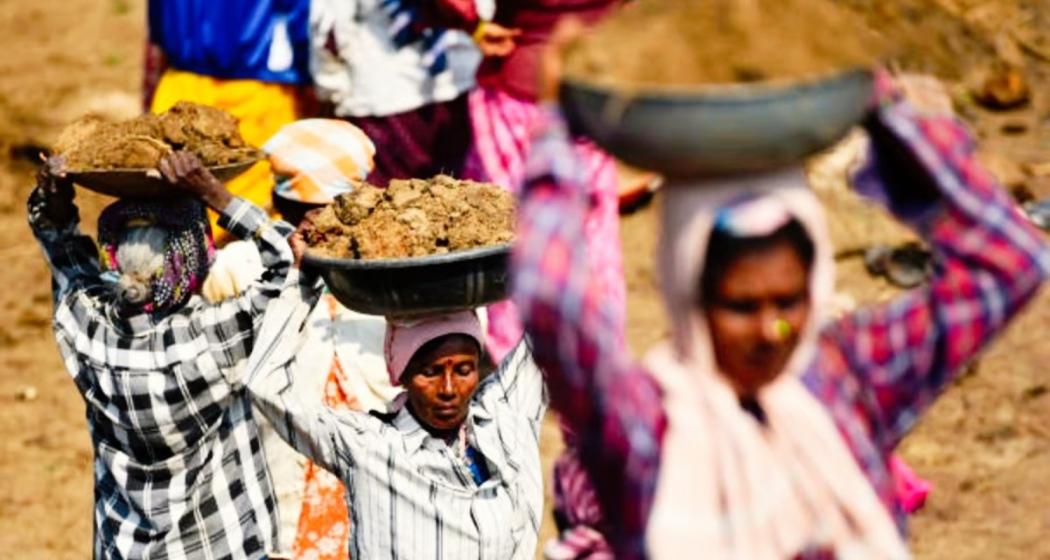
Employment generation under the government’s revamped rural job guarantee programme fell by nearly 50% in July, the first month after the Mahatma Gandhi National Rural Employment Guarantee Scheme (MGNREGS) was replaced by the Viksit Bharat–Guarantee for Rozgar and Ajeevika Mission (Gramin), or VB-G RAM G.
Official data as of August 9 showed that 7.67 crore person-days of employment were generated under the new scheme in July 2026. This was 49.94% lower than the 15.33 crore person-days recorded under MGNREGS in July last year.
The number of households that availed themselves of the rural employment programme also fell sharply. About 68.94 lakh households received work in July, compared with 1.42 crore under MGNREGS during the same month last year — a decline of 51.45%.
The July figures are also significantly below the average recorded in recent years. The average number of households availing work during the previous four years was around 1.72 crore, while average monthly person-days stood at 21.56 crore.
Also read: Jharkhand protest: Students break barricades, face water cannons
Government cites smooth transition
The decline comes amid an uneven monsoon, with rainfall deficits reported across several districts, potentially increasing dependence on rural employment among agricultural labourers.
The Rural Development Ministry, however, said the transition to VB-G RAM G had been smooth and that more than 98% of rural households demanding employment had been offered work.
The ministry said around nine crore person-days were generated during the first month of implementation, while more than 1.33 crore rural workers were offered employment. It also said 63% of person-days generated so far were contributed by women.
The new scheme guarantees 125 days of wage employment to rural households in a financial year, compared with 100 days under MGNREGS. It also allows states to pause employment for up to 60 days during peak agricultural sowing and harvesting periods.
The government has allocated ₹95,692 crore for the programme in 2026-27, calling it the highest-ever budget estimate for a rural employment programme.

 Follow us