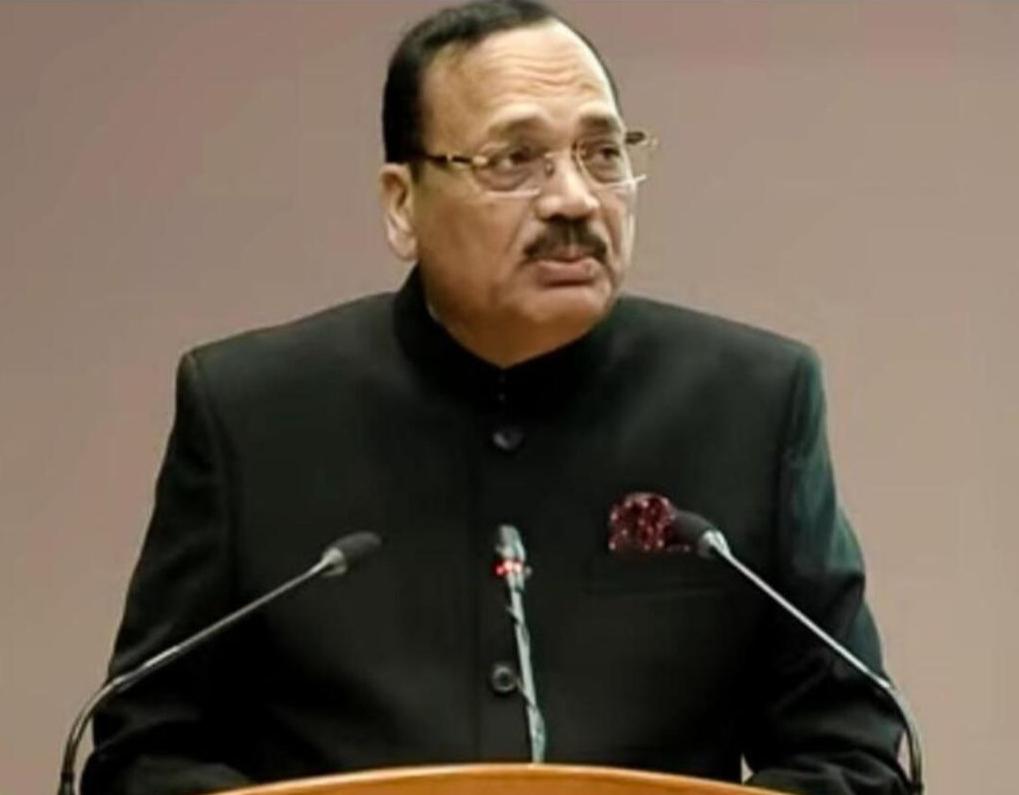
Reinstating the common man’s faith in the judiciary dispensing justice for one and all, and setting a predictable timeline for deciding cases, especially those pending, are some of his near-term priorities, said the recently-inducted Chief Justice of India, Surya Kant.
Speaking at a leadership summit in the capital city on Saturday, the CJI said he wants to send out a “strong message” to the public that the apex court is for the common man, and this can be done by reducing the cost of litigation and having a unified national judicial policy-based decision-making.
“I just want to send a very clear and strong message that the Supreme Court is also meant for the common man, and any ordinary litigant will also have sufficient space and time in the court. And for that, I am doing some prioritisation of the matters to be listed,” he said.
His first priority, said the CJI, is setting in place a predictable timeline.
“I am not saying elimination of all the arrears. That will never happen. That should not happen because litigation is an ongoing process. People have trust and faith in the judicial system,” he said, adding that older cases need to be tackled first, for which mediation must be explored.
Talking of upcoming reforms in the Supreme Court, Justice Kant said it’s imperative to address ways to face new challenges, such as cases of digital arrests and cybercimes.
“First, we need to update our judiciary… We must update our judicial officers with newer challenges and how to deal with those issues,” he said.
Also Read: SC to High Courts: Submit acid attack cases’ details in 4 weeks
On ensuring justice is delivered to those from the marginalised or vulnerable groups, the CJI said fair evaluation of human resources requires recognition of merit in the institution.
“One of the challenges when we talk of access to justice is how to ensure that a person belonging to the vulnerable classes or the marginalised sections of the society gets quality legal assistance in court.
Now, when I talk of access to justice, my first priority is to ensure how to reduce the cost of litigation and how to prescribe a reasonable timeline within which the matters are decided,” he said.
While mediation is proving to be a very effective tool in being cost-effective as compared with the alternative dispute resolution mechanisms, Justice Kant said the judiciary has also expanded the platform of free legal aid, especially for those living below the poverty line.
“A massive programme has been launched across the country to provide quality legal assistance, and competent lawyers are being engaged to ensure quality legal assistance to those who need it,” he said.
On the often-talked about topic of independence of judiciary, Justice Kant referred to the constitutional philosophy of separation of powers, and said the Constitution has defined the respective roles of the judiciary, the legislature, and the executive “beautifully”, while ensuring that there is no overlap.
“The judiciary, the legislature and the executive... the Constitution has so beautifully defined their respective roles, it has ensured that there is no overlapping. But, at the same time, it is the beauty of our Constitution that a unique compatibility, a unique complementary relationship with each other is our constitutional philosophy says,” the CJI said.
There’s also increasing diversity in the judiciary, he pointed out, because of a concerted effort to induct judges from different regions to ensure community and regional representation.
“We have always kept in view that persons from marginalised communities and women must get adequate and fair representation. And that inclusivity, that diversity, has really brought a very rich culture in the Supreme Court,” Justice Kant said.

 Follow us