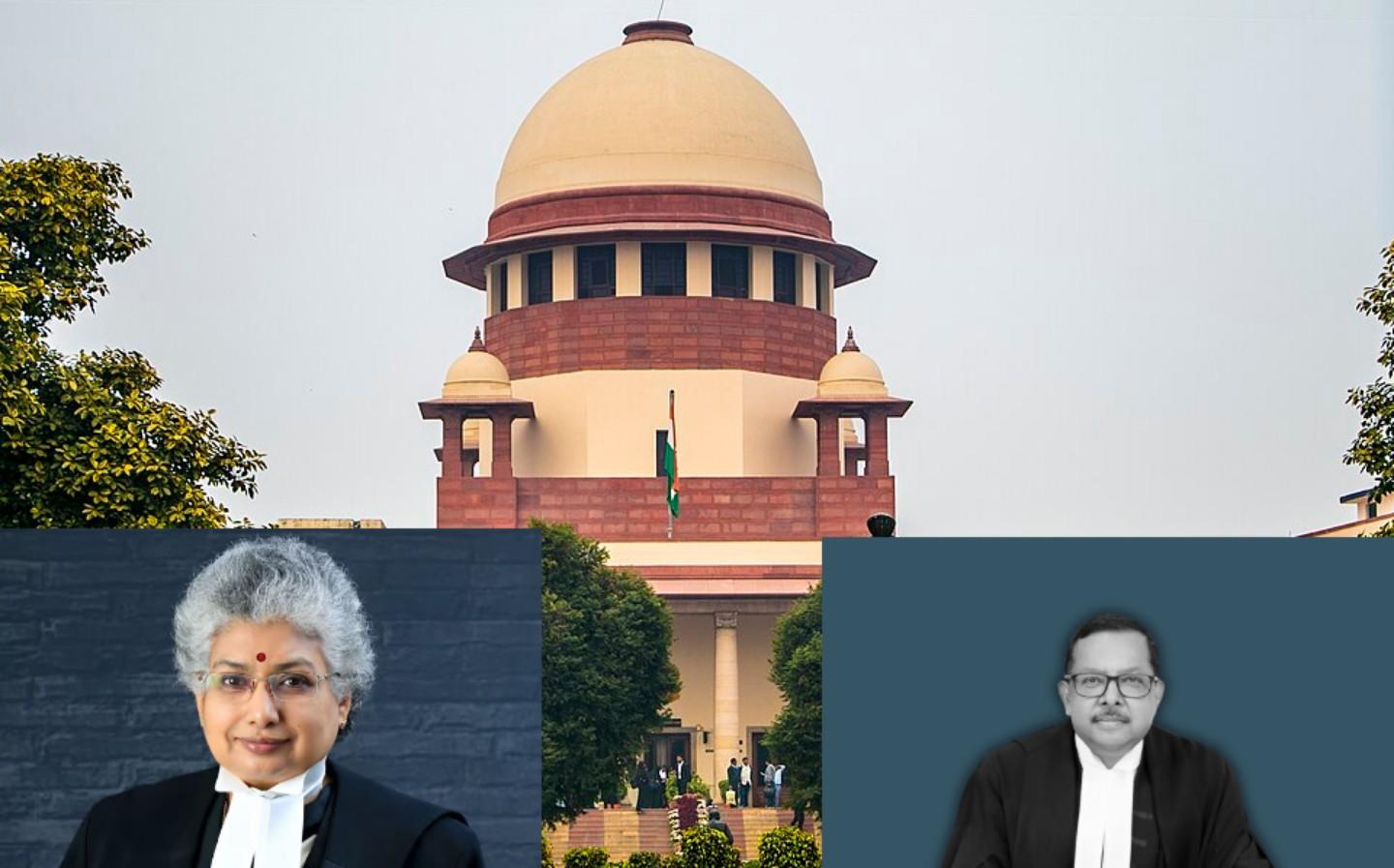
The Supreme Court on Wednesday imposed costs of ₹25,000 on the Union government while dismissing a plea challenging relief granted by the Punjab and Haryana High Court to a CISF (Central Industrial Security Force) constable who had been removed from service for unauthorised absence of 11 days .
A Bench of Justices BV Nagarathna and Ujjal Bhuyan said the Union’s decision to pursue the matter despite the High Court granting relief reflected unnecessary litigation that added to court pendency.The Bench questioned why the Union had approached the Supreme Court at all.
“We keep shouting pendency, pendency. Who is the biggest litigant? High court granted him relief. Instead of giving opinion that you will not go to Supreme Court, you still proceed against him. We do not find any reason whatsoever to interfere with the impugned order. We fail to understand as to why the Union of India and others have approached this Court,” Justice Nagarathna observed.The Court then proceeded to dismiss the appeal with costs of ₹25,000.
The case arose from disciplinary proceedings initiated against the CISF constable, who had been removed from service on allegations including unauthorised absence and alleged involvement in facilitating the elopement of a woman with his brother.
The Punjab and Haryana High Court had earlier found that the constable’s absence coincided with sanctioned medical leave and that the allegation relating to the woman’s elopement did not amount to misconduct. The High Court consequently quashed the punishment orders passed against him.Despite this, the Union government challenged the High Court’s ruling before the Supreme Court.
During the hearing, Justice Nagarathna linked the case to the issue of excessive government litigation contributing to judicial backlog.Referring to remarks she had recently made at the Supreme Court Bar Association’s (SCBA) national conference on judicial governance, she said the observations made there were meant to be taken seriously.
“We have taken the SCBA conference very seriously. It was not just to go to some resort and come back. We made preparations, we did homework. We spoke. Not to forget,” she remarked.At the conference last month, Justice Nagarathna had observed that while governments often blame the judiciary for delays, they remain the largest contributors to litigation in the country.

 Follow us