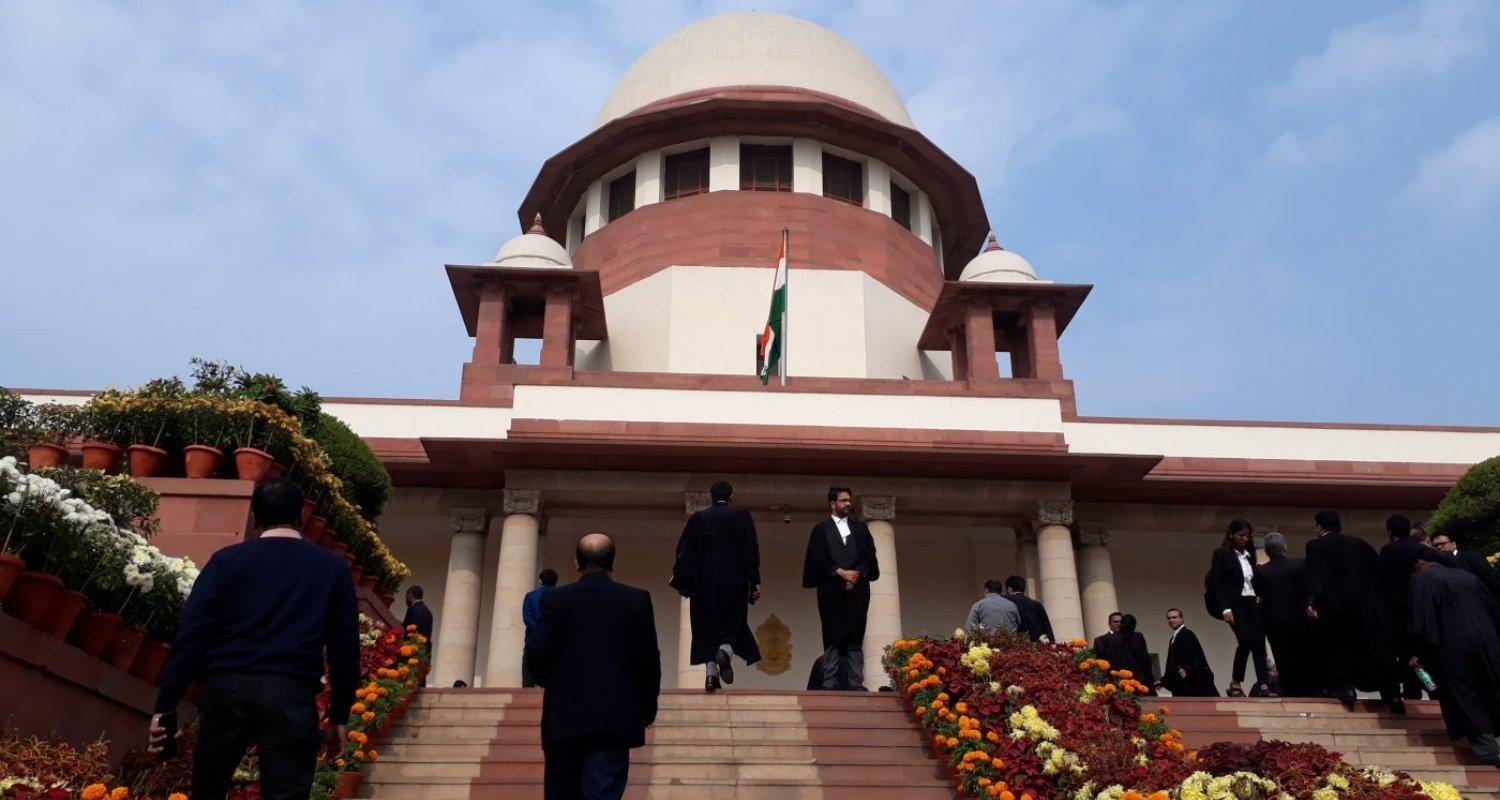
The Supreme Court on Tuesday said unauthorised constructions cannot be legitimised merely due to administrative delays, passage of time, or monetary investments and issued a slew of directions to curb illegal constructions.
A bench comprising Justices J B Pardiwala and R Mahadevan said even the post-construction violations must trigger swift corrective action, including demolition of the illegal part and penalties for erring officials.
The bench also upheld the demolition of unauthorised commercial constructions in a residential plot in Meerut, emphasising the need for strict adherence to urban planning laws and accountability of officials.
The court issued a slew of comprehensive directions in the larger public interest to streamline urban development and enforcement.
"We are of the opinion that construction(s) put up in violation of or deviation from the building plan approved by the local authority and the constructions which are audaciously put up without any building planning approval, cannot be encouraged. Each and every construction must be made scrupulously following and strictly adhering to the rules," it said.
In the event of any violation being brought to the notice of the courts, the bench said, it would be "curtailed with iron hands" as any leniency would amount to showing "misplaced sympathy".
“Delay in directing rectification of illegalities, administrative failure, regulatory inefficiency, cost of construction and investment, negligence and laxity on the part of the authorities concerned in performing their obligation(s) under the Act, cannot be used as a shield to defend action taken against the illegal/unauthorised constructions,” it said.
"Unauthorised constructions, apart from posing a threat to the life of the occupants and the citizens living nearby, also have an effect on resources like electricity, groundwater and access to roads, which are primarily designed to be made available in orderly development and authorised activities,” it said.
All necessary service connections, such as, electricity, water supply and sewage, should be given by the service providers to the buildings only after the production of the completion and the occupation certificate, it said.
"Even after issuance of completion certificate, deviation/violation if any contrary to the planning permission brought to the notice of the authority immediate steps be taken by the said authority concerned, in accordance with law, against the builder/owner/occupant…,” it said.
"In the event of any application...being filed by the owner or builder against the non-issuance of completion certificate or for regularisation of unauthorised construction or rectification of deviation, etc., the same shall be disposed of by the authority concerned, including the pending appeals/revisions, as expeditiously as possible, in any event not later than 90 days as statutorily provided,” it said.
Banks and financial institutions should sanction loan against any building as a security only after verifying the completion certificate, it said.
"The violation of any of the directions would lead to initiation of contempt proceedings...," it held.
The top court directed its registrar to circulate a copy of judgment to all high courts to enable them to refer it while considering such disputes.
The judgment pertained to the appeals, including the one filed by Rajendra Kumar Barjatya, against the Allahabad High Court's 2014 decision directing demolition of the illegal structures on a plot in Shastri Nagar, Meerut.
The apex court upheld the high court’s judgement and passed a slew of directions to curb such activities in the country.

 Follow us