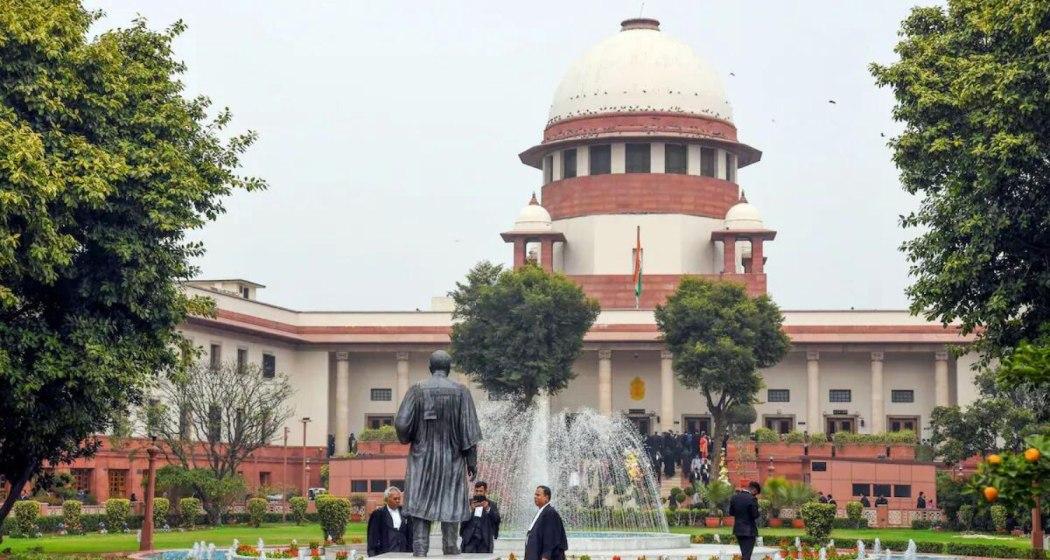
The Supreme Court on Wednesday agreed to fix a date for the final hearing of petitions challenging the constitutional validity of certain provisions of the Places of Worship (Special Provisions) Act, 1991, which bars fresh suits to reclaim or alter the character of places of worship as it stood on August 15, 1947.
A Bench comprising Chief Justice Surya Kant and Justices Joymalya Bagchi and Vipul M Pancholi was urged by senior advocate Rakesh Dwivedi, appearing for petitioner Ashwini Upadhyay, to commence final arguments, noting that issues were framed as far back as October 12, 2022.
Dwivedi pointed out that the Centre, which had been directed to file its response by October 31, 2022, was yet to submit its affidavit.
“We will fix a date for the final hearing,” the Chief Justice said, adding that two nine-judge Bench matters were already scheduled for March and April. “Let us see. We will finalise the hearing dates after the 9-judges bench case,” he observed.
The court declined a plea seeking restraint on a Rajasthan civil court from passing effective orders in the Ajmer dargah matter.
“If they pass such orders we will see what's to be done. We have passed an order and that is binding on all and one. If someone passes an order in defiance of that then we have to examine that and see... consequences will follow,” the Chief Justice said.
Also read: SC stays exhumation of tribal Christians’ bodies in Chhattisgarh
The Bench clarified that mere issuance of notices or calling for replies would not warrant interference.
On December 12, 2024, the apex court had directed courts across the country not to entertain fresh suits or pass interim or final orders in pending cases seeking reclamation of religious places, including mosques and dargahs, until further directions.
Among the petitions under challenge is one filed by advocate Ashwini Upadhyay seeking to strike down Sections 2, 3 and 4 of the Act, contending that they curtail the right to judicial remedy to reclaim places of worship.
Former Rajya Sabha member Subramanian Swamy has sought a “reading down” of certain provisions to enable claims over the Gyanvapi mosque in Varanasi and the Shahi Idgah in Mathura. Upadhyay, however, has argued that the entire statute is unconstitutional.
Opposing the pleas, Jamiat Ulama-i-Hind has cited the Constitution Bench verdict in the Ram Janmabhoomi-Babri Masjid case, where the 1991 law was referred to and upheld as reflecting constitutional commitment to secularism.
The 1991 Act mandates maintenance of the religious character of places of worship as it existed on August 15, 1947, with the Ayodhya dispute being the sole exception.

 Follow us