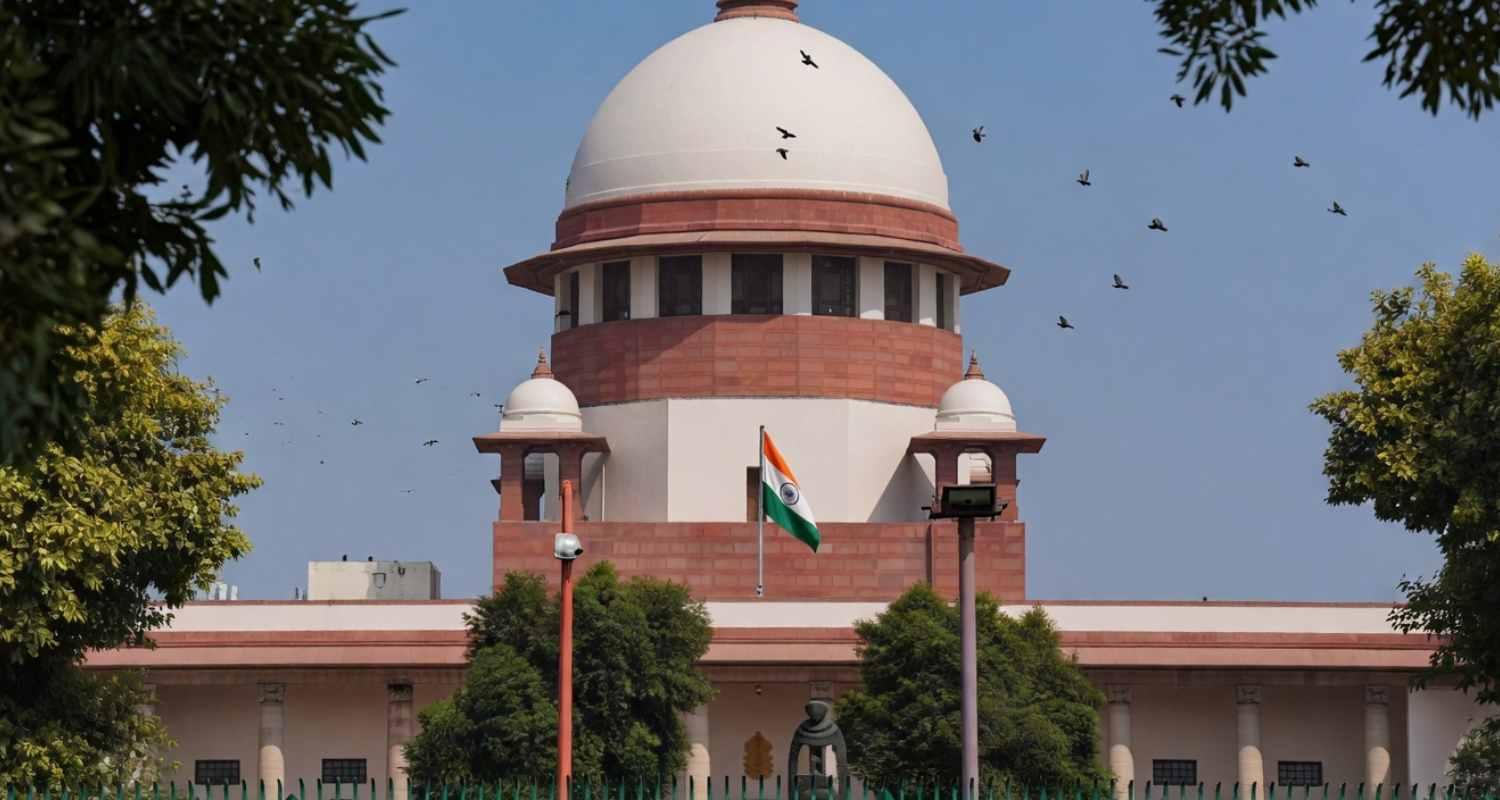
The Supreme Court on Thursday expressed concern over the Centre's recent decision to introduce a third language at the Class 9 level under the CBSE, saying that the move would increase pressure on the students preparing for their board exams. Justice BV Nagarathna made the remarks while hearing the Tamil Nadu government's appeal against a Madras High Court direction to facilitate the establishment of Jawahar Navodaya Vidyalayas (JNVs) in every district of the state.
The Tamil Nadu government has constantly opposed the establishment of JNVs, citing concerns over the three-language policy followed by concerned schools. Although the validity of the CBSE's three-language policy was not directly under consideration in the case, Justice Nagarathna expressed dissatisfaction over the timing of the introduction of the language.
Additionally, the three-language policy is also being challenged in separate public interest litigation before a bench headed by Chief Justice of India Surya Kant. The bench, however, has declined to stay the implementation of the policy by listing the matter for next week.
During the course of the hearing, the Tamil Nadu government counsel submitted that the state's objection primarily related to the three-language policy.
Justice Nagarathna clarified that the policy does not mandate Hindi as the third language.
She said, "The policy clearly states that a third language, which could be any, must be taught", and added that it wasn't compelling anyone to learn Hindi.
Meanwhile, Advocate G. Priyadarshini, appearing for the respondent (the NGO petitioner before the High Court), pointed out that the National Education Policy states that no language should be imposed on any state.
In response, Justice Nagarathna asked the state, "You don't want Hindi, but if it's Sanskrit, what is the issue?"
In reply, counsel said that third language becomes compulsory only from Class 9. Justice Nagarathna responded: "No, that is very bad. Ninth standard is stressful. Why do you introduce a new language in 9th? You introduce it in 6th."
The bench, also comprising Justice R. Mahadevan, noted that discussions between the Union government and the Tamil Nadu government on establishing Jawahar Navodaya Vidyalayas were still underway.

 Follow us