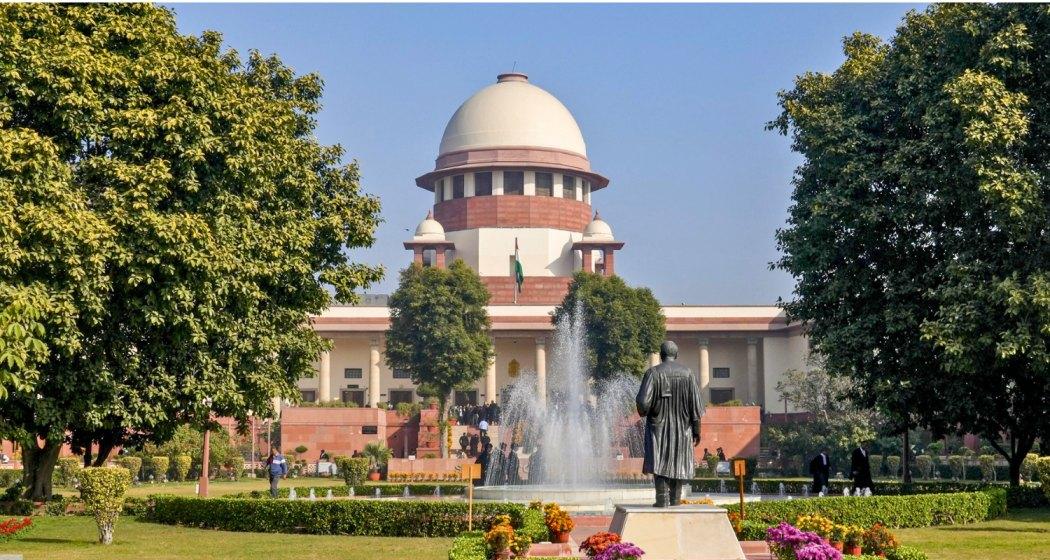
The Supreme Court on Monday refused to entertain a public interest litigation (PIL) seeking directions to the Centre to frame a national policy and legal framework prohibiting the viewing of pornographic content across India, holding that the issue falls within the domain of policymaking rather than judicial intervention.
A Bench headed by Chief Justice of India Surya Kant observed that while the issue raised in the petition was of "paramount importance", it did not involve a question of law requiring adjudication by the apex court.
"The issue concerns policy matters that require technological advancement and expert consideration. Such issues fall within the domain of experts, particularly the Ministry of Electronics and Information Technology (MeitY)," the Bench observed while disposing of the petition.
The court granted liberty to the petitioner to submit a representation before the competent authorities, including the Union government, for appropriate consideration.
The PIL was filed by BL Jain through advocate Varun Thakur, seeking directions to the Centre to formulate a nationwide policy banning the viewing of pornographic material, particularly with a view to protecting minors from easy online access.
Also read: PM,CMs removal bill: Parliamentary panel recommends 'suspension'
The petitioner argued that the rapid expansion of internet access has made pornographic content widely available, leading to excessive consumption and addiction. It further contended that unrestricted access to such material has contributed to an increase in sexual offences and poses a serious threat to society.
The plea also highlighted what it described as a legislative gap under the Information Technology Act. While the law criminalises the publication, transmission and distribution of obscene and pornographic material, it does not penalise the act of viewing such content, the petitioner argued.
According to the petition, this absence of a specific legal provision creates a vacuum that warrants the formulation of a comprehensive national policy and an appropriate legal framework to regulate the issue.
The Supreme Court, however, declined to issue any directions, reiterating that matters involving technological regulation and digital policy require specialised expertise and executive decision-making rather than judicial mandates.
With the petition disposed of, the court left it open to the petitioner to pursue the matter before the Union government and relevant authorities, particularly the Ministry of Electronics and Information Technology, which is responsible for framing policies related to internet governance and digital regulation.

 Follow us