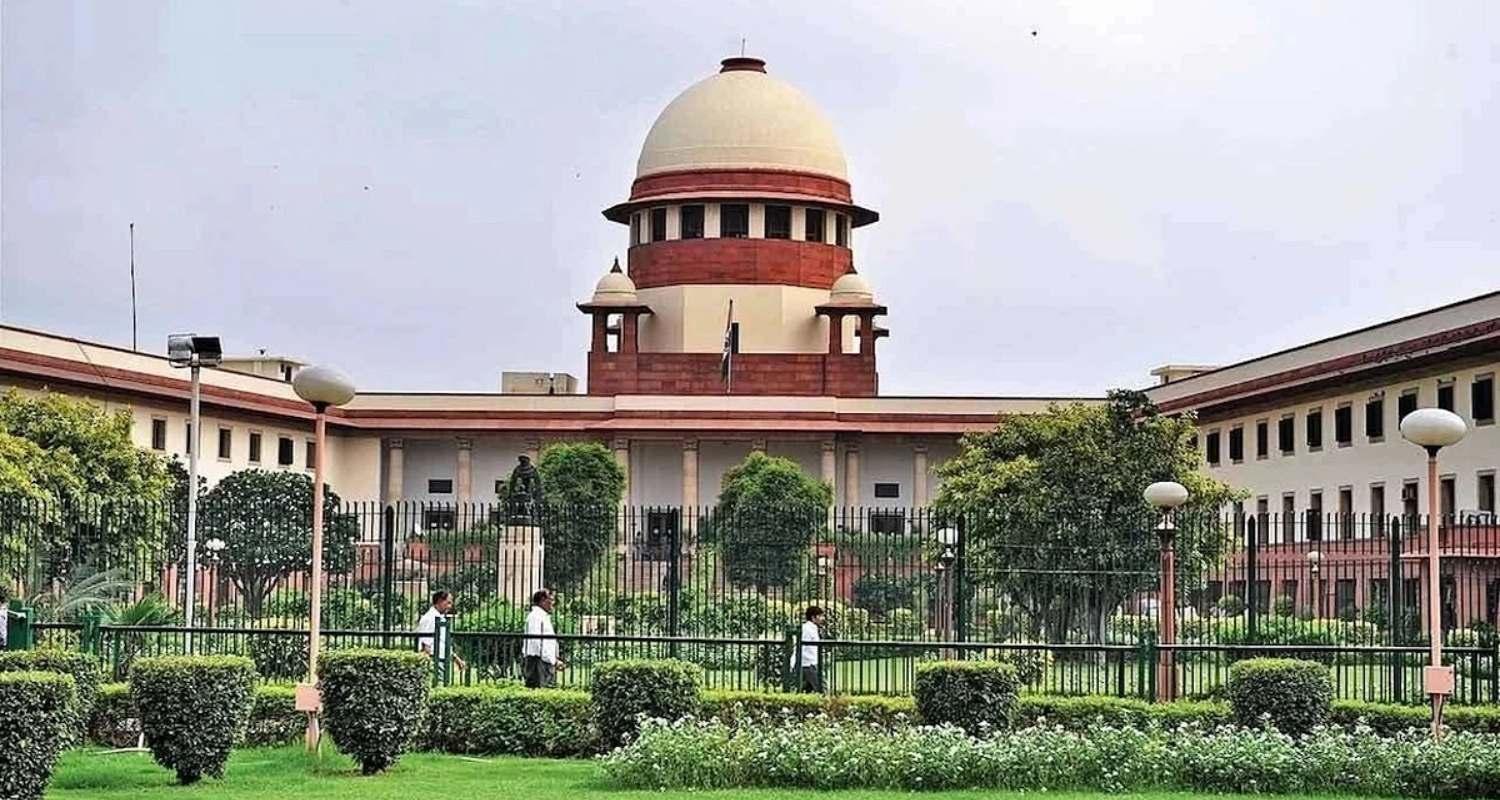
The Supreme Court has intervened to stay the deportation of an Accenture employee based in Bengaluru and his family, following a government order directing their removal from the country. The deportation was part of a broader move by the government to cancel visas and expel Pakistani nationals in the wake of the Pahalgam terror attack.
The man at the center of the case, Ahmed Tariq Butt, approached the apex court after he and his six-member family were served deportation notices, despite holding Indian passports and Aadhaar cards.
Responding to his plea, the Supreme Court ordered that no coercive action be taken against Mr. Butt while his documents undergo verification. Mr. Butt, an MBA graduate from the Indian Institute of Management (IIM) Kozhikode, was also directed to approach the High Court for further relief.
The government's legal representative, Solicitor General Tushar Mehta, opposed this interim protection, but the court acknowledged there was “some human element” in the case that merited consideration.
Importantly, the Supreme Court clarified that its ruling in Mr. Butt's case should not be treated as a precedent for other, similar cases. This clarification comes amid increasing reports of Indian nationals — particularly those with Muslim names — being asked to leave the country after having their visas cancelled.
‘How Did You Come to India?’
During Friday’s hearing, Justice Surya Kant questioned Mr. Butt on how he came to India. Butt explained he was born in Mirpur, Pakistan, and had arrived in India in 1997 with his father, who held a Pakistani passport.
Upon their arrival in Srinagar, Mr. Butt surrendered his Pakistani passport to the Jammu and Kashmir High Court and subsequently applied for and was granted Indian citizenship and a passport.
He told the court that the rest of his family followed in 2000 and also obtained Indian citizenship and passports. Mr. Butt added that he and his siblings had completed their education at a private school in Srinagar.
Despite holding all necessary documentation — including Indian passports and Aadhaar cards — Mr. Butt said the Ministry of Home Affairs issued a notice last week ordering the family to leave the country. According to him, the notice inaccurately stated that they had entered India on visas and overstayed, which he firmly denied.
Also Read: Supreme Court upholds right to digital access
Government Crackdown on Pakistani Nationals
The deportation order against Mr. Butt and his family is part of a wider set of diplomatic measures initiated by the Indian government after the deadly terror attack in Pahalgam. The attack, carried out by four terrorists from the banned Pakistan-based Lashkar-e-Taiba group, claimed the lives of 26 civilians — most of them tourists, including one Nepali national.
In response, the Indian government has revoked all visas issued to Pakistani nationals, except for long-term visas granted to Pakistani Hindus. This move is one among a series of retaliatory steps that also includes sealing the border with Pakistan, suspending the Indus Waters Treaty, and halting visa services.
Pakistan retaliated by expelling Indian nationals, closing its airspace and borders, and suspending the Simla Agreement. Prime Minister Narendra Modi, condemning the attack, reaffirmed India’s commitment to combating terrorism and declared that the armed forces have been given full operational freedom to plan and carry out retaliatory action. He reiterated that India will not allow the "evil agenda of terrorism" to succeed.
As diplomatic tensions escalate, the Supreme Court’s stay on Mr. Butt’s deportation adds a layer of legal and humanitarian complexity to the unfolding geopolitical situation.
Also Read: SC won’t hear PIL on Pahalgam attack, plea withdrawn

 Follow us