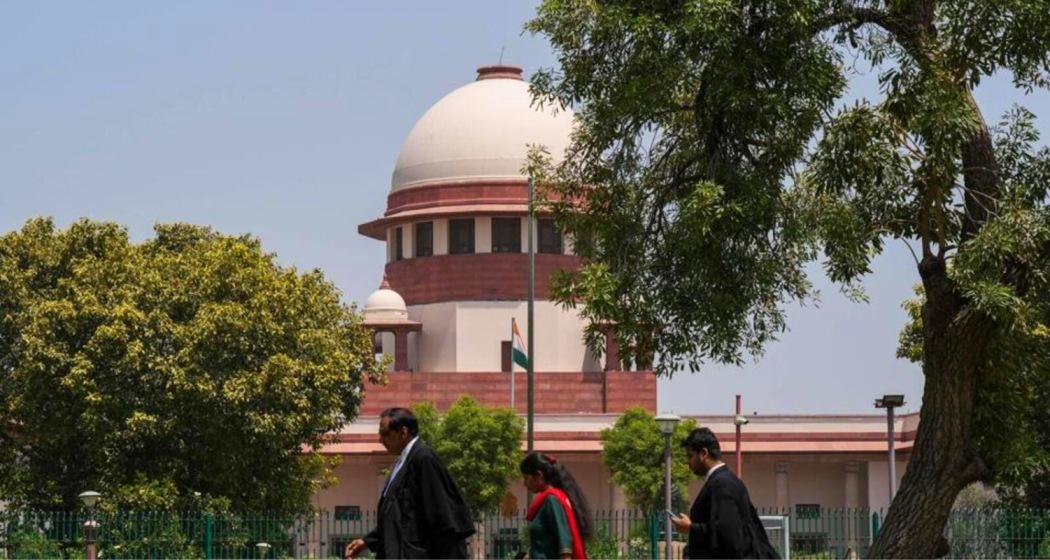
The Supreme Court on Wednesday questioned the institutional capacity of the National Testing Agency (NTA) and stressed the need for a scientifically equipped examination body capable of developing expertise and institutional memory over time, citing the Union Public Service Commission (UPSC) as an example.
A Bench of Justices PS Narasimha and Alok Aradhe was hearing pleas seeking structural reforms in the NTA following concerns over the NEET-UG 2026 paper leak. The court sought details from the Centre on the implementation of recommendations made by the committee headed by former ISRO chief K Radhakrishnan and subsequently refined by a panel led by Nandan Nilekani.
SC asks Centre about NTA’s new structure
The Bench said the Centre’s response should go beyond listing security measures and explain how the recommendations had been converted into a permanent institutional framework.
Justice Narasimha sought details on the infrastructure, manpower and appointments envisaged under the restructured NTA, including positions linked to testing centres, network operations, candidate experience and information security.
“You provided a Director General. There are two additional… joint secretary levels and IT directors and joint directors. How many of them have been appointed? Have they taken charge? Is there a separate premises?” the judge asked.
The court also questioned whether the proposed institutional structure was already operational or was still at the recruitment stage. When Solicitor General Tushar Mehta said advertisements had been issued for appointments, the Bench asked how many officers had actually been appointed and taken charge.
Also read: Siwan SP shifted over use of AK-47 at student protest
Centre details safeguards for NEET papers
Mehta told the court that the safeguards currently followed by the NTA to protect question papers were “foolproof”, while acknowledging that human involvement could still leave room for error.
He said multiple moderators prepare questions, after which another group selects them to create four question papers. Those involved in the process do not know which paper will eventually be used.
The Centre said the selected papers are sent in sealed covers to separate printing presses equipped with CCTV surveillance and CISF security. The papers are then transported in secured, GPS-enabled vehicles and stored in strong rooms, with the process videographed and documented.
On examination day, sealed boxes are opened under video recording in the presence of two students before the question papers are distributed classroom-wise.
However, the Bench made clear that it was looking beyond individual security protocols and wanted to know whether the NTA had developed the institutional capacity needed to ensure examination integrity over the long term.
SC cites UPSC as model for NTA
Justice Narasimha stressed that examination integrity should be entrusted to a dedicated institution that can continuously develop its expertise rather than rely on safeguards designed separately for individual examinations.
The judge cited the UPSC as an example, saying that the commission had developed institutional memory and expertise by conducting examinations regularly over several years and upgrading itself as an institution.
The Bench also emphasised the need to train personnel for future examinations, strengthen physical and intellectual capacity, improve candidate-friendly arrangements and establish effective grievance mechanisms.
The court directed the Union Secretary to file an affidavit within three weeks detailing the steps taken to implement the Radhakrishnan Committee’s recommendations, as refined by the Nilekani panel, along with indicative timelines.

 Follow us