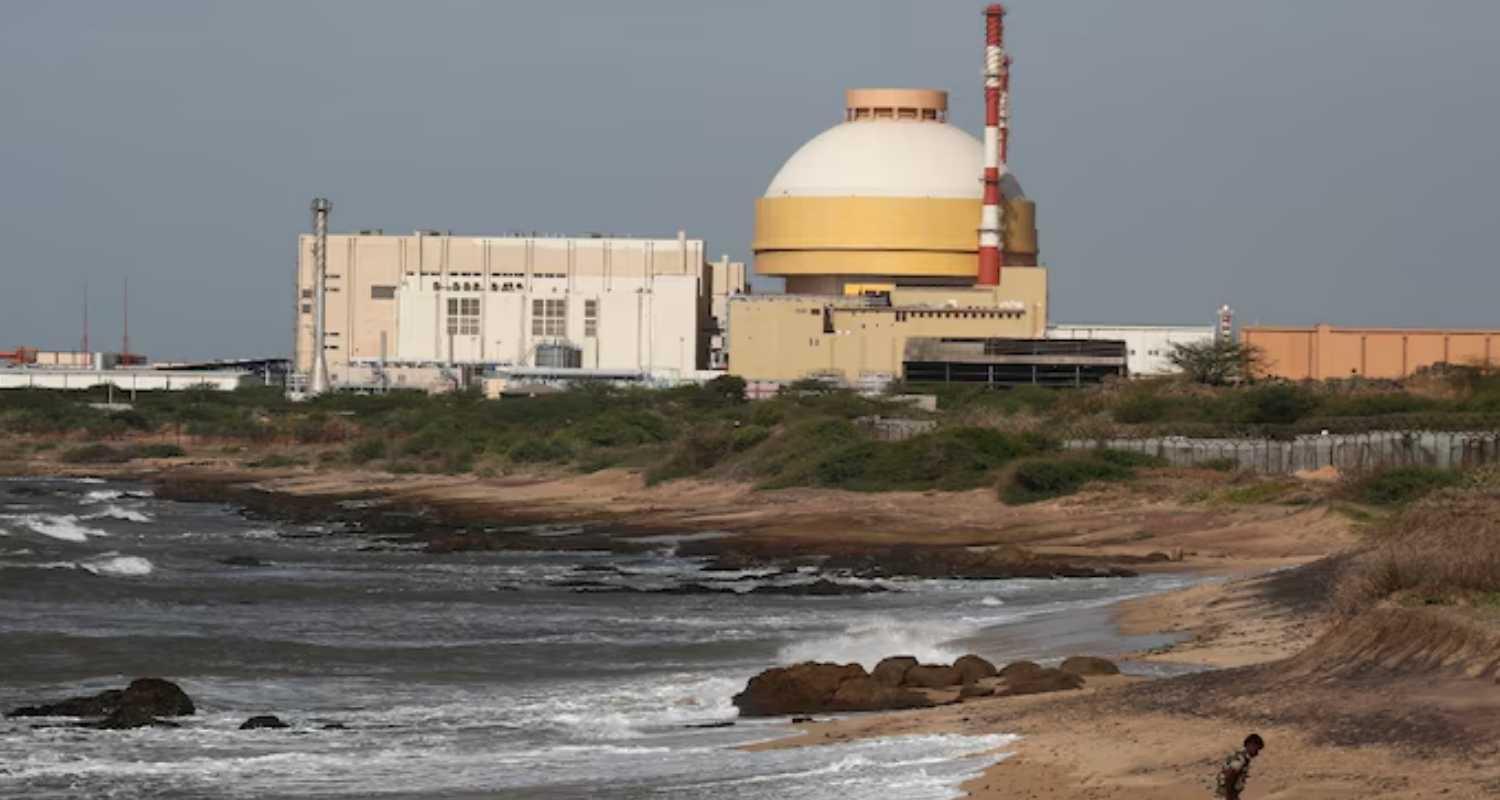
The Indian government introduced the Sustainable Harnessing and Advancement of Nuclear Energy for Transforming India (SHANTI) Bill, 2025, in the Lok Sabha. This legislation proposes a comprehensive and far-reaching reform of India's civil nuclear regulatory framework, aimed at terminating the long-standing exclusive control exercised by the state over the sector and facilitating the entry of private entities into nuclear power generation and related activities.
Should the bill receive approval from both the Lok Sabha and the Rajya Sabha, it would result in the complete repeal of two foundational statutes: the Atomic Energy Act, 1962, which has historically enforced government monopoly, and the Civil Liability for Nuclear Damage Act, 2010, which has imposed stringent liability provisions. These two enactments have been widely regarded by domestic industry stakeholders as well as potential international collaborators as significant impediments that have discouraged substantial investments in the expansion of nuclear power capacity in India.
"The Bill seeks to provide for a pragmatic civil liability regime for nuclear damage and to confer statutory status to the Atomic Energy Regulatory Board," stated Minister of State in the Prime Minister's Office, Jitendra Singh, while introducing the legislation.

As articulated by the government, the SHANTI Bill is strategically designed to support and advance India's overarching national objectives in the energy domain. These include elevating the proportion of nuclear energy within the overall energy portfolio of the country, fostering greater innovation across nuclear science and associated technologies, broadening the scope of non-electricity applications of nuclear energy (such as in medicine, agriculture, and industry), and ensuring sustained compliance with India's commitments under international frameworks concerning nuclear safety, physical security, and safeguards.
WHAT DOES THE SHANTI BILL PROPOSE?
One of the most significant changes introduced by the SHANTI Bill is the provision enabling private companies incorporated in India to apply for licences permitting them to construct, own, operate, and decommission nuclear power plants and reactors. These core activities have, until now, been largely confined to the Nuclear Power Corporation of India (NPCIL) and joint ventures involving other public sector undertakings.
The proposed legislation confines liability in the event of a nuclear incident exclusively to the operators of the plants and expressly excludes equipment suppliers from such liability, thereby resolving a longstanding issue that has discouraged participation from international vendors.
Under the Bill, the maximum liability amount for any single nuclear incident is capped at the equivalent in Indian rupees of 300 million Special Drawing Rights (SDRs), a reserve asset defined by the International Monetary Fund, bringing the regime in alignment with prevailing international standards.
Operators are mandated to secure insurance coverage or establish financial liability provisions that vary based on the reactor's capacity, ranging from approximately USD 11 million to USD 330 million. To address claims surpassing the operator's liability, a dedicated nuclear liability fund will be instituted, with the central government providing additional support should the damages exceed the established cap.
Furthermore, private entities incorporated within India will qualify to engage in various ancillary nuclear activities, such as the fabrication of nuclear fuel and the transportation and storage of both nuclear material and spent fuel, as well as the import or export of designated equipment, technology, or software.
Also Read: FM Sitharaman to move Appropriation (No. 4) Bill in LS today
That said, companies incorporated abroad or those under the control of foreign entities are prohibited from obtaining such licences. Additionally, certain highly sensitive operations—including uranium enrichment, reprocessing of spent fuel, and the production of heavy water—will continue to be reserved solely for government entities.
WHY IS THE BILL SIGNIFICANT?
The Bill is closely tied to India's climate commitments, including the goal of net-zero emissions by 2070 and a target of achieving 100 gigawatts of nuclear power capacity by 2047, up from about 8.2 GW at present.
To reach this scale, the government has underlined the need to better harness indigenous nuclear resources, enable participation of both public and private sectors, and position India as a meaningful contributor to the global nuclear energy ecosystem.
Major Indian conglomerates such as Tata Power, Adani Power and Reliance Industries have already indicated interest in investing in nuclear energy, while global suppliers including Westinghouse, GE-Hitachi, France's EDF and Russia's Rosatom have expressed willingness to partner with Indian firms.
Certain exclusions are also specified in the Bill: operators will not be liable for damage to the under-construction nuclear installation itself, other installations on the same site, related property, or the means of transport carrying nuclear material at the time of the incident.
Also Read: New Seeds Bill won’t apply to farmers, says government

 Follow us