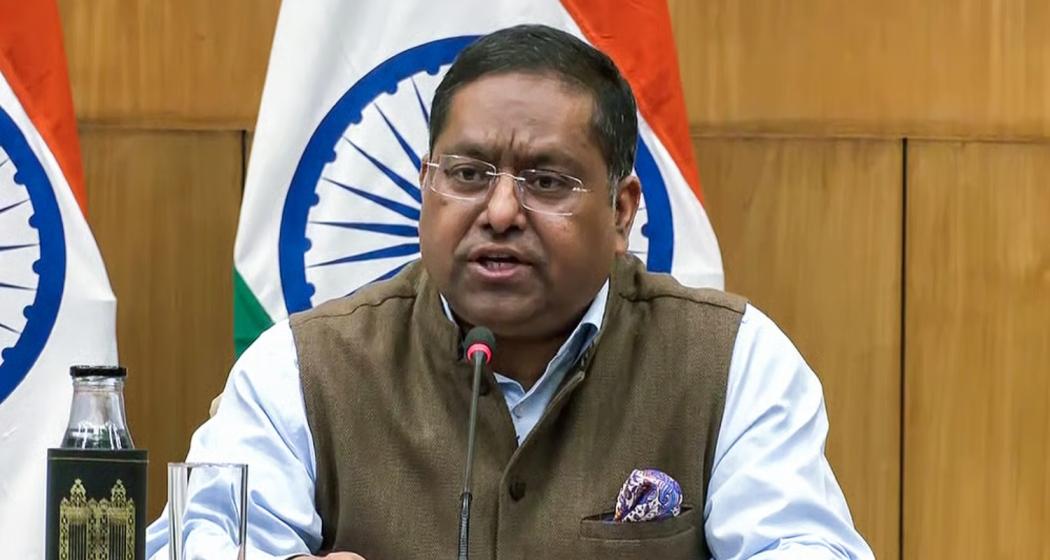
India on Friday said Bangladesh’s request for the extradition of former prime minister Sheikh Hasina is under examination as part of ongoing legal and judicial processes, even as New Delhi signalled its intent to engage constructively with Dhaka amid strained ties.
Responding to queries at the weekly briefing, External Affairs Ministry spokesperson Randhir Jaiswal said the request from Bangladesh was being processed in accordance with established procedures. “The request is being examined as part of ongoing judicial and internal legal processes. We will continue to engage constructively on the issue with all stakeholders,” he said.
Hasina, 78, has been in India since August 2024 after fleeing Dhaka following the collapse of her government amid a massive anti-government agitation.
The extradition issue figured during the recent visit of Bangladesh Foreign Minister Khalilur Rahman to New Delhi, where it was raised in talks with External Affairs Minister S Jaishankar. The development comes against the backdrop of Dhaka’s push to bring Hasina back to face legal proceedings.
Bangladesh authorities have sought her extradition following her conviction by the International Crimes Tribunal, a domestic war crimes court, which last year sentenced her to death for “crimes against humanity” linked to the crackdown on student-led protests in 2024. Former home minister Asaduzzaman Khan Kamal was also handed the death penalty in the case.
Also read: India to export 45,000 tonnes of diesel to Bangladesh
While declining to comment directly on a recent Bangladeshi law that could formalise the ban on Hasina’s Awami League, Jaiswal said India is closely monitoring developments in the neighbouring country.
He reiterated New Delhi’s position of maintaining engagement with the new leadership in Dhaka. “The external affairs minister reiterated India’s desire to engage constructively with the new government and further strengthen bilateral ties,” he said.
India-Bangladesh relations have remained under strain since the fall of Hasina’s government and the political transition that followed. However, both sides have taken steps in recent months to stabilise ties.
A notable gesture came in February when Lok Sabha Speaker Om Birla, accompanied by Foreign Secretary Vikram Misri, represented India at the swearing-in of Bangladesh Nationalist Party leader Tarique Rahman as prime minister after his party’s landslide electoral victory.
The extradition request is now expected to be processed through legal channels, with diplomatic sensitivities and bilateral relations likely to play a key role in the final decision.

 Follow us