President Droupadi Murmu’s remarks on the condition of tribal communities in West Bengal on Saturday triggered a sharp political response from Chief Minister Mamata Banerjee, who accused the BJP of attempting to use the President to advance its political agenda in the state.
The President raised concerns about the development and welfare of tribal and Santal communities during her address at the International Santal Conference in Siliguri in North Bengal. She questioned whether tribal communities in the state were receiving government benefits properly and expressed doubts about their overall progress.
Her remarks prompted a response from the West Bengal government and the ruling Trinamool Congress (TMC), which posted a list of tribal welfare projects being implemented in the state from its official social media handle.
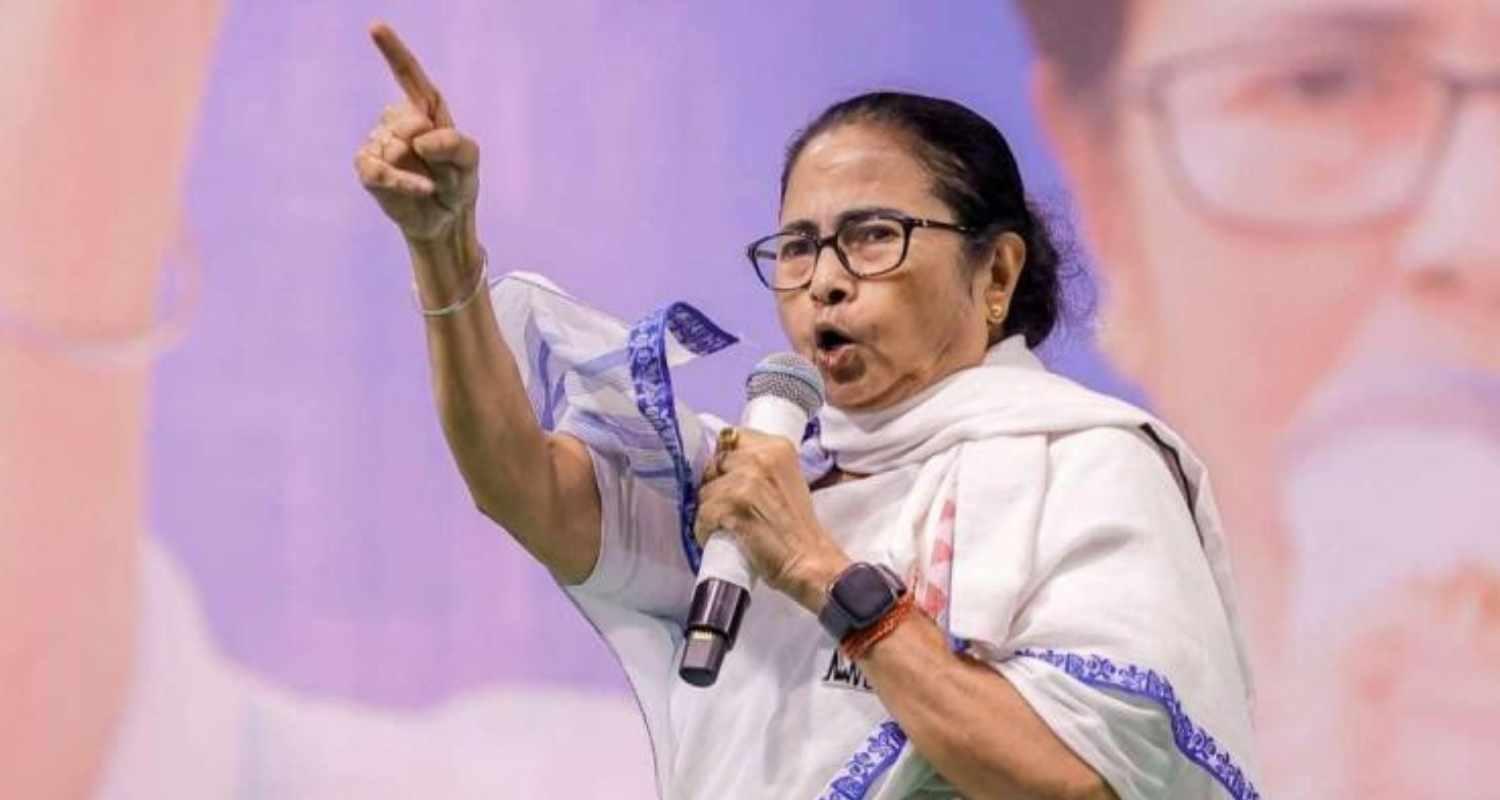
Later, speaking from the sit-in protest (dharna) stage at Esplanade in Kolkata, Mamata strongly reacted to the President’s comments. While maintaining that she has deep respect for the President, Mamata alleged that the BJP was trying to use the constitutional office for political purposes.
“I’m sorry, madam” —
“We have immense respect for the Honorable President. But today we feel ashamed to see where the BJP has taken the Constitution,” Mamata said, adding, “I am sorry, Madam, I respect you greatly, but you have fallen into the BJP’s trap. They have sent you here to promote their political agenda.”
Mamata also addressed criticism that she did not meet the President during her visit to the state. She explained that while guests are always welcomed in West Bengal, it is not always possible for her to be present whenever dignitaries visit repeatedly due to administrative responsibilities.
“At the time of her visit, I was participating in a dharna on the SIR issue on behalf of the common people. The government has many responsibilities, so it is not possible to attend every visit,” she said.
The Chief Minister further questioned why West Bengal is frequently targeted over tribal issues while alleged atrocities against tribal communities in other states often receive less attention.
The exchange has added a new political dimension to the debate over tribal development in the state, with both sides defending their positions while the issue continues to draw attention in the run-up to upcoming political developments.

 Follow us