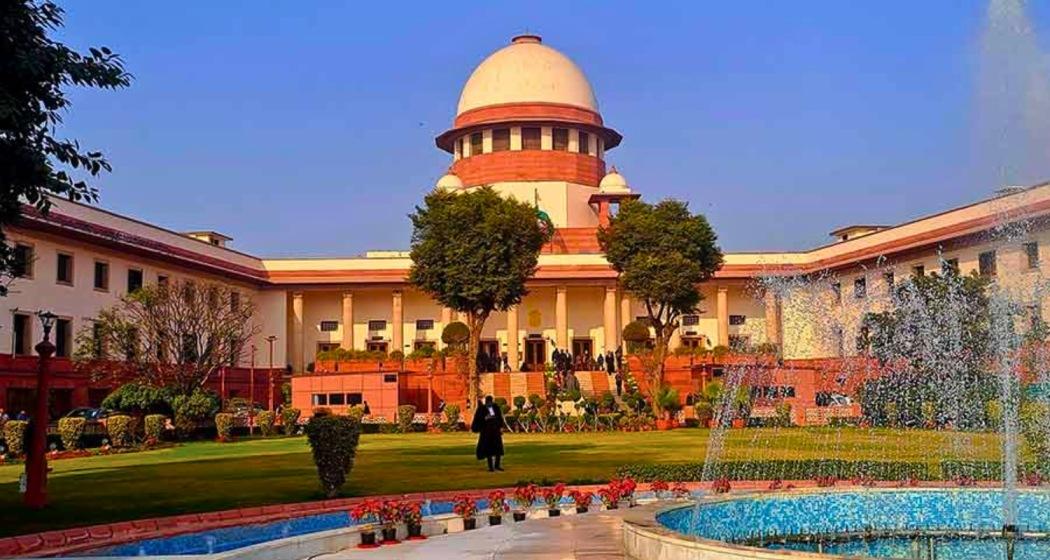
The Supreme Court on Monday clarified that the term "criminal antecedents" used in its July 28 interim order on student protest cases refers only to persons accused of grave and heinous offences, while also observing that the Delhi government and other states are free to withdraw or close criminal cases in accordance with the law.
A Bench headed by Chief Justice of India Surya Kant issued the clarification while hearing petitions alleging police excesses during recent student protests and seeking accountability for the use of force against demonstrators.
"The NCT of Delhi or any other State shall be at liberty to close or withdraw any such criminal case, in accordance with law. 'Criminal antecedents' used in paragraph 8(5) would mean grave and heinous offences," the Bench said.
The clarification comes after concerns were raised that the phrase "criminal antecedents" was being interpreted too broadly, leading to unnecessary arrests and denial of relief to protesters. Senior advocates appearing for petitioners argued that a broad interpretation had become a "catch-all category" for police action.
Solicitor General Tushar Mehta, appearing for the Centre and the Delhi government, assured the court that peaceful protesters would not be treated on par with hardened criminals and said action would not be taken against those without serious criminal backgrounds.
The apex court also indicated that it is considering setting up an independent, judge-led mechanism to examine allegations of police excesses during the protests, while making it clear that the proposed body may not formally be called a Special Investigation Team (SIT).
The proposed panel would examine allegations against both law enforcement agencies and protesters.
On the issue of force used during the protests, including allegations of pellet guns and nail-studded lathis, the court sought a detailed affidavit from the Centre. It said guidelines may be framed on the circumstances under which pellet guns can be used or avoided.
The Centre has also been directed to submit affidavits detailing protest-related FIRs and the use of pellet guns.
The matter has been listed for further hearing on August 18, when the Supreme Court is expected to consider the composition of the proposed judge-led panel and the Centre's response.

 Follow us