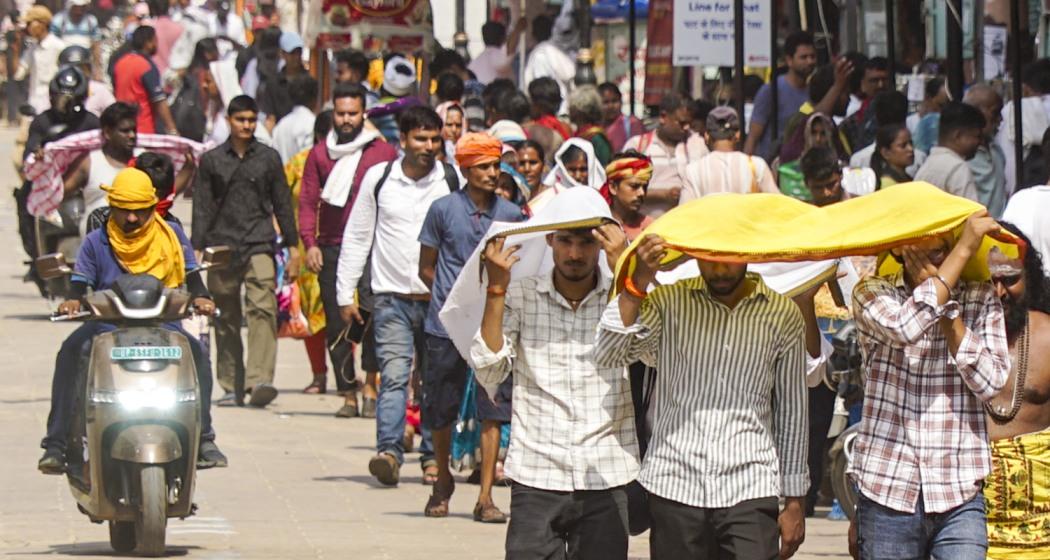
Uttar Pradesh's Banda town on Tuesday recorded a blistering 48.2 degrees Celsius, emerging as the hottest place in India and among the hottest locations globally this season, as north India continues to reel under an intense and prolonged heatwave.
Just days earlier, on April 27, the district had logged 47.6°C, its highest April temperature since 1951, signalling a sharp and sustained rise in extreme heat conditions across Uttar Pradesh’s Bundelkhand region.
The relentless temperatures have severely disrupted daily life in Banda. Streets turn deserted after late morning hours, shops shut early, and outdoor work has become increasingly difficult, forcing labourers and farmers to adjust their working hours to avoid peak heat.
The India Meteorological Department (IMD) has issued a red alert for severe heatwave conditions in Banda and adjoining districts, warning that temperatures are expected to remain between 44°C and 48°C over the coming days under persistent dry and hot conditions.
Experts say Banda’s extreme heat is no longer only a seasonal phenomenon but reflects deeper environmental stress. According to researchers and climate experts, the district is increasingly behaving like a “man-made heat island”.
Also read: Heatwave to intensify across North India, Delhi to hit 45°C
They attribute the rising temperatures to a combination of factors, including large-scale mining and blasting in surrounding rocky terrain, extensive sand extraction from the Ken riverbed, and rapid loss of vegetation cover.
Environmental assessments suggest that thousands of trucks of sand and morang are extracted daily from the Ken river basin, significantly reducing groundwater recharge and exposing dry riverbeds that absorb and radiate heat.
Dust from stone-crushing units and exposed rocky surfaces further traps solar radiation near the ground, intensifying surface temperatures and limiting nighttime cooling.
Deforestation has compounded the crisis. Studies indicate that forest cover in Banda has declined by more than 15 per cent since 2005, leaving the district with extremely low green cover and weakening its natural cooling systems.
With shrinking rivers, falling groundwater levels and rising heat, experts warn that Banda is now caught in a self-reinforcing cycle of warming, where environmental degradation and climate change are amplifying each other.

 Follow us