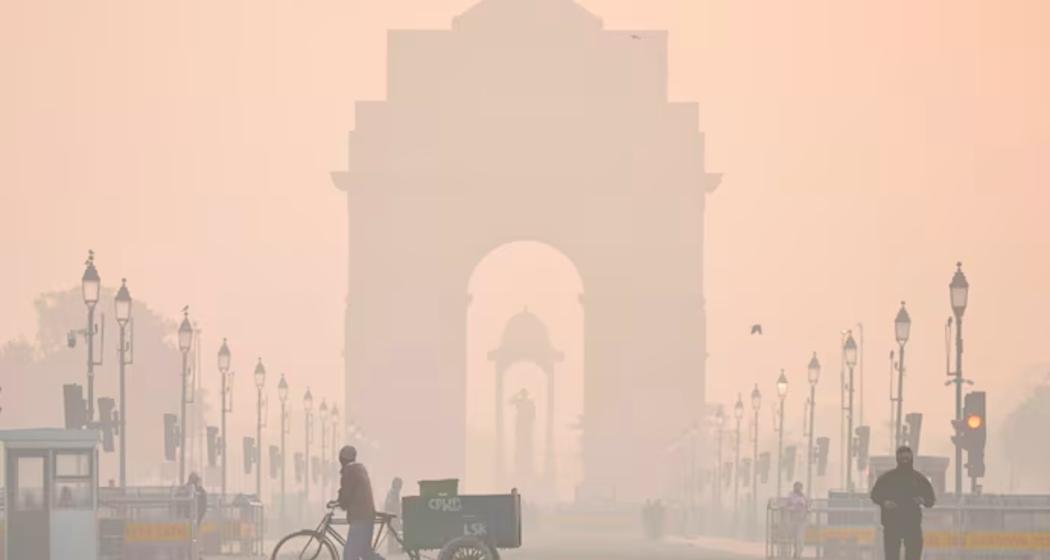
The Commission for Air Quality Management (CAQM) told the Supreme Court on Wednesday that vehicular emissions are the primary contributor to air pollution in Delhi-NCR, recommending 15 long-term measures to curb worsening air quality and improve the Air Quality Index (AQI) in the region.
Appearing for the CAQM, Additional Solicitor General Aishwarya Bhati told a bench comprising Chief Justice of India Surya Kant and Justices Joymalya Bagchi and Vipul M. Pancholi that a meta-analysis of studies conducted from 2015 to 2025 attributed PM2.5 pollution in Delhi to a combination of primary emissions and secondary particulate formation from sources within the National Capital Region.
The CAQM’s recommendations, to be implemented in a phased manner, include the time-bound phasing out of high-emission vehicles, strengthening of Pollution Under Control (PUC 2.0) measures, and deployment of remote sensing devices to monitor on-road vehicles.
The commission also suggested expanding the Regional Rail Transport and Metro networks, developing multi-modal transport hubs, and improving last-mile connectivity through real-time passenger information systems.
Also read: 44% of Indian cities facing chronic air pollution: Report
Other measures include reviewing electric vehicle policies to incentivise zero tailpipe emission vehicles, expanding EV charging infrastructure including swappable battery stations, and permitting retrofitting of vehicles certified by ARAI or ICAT.
To reduce commercial vehicle emissions, the CAQM proposed developing CNG/LNG fuelling networks, augmenting public bus services with e-buses or CNG buses, and implementing traffic management systems in Delhi and NCR cities such as Noida, Greater Noida, Ghaziabad, Meerut, Gurugram, Faridabad, and Sonipat.
The recommendations further call for parking area management, higher environmental protection charges, and intensified enforcement using technology-driven solutions such as ANPR cameras, RFID, remote sensing, and AI surveillance.

 Follow us