For several years, the grievance of the southern states was that they were being handed a raw deal in the devolution from the divisible pool of central taxes, despite their credible performance on various parameters and significant contributions to the country’s growth.
It was argued that the spirit of fiscal federalism was being undermined by punishing progressive and well-performing states while rewarding poorly governed ones.
This dichotomy created a sense of frustration among high-performing states. The declining share of states, in real terms, in the divisible pool of taxes, faulty implementation of the Goods and Services Tax (GST) regime, and restrictions on state borrowings are among the factors that have strained Centre–State relations.
On several occasions, finance ministers from these states argued that although the 15th Finance Commission recommended that 41 per cent of central taxes be devolved to states, the actual amount received was only about 30 per cent, as the Centre increasingly relied on cesses and surcharges, which are not shared with states.
Now, the situation appears to be changing for the better.
Striking a balance
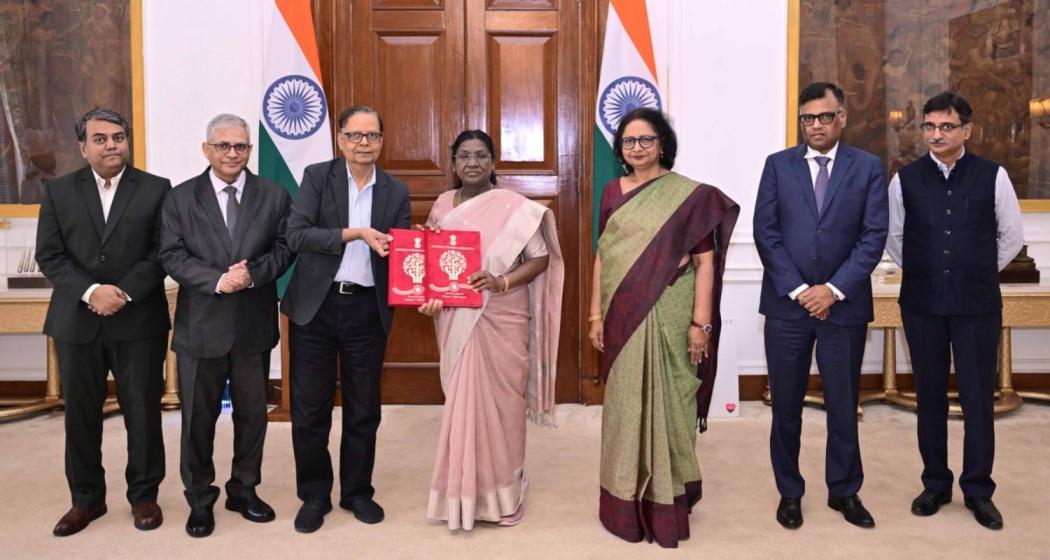
The 16th Finance Commission, whose report was recently accepted by the Union Cabinet, has managed to strike a fine balance between the imperatives of equity and addressing the legitimate concerns of the southern states.
The Commission, which covers the period from 2026 to 2031, has made welcome changes to the weightage assigned to various criteria, resulting in an increase in the southern states’ share to 17 per cent, compared to 15.8 per cent during the 15th Finance Commission period.
Overall, the 16th Finance Commission has retained the states’ share in the divisible pool at 41 per cent, the same as recommended earlier. However, in determining horizontal devolution, it has tweaked certain criteria and weights. For instance, it has reworked population weights and added the criterion of a state’s contribution to GDP. On both counts, southern states have performed better.
Other states that have seen an increase in their share include Gujarat, Maharashtra, Punjab and Jharkhand, while Uttar Pradesh, Bihar, Madhya Pradesh and Rajasthan have recorded a decline.
The criteria for calculating states’ shares in the divisible pool include population, demographic performance, area, forest cover, per capita GSDP distance and contribution to GDP. The divisible pool is arrived at after excluding the cost of collection and cesses and surcharges from the gross tax revenue collected by the Centre.
States have overwhelmingly demanded an increase in their share of the divisible pool from 41 per cent to 50 per cent, with 18 of the 28 states making this recommendation.
Also read: India-EU mega-deal signals global power-shift
They argued that the Constitution assigns proportionately greater expenditure responsibilities to states, particularly in sectors such as health, education, agriculture, drinking water, sanitation, welfare, and law and order. To discharge these responsibilities effectively, they require additional resources.
A majority of states have also expressed concern over the increasing share of cesses and surcharges in gross tax revenue (GTR), as these do not form part of the divisible pool.
In addition to tax revenues, several states proposed including certain non-tax revenues of the Union government in the divisible pool. However, the Finance Commission concluded that the Constitution does not permit the sharing of non-tax revenues, nor does it allow a cap on cesses and surcharges or their inclusion in the divisible pool.
The Commission held that the existing division of tax revenues, supplemented by Finance Commission and non-Finance Commission grants, provides states with adequate resources to meet their constitutional responsibilities. The proliferation of transfers and subsidies by states to various groups in recent years suggests the availability of sufficient funds for developmental activities.
Southern comfort
The southern states will collectively receive just over 17 per cent of the ₹15.26 lakh crore divisible pool of central taxes and duties in 2026–27.
Andhra Pradesh emerges as the biggest beneficiary under the revised formula, receiving ₹64,362.16 crore, with its share rising to 4.217 per cent of the divisible pool.
Karnataka will receive ₹63,049.58 crore, or 4.131 per cent, despite being the second-highest tax-paying state in the country. This falls short of its demand to restore its pre-2021 share of around 4.71 per cent or higher.
Tamil Nadu follows closely, with an allocation of ₹62,530.65 crore, corresponding to a share of 4.097 per cent.
Kerala will see the largest increase in its share among the southern states, rising to 2.382 per cent from 1.925 per cent, translating into receipts of ₹36,355.39
crore.
Telangana records only a modest increase, with its share rising from 2.102 per cent to 2.174 per cent, amounting to ₹33,180.78 crore for the year.
Break from the past
In formulating the criteria for horizontal devolution, the Commission introduced several changes, including the addition of GDP contribution. These include the removal of the 2.5 per cent weight assigned to states’ tax efforts, an increase in the weight of population by 2.5 percentage points, and reductions in the weight accorded to area, demographic performance and per capita GSDP distance.
Per capita GSDP distance measures how far a state’s income level falls below a benchmark based on the average of the top three richest states, thereby favouring poorer states.
A significant innovation in the 16th Finance Commission is the inclusion of a state’s contribution to national GDP as a criterion, with a weight of 10 per cent. This is expected to benefit economically strong and industrialised states such as Tamil Nadu, Karnataka, Gujarat and Maharashtra.
No grant-in-aid
Another notable decision of the 16th Finance Commission is the discontinuation of revenue deficit grants to states. The Commission cited the aggregate revenue deficit of states, which stood at only 0.3 per cent of GDP in the post-Covid years of 2022-23 and 2023-24.
“In continuation of the diminishing trend of revenue deficit grants recommended by the 15th Finance Commission, which reduced to near-zero levels by 2025–26, we do not recommend any revenue deficit grants to states. We also do not recommend any sector-specific or state-specific grants,” the report said.

 Follow us