
Trending:
A red sunset on the horizon
Naxalism, the revolutionary movement, which once boasted of running a parallel administration in several parts of the country, has now hit a dead end, crumbling under an unrelenting offensive by the security forces. A determined government has offered them to make a clear choice: surrender or face annihilation. Follow us
News Arena Network - Chandigarh - UPDATED: February 26, 2026, 03:10 PM - 2 min read
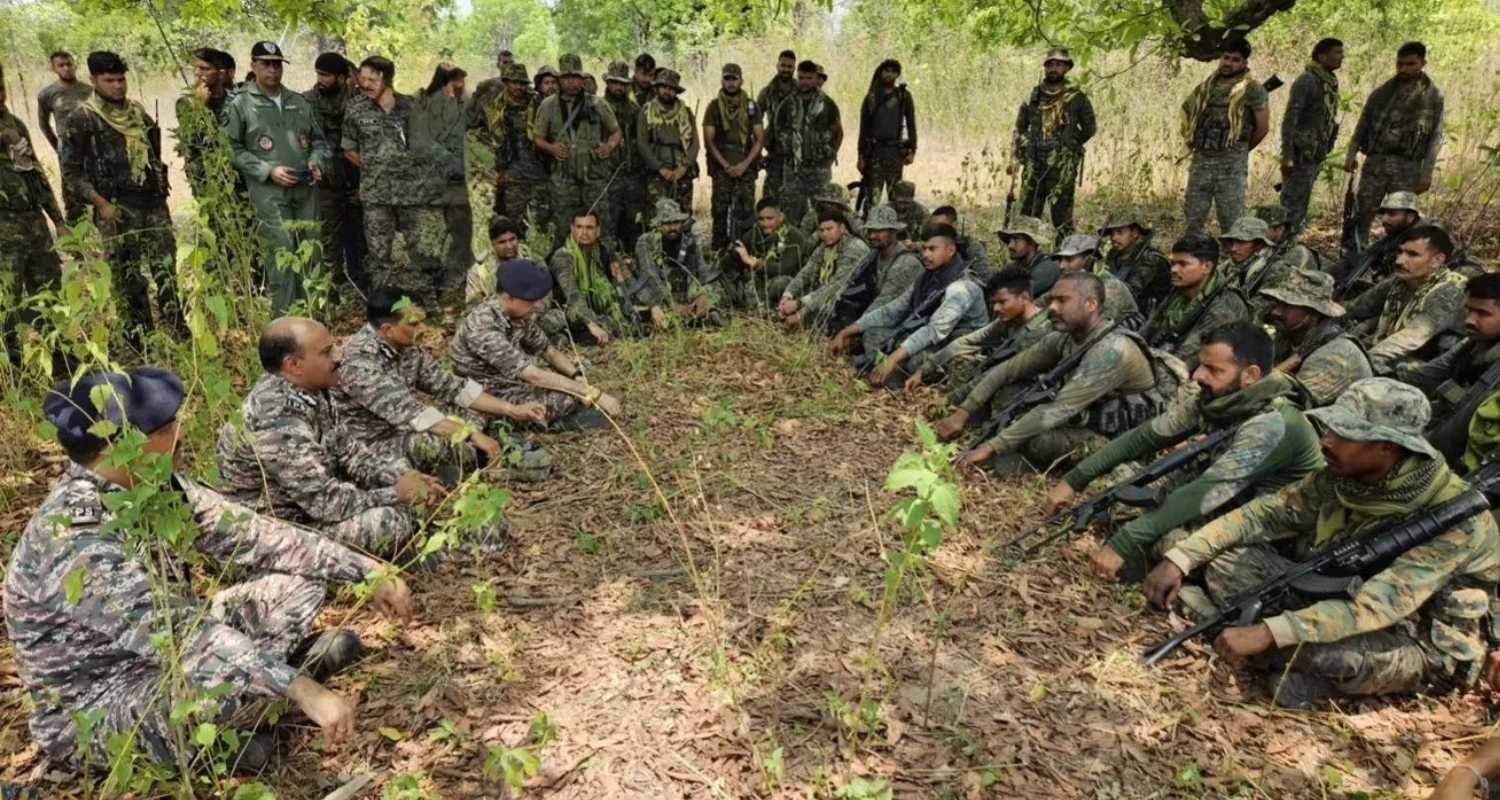
The imminent denouement assumes significance in the wake of Union Home Minister Amit Shah setting the March 2026 deadline to wipe out Naxalism from the country.
In 2009, the then Prime Minister Manmohan Singh dubbed Naxalism as the “gravest internal security threat” to India.
Nearly 16 years later, the Maoist movement is literally gasping for breath. A red sunset is on the horizon.
The revolutionary movement, which once boasted of running a parallel administration in several parts of the country, has now hit a dead end, crumbling under an unrelenting offensive by the security forces. A determined government has offered them to make a clear choice: surrender or face annihilation.
A spate of recent surrenders by top leaders and elimination of a large number of cadres in the security operations, coupled with a steady erosion of public support, have pushed the movement to the brink of extinction.
The imminent denouement assumes significance in the wake of Union Home Minister Amit Shah setting the March 2026 deadline to wipe out Naxalism from the country.
Last straw
The surrender of Thippiri Tirupathi alias Devuji, general secretary of CPI (Maoists), along with another leader, Malla Raji Reddy, in Telangana, may well be the last straw as the revolutionary movement is now left rudderless. This would mean that the Politburo and the Central Committee of Maoists have been nearly wiped out.
The launch of a massive operation codenamed KGH-2 by over 2000 personnel, including Cobra and the Central Reserve Police Force, to apprehend top leaders may have prompted the surrender of these top leaders.
The ideological churn within the organisation—with a majority of top leaders favouring giving up arms and joining the social mainstream—appears to have accelerated the collapse.
The latest surrenders are part of a string of setbacks in the last few months. In October last year, Mallojula Venugopal Rao, a key strategist who shaped the trajectory of the armed rebellion in the last four decades, gave himself up and surrendered his arms to the Maharashtra Chief Minister Devendra Fadnavis in Gadchiroli, signalling denouement of the violent ideology that he had espoused for decades.
Lost relevance
“Armed struggle is no longer possible. We must work according to the Constitution,” he said in a statement after the surrender. A senior member of the politburo, Venugopal, a 69-year-old Commerce graduate from Telangana, was responsible for planning and executing several high-profile operations targeting politicians and police officials in the past. Along with him, over 60 of his associates also gave up arms and joined the social mainstream.
Under his direction, Maoists expanded their influence through local governance initiatives known as ‘janatana sarkar’ (people’s government), which consolidated their authority across remote tribal belts of the 'Red Corridor'. His strategic efforts helped broaden the movement’s base into newer areas such as southern Maharashtra, Telangana, and the Western Ghats.
Venugopal’s ability to merge strategic violence with deep organisational discipline and ideological conviction made him one of the most influential leaders in the history of India’s Maoist movement.
He also played a pivotal role in shaping Maoist ideology and propaganda after 2010, serving as the party’s chief spokesperson. He produced policy statements, pamphlets, and manifestos that refined the party’s outreach and messaging.
A month later, a key commander of the central military commission Madvi Hidma was killed in an encounter with the Greyhounds of Andhra Pradesh in November. Hidma, the commander of the People’s Liberation Guerrilla Army’s Battalion 1 and notoriously called the ‘ghost of Bastar’, orchestrated some of the deadliest attacks on security forces and civilians in the last three decades.
He was the mastermind behind the 2010 Dantewada attack in which 76 CRPF personnel were killed, the 2013 Jhiram Ghati ambush and numerous high-casualty assaults on security forces in Sukma. These operations reshaped India’s security calculus.
According to the Union Home Ministry’s data, over 270 Maoists were killed, 680 arrested, and 1,225 surrendered in 2025.
Devji (60), the latest to give up arms and join the social mainstream, is a native of Karimnagar district in Telangana. He was appointed general secretary of the Maoist outfit about eight months ago after former party chief Nambala Keshava Rao, known as Basavaraju, was killed in an exchange of fire with security forces in what is seen as a watershed moment in India’s counter-insurgency history.
Romantic aura dissipates
Most of the Maoist top leadership hail from Telangana, which was once considered the bastion of the Naxalite movement.
Once a romantic notion that attracted both the restive urban youth on campuses and the underprivileged and exploited sections in rural areas and gave them a sense of purpose and justice, Naxalism has gradually degenerated into a refuge for a clutch of extortionists and trigger-happy vigilantes indulging in pointless violent attacks and blindly obstructing developmental projects.
Also read: Maoist movement on last leg
Indiscriminate killing of innocent people, branding them as police informers, and resorting to the same brutal methods that they often accuse their enemy classes of, public hangings after holding kangaroo courts, killing politicians and policemen and resorting to extortions have resulted in a steady erosion of public support. The academics and intellectual class, once the mainstay of the Maoist ideology, slowly moved away from it.
Failure of talks
After the failure of the first-ever peace talks with the state government in October 2004, Maoists suffered big setbacks in the state, with several of their top leaders being eliminated in police operations and many more surrendering to the police.
The success in anti-insurgency operations was largely due to “greyhounds”, an elite anti-Naxalite outfit of AP police raised in 1989 to specialise in executing intelligence-led precision strikes.
Adopting jungle warfare and guerrilla tactics and armed with improved intelligence gathering and sophisticated weapons and training, Greyhounds soon emerged as a role model for the rest of the country.
The successive governments adopted a two-pronged strategy to contain Naxalite activities: modernisation of the police force to execute intelligence-led precision strikes and massive development in the remote areas, particularly focusing on roads, infrastructure, communication, schools and hospitals.
This came to be known as the ‘Andhra model’ and proved to be very effective in ridding the state of the Naxal menace.
Challenges ahead
The recent security operations yielded major victories in the battle against Maoist insurgency. Leading security experts believe that the latest turn of events may well signal the end of Maoism in the country.
While the security operations have been successful in breaking the back of the extremist movement, the government should now focus its attention on addressing the grievances of the tribal communities, especially in Chhattisgarh’s Bastar region. The fight against Naxalism has to be on both ideological as well as security and development fronts. It would not be won unless good quality governance is provided.
The authorities must focus on building roads, infrastructure, schools, hospitals and ensuring the rights and livelihoods of the forest communities of Bastar.
Much of Bastar continues to suffer from chronic underdevelopment, and an enduring trust deficit between tribal communities and the state. Access to healthcare, quality schools, land records, and functioning welfare delivery remains patchy. Many villages still experience the administration mainly through the presence of security forces, not civil institutions.
Weak governance, corruption, and inadequate provision of basic services in affected regions contribute to a sense of alienation and disillusionment among the local population.
The inability of the governments to address the root causes of discontent creates space for extremist groups to exploit the situation. Unless governance becomes visible, accountable and culturally sensitive, the vacuum that once allowed the insurgents to project themselves as protectors may persist.
