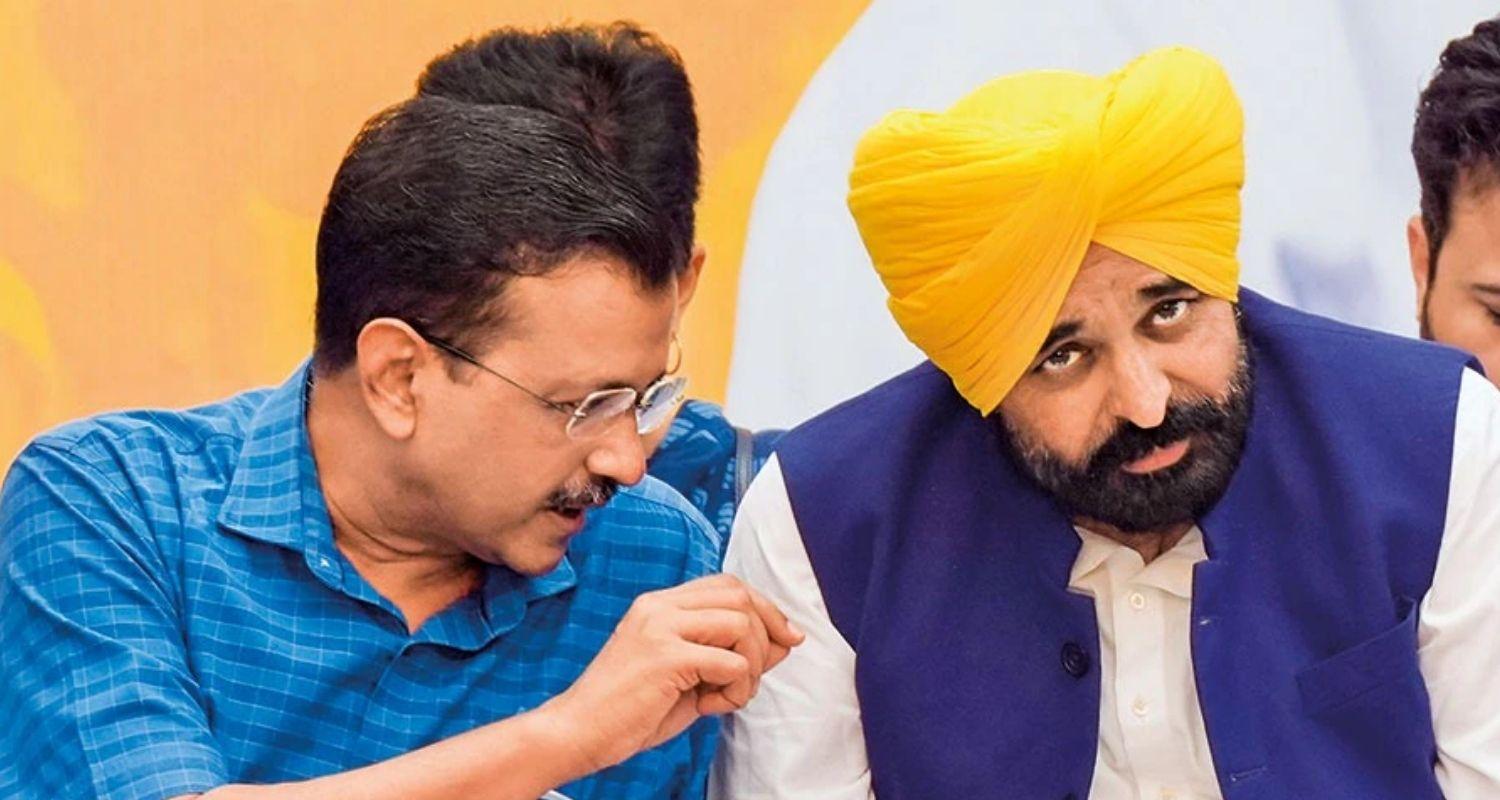
On August 8, Punjab Chief Minister Bhagwant Singh Mann wrote to Punjab Governor Gulab Chand Kataria, seeking 10 days parole for jailed militant Jagtar Singh Hawara, who is one of the convicts in the assassination of former Punjab Chief Minister Beant Singh.
Hawara was earlier sentenced to death. His death sentence was later commuted to life imprisonment. A few months ago, Hawara had sought parole to meet his ailing elderly mother. The Aam Aadmi Party government that time had opposed the parole, which was consequently denied.
With Punjab assembly elections just a few months away, the AAP government appears to have initiated the “parole” move with an intention to appeal to the radical sections of the electorate. The immediate reason for the AAP to seek parole for Hawara, which otherwise it had rejected just a few months ago, appears to be the rising popularity of the Waris Punjab De (WPD), a radical political outfit, which has made inroads into the Punjab countryside.
The WPD will obviously gain at the cost of the AAP, which had received a lot of support from the rural areas in the 2022 assembly elections when the party (AAP) won 92 of the 117 assembly segments.
WPD is a party supported predominantly by the radicals. It has been founded by the supporters of incarcerated MP Amritpal Singh, who was elected to the Lok Sabha from the Khadoor Sahib parliamentary constituency while in jail. His supporters recently tried to march to Chief Minister’s residence in Chandigarh, demanding his release.
While it is believed that the WPD is cutting into the traditional Akali bases, the AAP has more reasons to worry. The traditional Akalis who are now inclined towards the WPD had already shifted away from the Akali Dal to the AAP in 2022. This time any gain of the WPD will be a direct loss of the AAP and not the Akalis, hence an attempt by the ruling party to warm up to them with plea for Hawara’s parole.
That explains the AAP government’s U-turn in seeking Hawara’s parole on humanitarian grounds. Otherwise, the AAP government has taken a clear stand against the radicals and on the issue of national security.
Also read: Sidelining moderate Akalis will do no good to Punjab
This move, clearly aimed at appealing to the radicals, is fraught with the danger of boomeranging against the AAP.
The AAP has had a bitter experience in 2017 when party supremo Arvind Kejriwal stayed overnight in the house of a former Khalistan Commando Force militant in Moga. Kejriwal that time had obviously wanted to convey a signal to radicals and former militants. Although the ex-KCF militant was not staying in the house himself, but had already moved to England, the AAP that time had played up the stay, which instead of delivering any electoral dividends, boomeranged and the party could not open any account in the Hindu-dominated urban constituencies.
The AAP, despite having contested the Punjab assembly elections, had won 20 assembly segments and assumed the role of the principal opposition party in Punjab, pushing the Shiromani Akali Dal to the third place.
Mann’s plea for Hawara’s parole to Punjab Governor has the potential to boomerang the same way, Kejriwal’s night stay in a former militant’s house did in 2017. The AAP obviously must have weighed all options and consequences before moving with the parole plea, despite having the 2017 bitter experience.
It is absolutely wrong to assume that majority of the Punjabis may support the radicals. Except for the 1989 parliamentary elections when the Shiromani Akali Dal-Amritsar led by Simranjit Singh Mann won most of the seats, Punjabis have never ever taken the radicals seriously. Their support base has remained confined to select pockets only and nothing much has changed about it.
The 2022 verdict in favour of the AAP was enough proof that given an option, Punjabis will never support the radicals. In 2022, majority of Punjabis were completely disillusioned with the Shiromani Akali Dal and the Congress. Their other option could have been Simranjit Singh Mann. Instead, the Punjabis gave an overwhelming mandate to the AAP which was quite new on the political horizon. Not much has changed about their voting inclinations which are necessarily not radical, barring limited exceptions.
The AAP must realise that it is mostly competing against the Congress, Shiromani Akali Dal and BJP and not even WPD. It has committed a grave error by subscribing to the WPD agenda. In any case a political party like the AAP cannot compete with a radical outfit like WPD on the radical agenda. Sporadic gestures, like demand for parole, have the potential of causing more damage than any advantage.

 Follow us