
Trending:
At 76, Chandrababu Naidu shows no signs of slowing down
Lokesh was recently appointed the TDP working president, a prelude to his taking over the reins of the regional party. Though the succession plan has been put in place, Naidu is in no mood to hang up the boots. Follow us
News Arena Network - Chandigarh - UPDATED: April 21, 2026, 01:46 PM - 2 min read
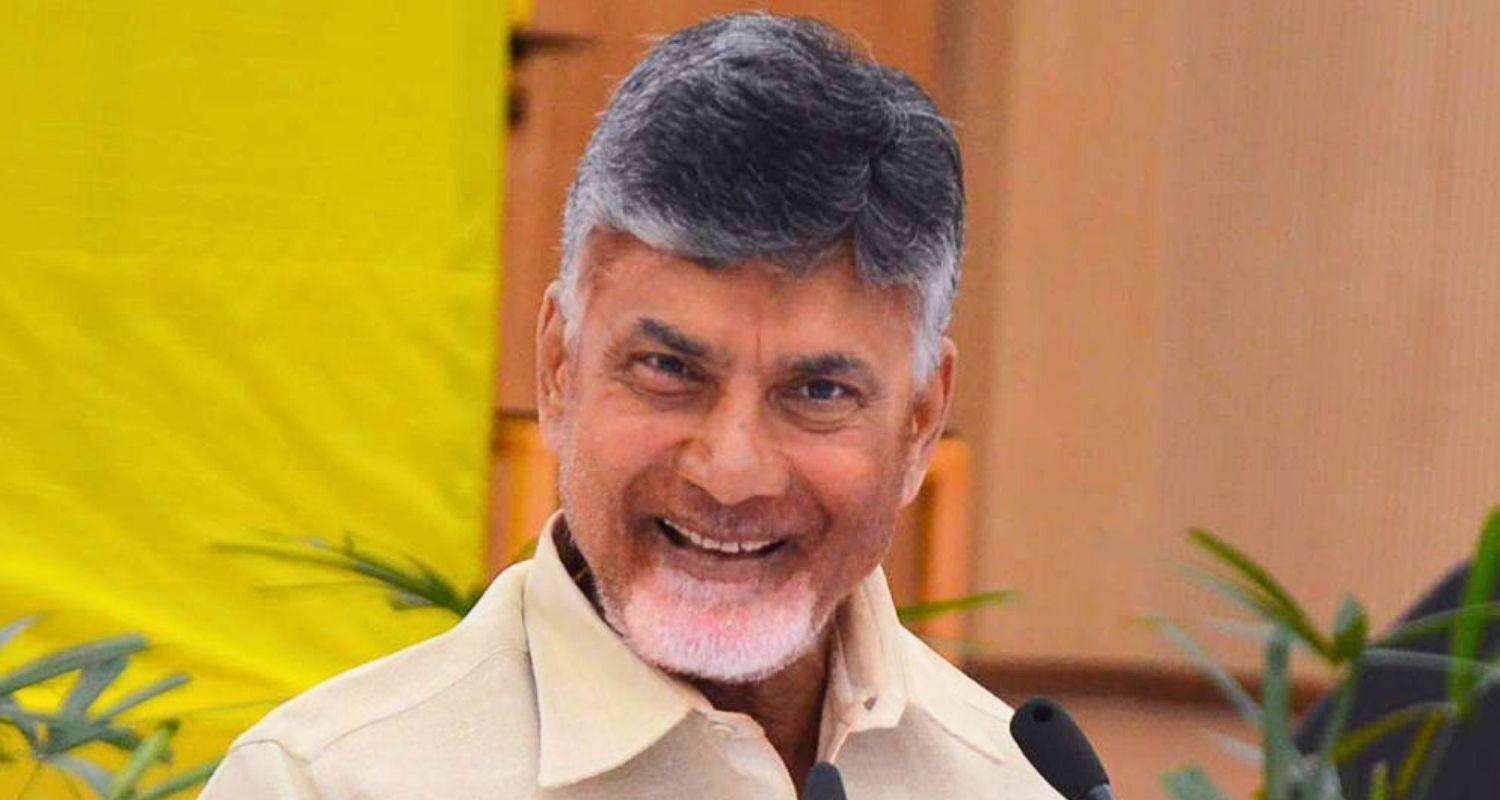
A student of political science, Naidu entered politics in the 1970s through the Congress Party and later joined the TDP founded by his father-in-law and matinee idol of Telugu cinema NT Rama Rao.
Indefatigable politician. Relentless reformer.
These two attributes sum up the personality of Andhra Pradesh Chief Minister Nara Chandrababu Naidu who turned 76 on Monday.
A four-time chief minister and a crucial ally of the BJP-led NDA, Naidu shows no signs of slowing down.
Though there were reports in a section of the media recently that he might follow the footsteps of Nitish Kumar and move to the Centre, handing over the baton to his son and minister Nara Lokesh, sources close to the Telugu Desam Party supremo firmly ruled out such a scenario.
“There are no plans of his retiring or slowing down in any way. He is passionate about his work focused on taking AP to new heights of development and prosperity,” sources said.
Lokesh was recently appointed the TDP working president, a prelude to his taking over the reins of the regional party. Though the succession plan has been put in place, Naidu is in no mood to hang up the boots.
In fact, he is racing against time to complete the works on his dream project to build an ultra-modern capital city at Amaravati in the Vijayawada-Guntur region.
Pragmatism, the guiding principle
Naidu’s five-decade long political journey symbolises triumph of pragmatism over ideological rigidity, reforms over populism, innovation over stagnation, self-belief over adversities and personal discipline over distractions.
The TDP supremo is among the rare breed of regional leaders who has been at the forefront of national politics for over three decades—playing a key role in both the United Front coalition and the NDA.
At present, his party, with 16 MPs in the Lok Sabha, is the largest ally of the BJP-led coalition, holding key to its stability and longevity.
What makes Naidu, widely known for transforming Hyderabad into a global IT destination, stand apart from his contemporaries is his constant desire to reinvent himself, embrace futuristic vision for the party and the government and an intense desire to rise above circumstances.
From a modest agricultural family in the drought-prone Rayalaseema region of Andhra Pradesh to becoming a four-time chief minister and a crucial player in national coalition politics, Naidu's story is one of grit and extraordinary self-discipline.
A student of political science, Naidu entered politics in the 1970s through the Congress Party and later joined the TDP founded by his father-in-law and matinee idol of Telugu cinema NT Rama Rao.
Over time, he not only emerged from NTR's shadow but also transformed the TDP into a modern political machine that reflected his own administrative and technological vision.
‘No ism, only tourism’
“The era of isms has ended. The only ism that is relevant today is tourism.” This used to be Naidu’s favourite quip at seminars and meetings with industrialists during his tenure as CM of combined AP from 1995 to 2004.
And, it used to invariably evoke appreciative nods from the gatherings. It was a heady time as the country was brimming with excitement over possibilities thrown up by economic liberalisation.
Understandably, Naidu was seen as the poster boy of reforms and a toast of the national media. He broke the mould of the traditional Indian politician. While many of his peers relied on populism and caste arithmetic, he carved a unique space for himself by championing economic reform, digital governance, and infrastructure development.
In the 1990s, when the IT revolution was in its infancy in India, Naidu embraced it with missionary zeal. He foresaw the rise of the knowledge economy and positioned Hyderabad as a global IT hub. His ability to convince giants like Bill Gates to invest in Andhra Pradesh made global headlines and earned him the moniker of "CEO of Andhra Pradesh."
Naidu's efforts were recognised globally, earning him several accolades, including being named ‘South Asian of the Year’ by Time magazine in 1999.
Also read: Nod for Amaravati, a shot in the arm for Naidu
Unlike many regional leaders who struggled to remain relevant beyond their states, Naidu became a national figure. His role as a key player in coalition politics during the United Front and NDA eras showcased his ability to navigate the complexities of Delhi power corridors.
Naidu's political survival is particularly remarkable, considering the fact that the leaders who once shared the national stage with him have faded into irrelevance or retirement. In contrast, Naidu remains a force to reckon with, not just due to his experience but because of his extraordinary physical and mental discipline. Even in his 70s, he puts in over 12 hours of work each day, a routine he has followed for decades.
A key reason behind this resilience is his disciplined lifestyle. Naidu follows a strict diet, maintains a rigorous daily routine, and consciously avoids indulgences that many others in public life often succumb to. He has few hobbies and no real interests outside work, which even his party leaders complain about.
Flaws and failures
For someone who has weathered many political storms and witnessed ups and downs in his long career, Naidu is not without his share of flaws.
Naidu’s over-reliance on bureaucracy, while in power, and a top-down model of governance has cost him dearly. While he is known for picking competent officers to implement important policies, he often faces flak for ignoring grassroots party workers, weakening the party's connect at the booth level.
His corporate style of functioning does not go down well with a large section of the party leaders. His flip flops during the Telangana statehood movement and his failure to retain a TDP footprint in Telangana remain the sore points.
Like most regional parties in the country, Naidu runs the TDP with an iron grip, leaving no scope for nurturing second-rung leadership or rewarding merit. And, like any other family-driven regional parties, he has clarity about who should be his political heir.
The power structure and decision-making is centralised as Naidu has a highly personalised and self-absorbed style of functioning. Naidu’s over-exposure to the media and his rambling monologues often create a sense of fatigue among the people.
Naidu is not a comfortable public speaker. His high-sounding jargon lacks emotional connect.
Swinging political pendulum
Naidu has traditionally chosen pragmatism over ideology while picking its partners. His party’s political pendulum has been swinging wildly ever since Naidu took over the reins of the regional party after dethroning his father-in-law in a midnight political coup in August 1995. He had aligned with the Left and the Right at different points in the last three decades.
He was widely seen as a king maker for his role in the formation of United Front and NDA governments at the Centre. As convener of the United Front, he played a key role not only in policy making but also in deciding the prime ministerial candidates. Later, during the NDA regime, his party's outside support became crucial for the survival of the BJP-led coalition.
He had a six-year long association with the NDA and fought the elections in 1999 and 2004 in alliance with BJP. However, after losing power in the combined AP in 2004, Naidu had severed links with the saffron party and moved closer to the left parties, only to return to the saffron fold ahead of the 2014 general elections.
Soon after, his party joined the Modi government, only to leave the alliance in 2018 ahead of Assembly polls in Andhra Pradesh in protest against denial of special category status to AP.
In November that year, Naidu joined hands with Congress to build an anti-BJP alliance at the national level.
However, his political flip-flops did not go down well with the voters who handed out a crushing defeat to the TDP in the 2019 elections. Casteism, corruption, skewed developmental priorities, unfulfilled promises, rising unemployment, and lack of progress on construction of capital city turned out to be his party’s undoing. As a result, Jagan Mohan Reddy, a brash and unconventional politician with no administrative experience, stormed to power.
Remarkable comeback
Naidu faced the biggest crisis in his career when he was arrested in 2023 in the alleged Skill Development Corporation Scam case, largely seen as an instance of political vendetta by the Jagan government. He spent 52 days in jail.
However, Naidu’s dogged determination and a sustained campaign put him on a comeback trail. Riding high on anti-incumbency against the YSR Congress government and promising a blend of welfare and development, the TDP pulled off a landslide victory in the 2024 elections and emerged as a key player at the Centre.
What continues to drive Naidu is his unrelenting curiosity for new ideas. From information technology in the '90s to artificial intelligence and P4 (Public-Private-People Partnership) today, Naidu is always looking ahead. He speaks passionately about using technology to solve age-old problems, whether it's smart agriculture, digital education, or transparent governance.
