
Trending:
Bankipur bypoll: The disruption Bihar didn’t see coming
For Bihar’s electorate, Bankipur offers something new: choice. The emergence of a credible third force suggests that politics in the state may no longer be confined to a binary contest. Whether this evolves into a lasting transformation remains to be seen—but the first crack in the old order has undeniably appeared. Follow us
News Arena Network - Chandigarh - UPDATED: August 4, 2026, 02:16 PM - 2 min read
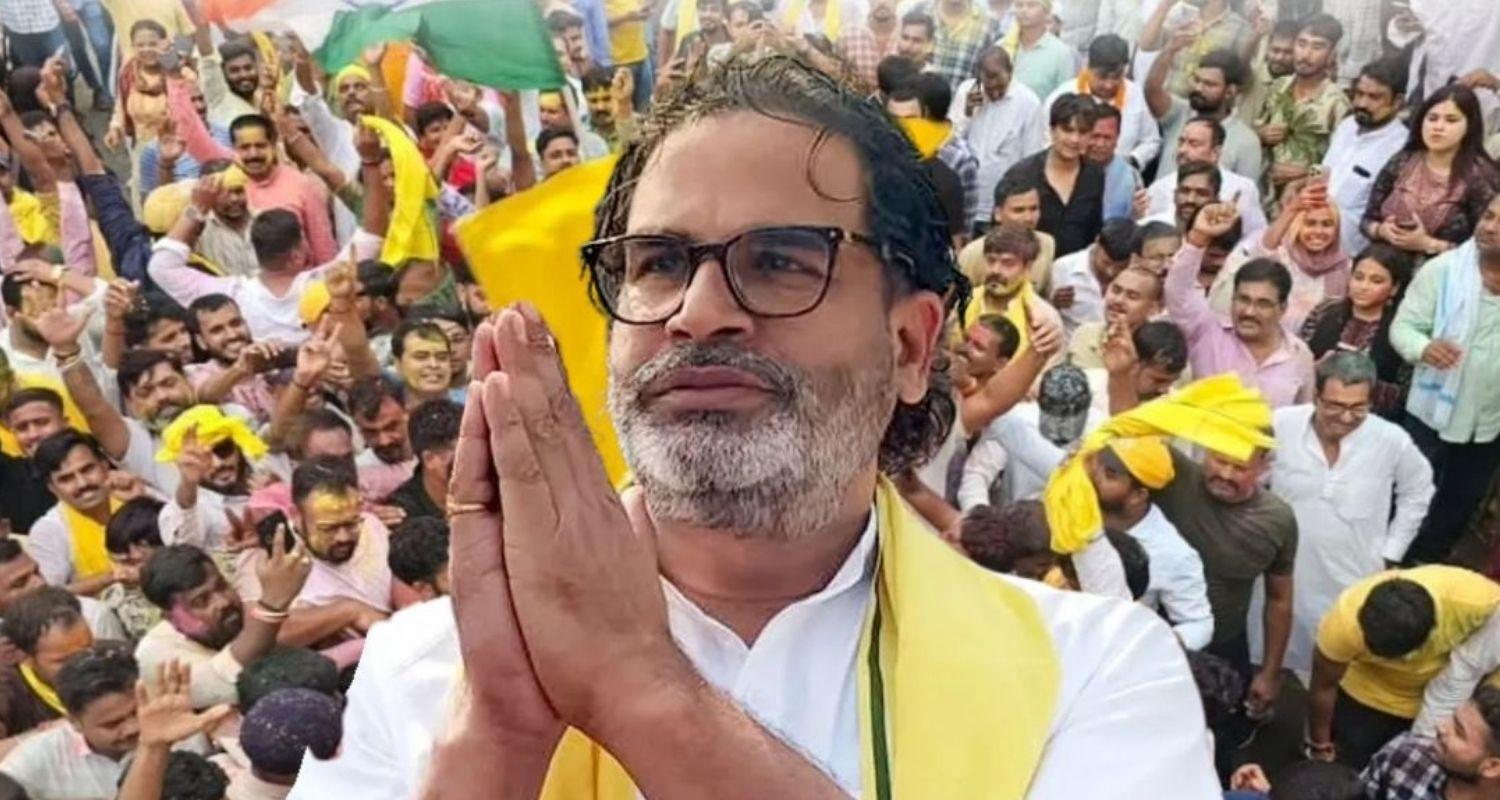
Bankipur has been regarded as an “impregnable BJP fortress,” with upper-caste voters forming nearly 37 per cent of its electorate.
The outcome of a by-election often carries meaning far beyond a single constituency. History offers multiple examples where a local contest signalled a larger political shift. The recent Bankipur by-election in Bihar appears to fall into that category. The victory of Prashant Kishor is not merely an electoral upset; it is a moment that challenges long-standing political assumptions in the state.
Kishor, contesting on behalf of his fledgling Jan Suraaj Party (JSP) platform, secured 63,203 votes, defeating the BJP’s Neeraj Kumar Sinha by a margin of 18,953. On paper, this is a comfortable victory. In reality, it is a political shockwave.
For nearly three decades, Bankipur has been synonymous with the BJP. It was not just a stronghold—it was considered impenetrable. Leaders like Nitin Nabin had turned the seat into a symbol of the party’s dominance, winning it repeatedly with significant margins. In the 2025 Assembly elections, the BJP had polled close to 98,000 votes here, with Jan Suraaj trailing far behind at just over 7,700.
The contrast with the by-election result is stark. Within months, Jan Suraaj’s vote share surged dramatically while the BJP’s tally nearly halved. While lower turnout—just 34.24 percent compared to over 41 percent in 2025—must be factored in, the magnitude of this shift cannot be dismissed as a statistical anomaly.
Several factors contributed to this outcome. Erosion in upper-caste vote bank, the BJP’s candidate selection process appeared chaotic, with a last-minute replacement raising doubts about organisational coherence. In a constituency where discipline and cadre strength were assumed to guarantee victory, the party struggled to mobilise its base. Low turnout elections typically favor well-organised parties; that the BJP still lost suggests deeper structural issues.
More importantly, Bankipur has long relied on a coalition of upper-caste, urban middle-class, and business-community voters. This election demonstrated that such “captive” vote banks are not permanently loyal. A credible alternative—especially one that appeals to governance and development—can disrupt even the most entrenched support bases.
Erosion in upper-caste vote bank
Bankipur has been regarded as an “impregnable BJP fortress,” with upper-caste voters forming nearly 37 per cent of its electorate. Among them, Kayasthas hold a particularly influential position. In Bihar’s political landscape, along with Bhumihars, Baniyas (Lalas), and Rajputs, they have traditionally been seen as a loyal support base for the BJP. The constituency falls under the Patna Sahib Lok Sabha seat, where Kayastha leaders such as Shatrughan Sinha and Ravi Shankar Prasad have consistently secured victories on BJP tickets since 2009.
The outgoing MLA, Nitin Navin, also belongs to the Kayastha community. Demographically, Bankipur presents a complex social composition: 14 per cent Kayastha, 12 per cent Yadav (OBC), 12 per cent Muslim, 9 per cent Chandravanshi (EBC), 9 per cent Baniya, 9 per cent Dalit (SC), 8 per cent Bhumihar, 8 per cent Brahmin, 7 per cent Rajput, 5 per cent Kurmi (OBC), and 3 per cent Kushwaha (OBC).
Despite this seemingly favourable arithmetic, the by-election results marked a dramatic shift among upper caste electorates. Kishor, a Brahmin, secured over 49 per cent of the vote, while the BJP’s share fell to just above 34 per cent. The RJD, led by Lalu Prasad Yadav, managed less than 11 per cent.
Also read: Prashant Kishor breaks BJP's Bankipur fortress
While the anti-paper-leak movement—particularly strong among urban, unreserved youth—played a role, two additional factors proved decisive. First, the last-minute replacement of the BJP candidate with Neeraj Kumar following a controversy undermined voter confidence, even within the Kayastha community. Second, the projection of a Kushwaha leader like Samrat as the chief ministerial face appears to have unsettled sections of the party’s upper-caste base. Rather than shifting towards the RJD’s traditional ‘Yadav-Muslim’ axis, many voters consolidated behind Kishor. Notably, Kishor’s non-reliance on caste-based mobilisation seems to have attracted a cross-sectional support base, with indications that segments of OBC, Dalit, and Muslim voters also backed him.
RJD’s decline as the ‘default opposition’
If the BJP’s defeat is significant, the performance of the Rashtriya Janata Dal (RJD) is arguably more consequential. Led by Tejashwi Yadav and rooted in the legacy of Lalu Prasad Yadav, the RJD has long positioned itself as the primary beneficiary of anti-incumbency sentiment in Bihar.
Bankipur disrupts that equation.
Despite a sharp decline in BJP votes, the RJD failed to capitalise, slipping to third place. This breaks the long-standing assumption that anti-BJP votes would naturally consolidate behind the RJD-led alliance. Instead, a significant portion of these votes shifted towards Kishor.
This shift also raises questions about the durability of the RJD’s traditional ‘Muslim-Yadav’ social coalition. While it would be premature to draw sweeping conclusions from a single urban constituency, the trend is noteworthy. Younger, urban voters—across communities—appear increasingly open to alternatives that emphasise governance, employment, and development over identity-based politics.
For Tejashwi, the message is clear: relying solely on legacy, caste arithmetic, or anti-BJP sentiment may no longer suffice. The electorate is demanding a more compelling and forward-looking political narrative.
The rise of a third political axis
For years, Bihar’s political landscape has been defined by a binary: the NDA, led by the BJP and JD(U), versus the RJD-Congress alliance. Voters were effectively presented with two poles, with little room for a viable third alternative.
Prashant Kishor’s victory challenges that binary.
Before entering electoral politics, Kishor was widely known as a master strategist—someone who engineered victories for others but had not tested his own mass appeal. Bankipur has provided the first definitive answer to that question. His extensive padyatra and street corners across Bihar, engagement with grassroots issues, and emphasis on governance appear to have translated into electoral credibility.
More importantly, his support base cuts across traditional divides. Evidence suggests he attracted not only upper-caste and urban voters disillusioned with the BJP but also segments of youth, minorities, and anti-incumbency voters who might otherwise have gravitated towards the RJD.
This cross-sectional appeal is significant. In a three-way contest, even modest vote shifts can dramatically alter outcomes. Jan Suraaj does not need to dominate statewide immediately; it simply needs to remain competitive enough to influence results. In doing so, it could emerge as a decisive factor in Bihar’s electoral arithmetic.
That said, caution is warranted. A single by-election—particularly one with low turnout and a high-profile candidate—cannot establish a statewide trend. Questions remain about organisational depth, rural outreach, and whether Kishor’s personal appeal can be replicated by other candidates.
A signal, not a verdict
The Bankipur by-election is not a definitive mandate for Bihar. It does not conclusively establish Jan Suraaj as a dominant force, nor does it signal the immediate decline of established parties. However, it does mark a critical inflection point.
For the BJP, the lesson is clear: no stronghold is invincible, and organisational lapses can prove costly even in the safest seats. For the RJD, the message is more existential—the era of being the default opposition is over.
For Kishor, the victory is both validation and challenge. He has demonstrated that the transition from strategist to mass leader is possible. The real test now lies in sustaining this momentum, building a robust organisation, and scaling a single-seat success into a statewide movement.
Finally, for Bihar’s electorate, Bankipur offers something new: choice. The emergence of a credible third force suggests that politics in the state may no longer be confined to a binary contest. Whether this evolves into a lasting transformation remains to be seen—but the first crack in the old order has undeniably appeared.
By Pranab Mondal
