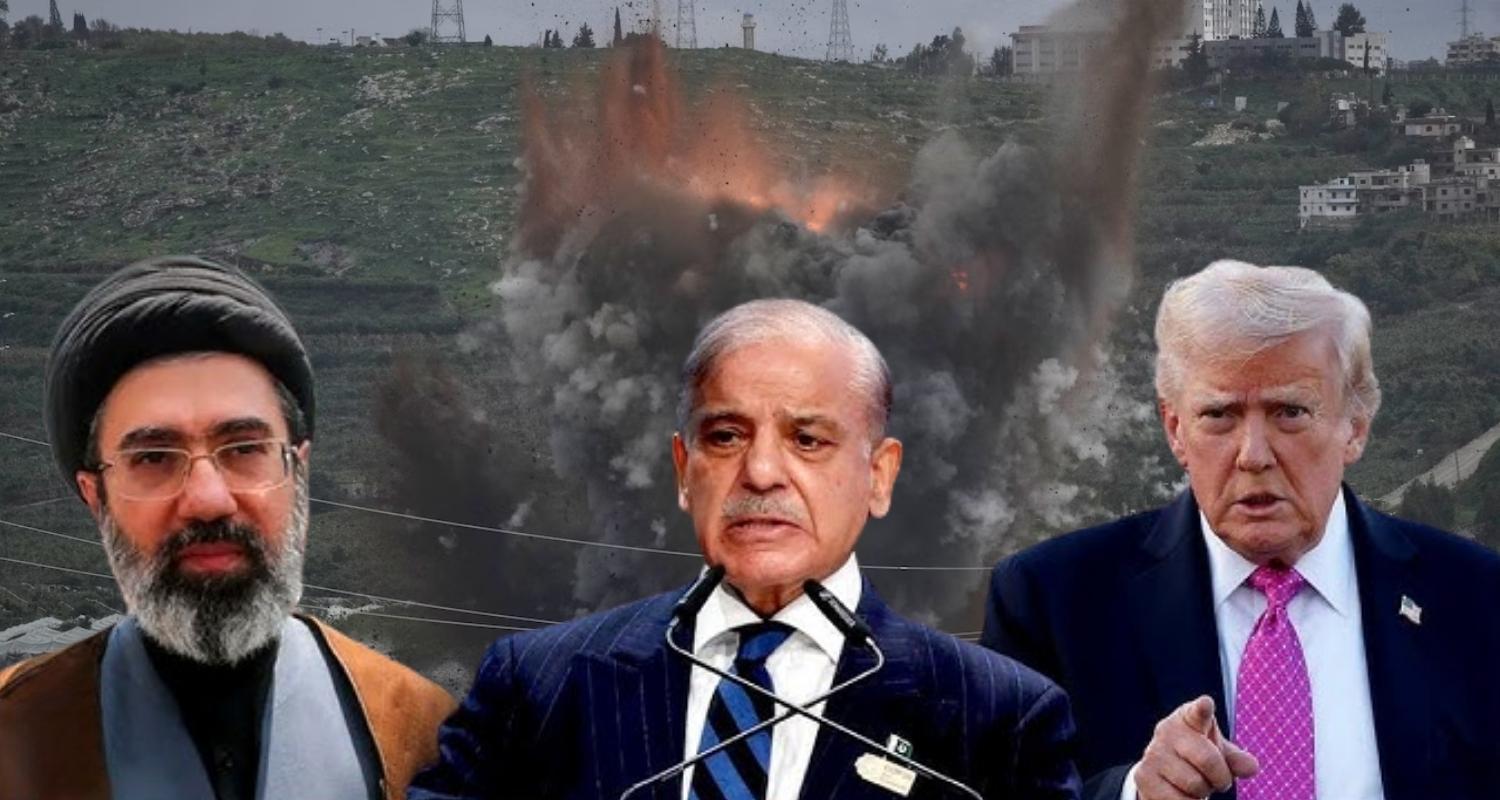
US President Donald Trump has repeatedly been asserting that negotiations are going on between his country and the Iranian leadership over ending the war. Iran has, in the same manner, rejected any such claims making it categorically clear that there have been no direct or indirect negotiations between the two countries.
However, there does appear to be “an exchange of messages” between the two countries through a third intermediary, which many believe is Pakistan’s army chief Asim Munir, one of Trump’s favourites.
Trump, in his characteristic manner and style, has been jumping the gun and blowing things out of proportion. To some extent, the communication channels have been identified. These have, however, not been opened as yet. Iran has been repeatedly asserting that the war will end when it decides to end it and not the US.
There hardly appears to be any scope of ceasefire and reconciliation as both the sides are sticking to their respective positions, which are neither feasible nor pragmatic. The US wants Iran to completely abandon its nuclear programme, drastically reducing its uranium enrichment capability, allow intrusive inspections, restrictions on missile production which includes limiting their range, quantity and deployment, cease or reduce support to organisations like Hezbollah, Hamas and Houthis, accept joint control of the Strait of Hormuz. In return, the US has offered Iran relief in sanctions and assistance in developing and building up a civil-nuclear programme.
It needs no diplomatic or strategic expertise to make out how acceptable these conditions will be to Iran. Even a layman can make out that these are totally unacceptable conditions for any country. Here it is Iran, which in no way seems to be in a mood to relent, no matter what the consequences may be.
Iran has also laid down certain conditions, some of which will never be accepted by the US. It has called for an immediate end to aggression, immediate halt to all military strikes and assassinations of its leadership, guarantee against any future attacks, this includes internationally recognised guarantee that the US and Israel will not launch any future military attacks on the country.
Iran is also demanding massive compensation and reparation for the huge losses caused by the “unprovoked attack”, suspension of attacks on its other allies, recognition of its authority and control over the Strait of Hormuz, including the right to manage the shipping traffic and charge a fee for it.
Also read: No negotiation talks happened with the US nor will: Araghchi
The US may be convinced and confident that it may impose its terms and conditions to end the war. Or, even if there is no formal ceasefire, the US may be of firm belief that it can completely decapitate Iran at some stage, sooner or later. After all, in the long and ultimate run, Iran does not stand any match to the US military might as well as other resources. Besides, US President Trump is not known for exercising restraint that too when he is aware of the fact that there will be least resistance in the long run.
The next theatre in the US-Iran war would be the all-important Iranian Kharg Island, the nerve centre of Iranian oil production. Iran processes 90 per cent of its oil in Kharg Island. Given its crucial importance for Iran in terms of oil production and processing, it has been fortified with multilayered security in place. It is going to be a natural target for the Americans and Israelis.
As Iran has been dragging on the ceasefire, Trump’s patience may eventually wear out. He has already issued a serious threat to Iran that they “better get serious about considering the ceasefire proposals, lest it is too late”.
His threats are not merely rhetorical. The US is believed to be dispatching 1,000 troops from the 82nd airborne division, besides 5,000 marines to the region. The intention seems to be obvious. The US wants to invade Kharg Island with airborne troops and take control of it. It is apparently intended to build up pressure on Iran to open the Strait of Hormuz for free shipping transportation.
Iran, having already got a whiff of the US intentions, has warned that it will not hesitate from “carpet bombing” its own territory to kill the US troops. That would be the worst-case scenario at this stage. Iran has proved to be as unpredictable as the US and has in fact surprised its enemies in a much greater proportion. That is the reason the Iranian threats cannot be taken so lightly. At the same time, Tehran is being fully supported by Russia, which has been shipping arms, ammunition, medicines and other material to Iran.
Iran’s survival in the war is just a matter of time. But one thing it has made clear is no matter what the outcome of the current war is, Iran will need to be taken more seriously in the future. Iran not only has oil; it has control over the Strait of Hormuz and capacity to build and pile up huge ammunition.

 Follow us