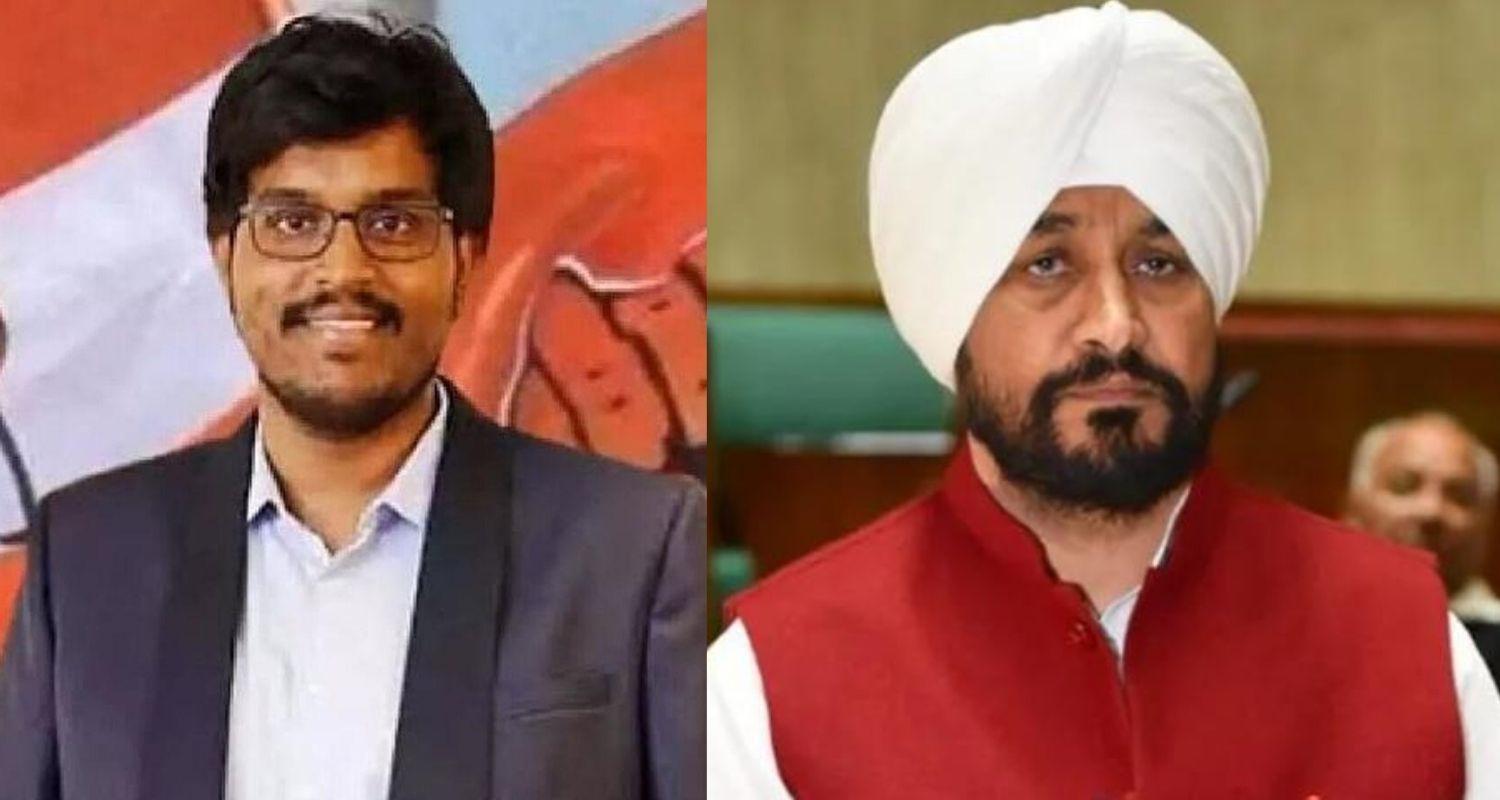
The audacious defiance by former Punjab chief minister Charanjit Singh Channi against his own party high command has a “strategic” reason that ended up in error. For a while, Channi was made to believe that on the basis of grassroots feedback collected by the party’s in-house poll strategist, he was not only going to be the face of the party for the 2027 assembly elections, but he actually was the only face the party could bank upon and who could navigate it to victory.
When there were consultations and deliberations going on for the appointment of a new PCC president in Punjab, Channi was relaxing in the safe knowledge that his appointment was a foregone conclusion. But when the actual announcement was made, Channi was shocked. He was not appointed the PCC president. Instead, he was nominated chairman of the campaign committee, while Amarinder Singh Raja Warring was retained as PCC president. This means Channi will not have any say in allotting the party tickets.
The Congress’ in-house poll strategist Sunil Kanugolu is understood to have recommended to the party high command to appoint Channi as PCC president and project him as the chief ministerial face, without announcing him so. Channi obviously had been briefed about it. Being former chief minister and also Dalit, he was convinced that the party high command, with advice from Kanugolu, will for sure hand over the reins of the party to him ahead of the 2027 assembly elections.
Once the expectations have risen so high, any contradictory decision is deeply disappointing. That precisely is the case with Channi. Having been sounded about an all-important role and then being merely appointed the chairman of the campaign committee must indeed have been greatly disappointing for the former chief minister.
Kanugolu has been with the Congress for quite some time now. He originally started with Prashant Kishor and both were together with the BJP ahead of 2014 general elections. He claims and shares the credit for the BJP’s spectacular 2014 victory along with Kishor, although both of them had very limited and marginal roles that time.
Also read: Congress high command faces ultimate Punjab test
Over a period, Kanugolu started working separately and eventually ended up being in the Congress after the party failed to reach an agreement with Kishor, who apparently sounded more ambitious and had demanded a powerful position with unlimited clout and authority in election strategy and management.
Kanugolu is credited with successfully strategising Congress victories in Telangana and Karnataka. At the same time, he badly failed in Haryana, where had had advised the party to put all its eggs in Bhupinder Singh Hooda’s basket. The strategy backfired and the Congress snatched away defeat from the jaws of victory.
Although Kanugolu works completely behind the scenes, yet interactions and communications with the concerned leaders of the states he is working in are natural. Kanugolu appeared to base his theory of projecting Channi as the chief ministerial face on his being a Dalit in a state with 32 per cent Dalit population. Surprisingly, he had ignored the fact that this strategy did not work in 2022, when Channi was already at the helm and had in fact, lost even his own assembly segments. The party was routed in Punjab in 2022 and one of the reasons was that Channi was projected as the chief ministerial face.
Obviously, Channi is aware of Kanugolu’s feedback to the party high command about him. He not only feels confident but also aggressive to assert his position, something similar to what his predecessor Capt Amarinder Singh used to do. He appears to be trying to leverage his Dalit identity supported by Kanugolu's feedback.
But the party high command does not sound confident about the “strategic” feedback and put all its eggs in Channi’s basket. Moreover, his defiance of the party high command obviously will not go well. Come what may, it is highly unlikely that defiance and rebellion will be rewarded like that. He is shrewdly using the differences of some senior leaders with incumbent president Raja Warring to present his case. Once the high command starts asserting its position, most of the “rebelling” leaders will fall in line.
There appears to be one more reason for the high command overlooking Kanugolu’s recommendations. The high command does not provide such a free hand to anyone. While Kanugolu recommends, there are others who take the final call. Obviously, there will be some resistance, lest Kanugolu emerges as the final arbitrator of the fate of the leaders and contesting candidates.

 Follow us