
Trending:
BJP sets ambitious target in politically fragmented Punjab
Amit Shah launches BJP’s 2027 Punjab poll campaign, signalling the party will contest alone while banking on a fragmented political landscape and its 19% vote share from the 2024 general elections. Follow us
News Arena Network - Chandigarh - UPDATED: March 14, 2026, 05:28 PM - 2 min read
Representational image.
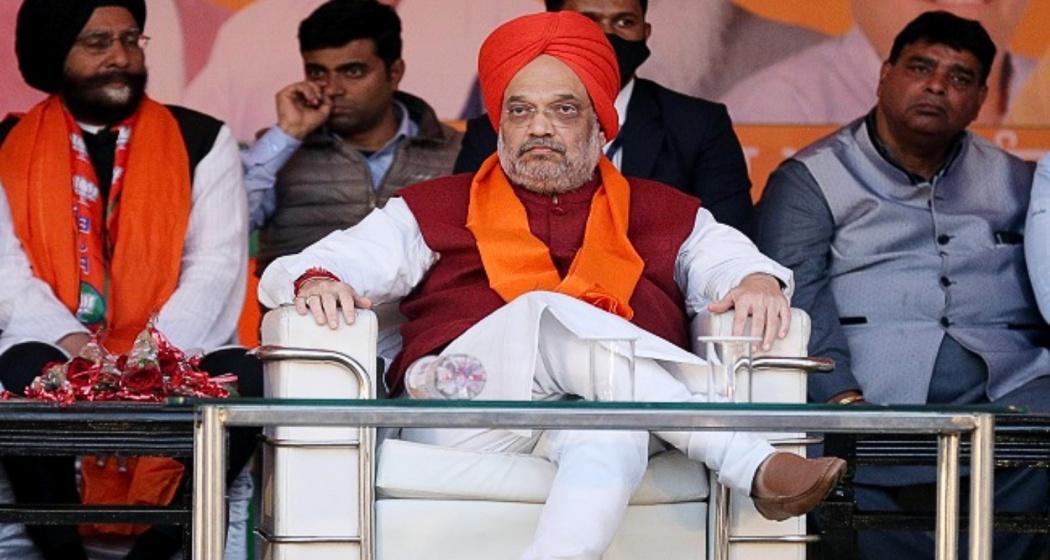
Union Home Minister Amit Shah on Saturday blew the Bharatiya Janata Party’s poll bugle for the battle of 2027 in Punjab. He announced it himself at the Moga rally, saying this was going to be the launch of the party’s campaign for 2027. He also spelt out the party’s agenda in clear and categorical terms, stating that the party will go it alone. That is what he conveyed specifically. He also referred to the earlier alliance of his party with the Shiromani Akali Dal, saying they were treated as “chhotta bhai” (younger brother) without any significant stakes.
The BJP leadership has been repeatedly reiterating and reaffirming that the party will not go for any alliance in Punjab in the 2027 assembly elections. This is despite the widespread perception that if the BJP and the Akalis align together, they stand a strong chance of winning the elections. However, the BJP has been dismissive of all such suggestions. Even senior party leader and two-time Punjab Chief Minister Amarinder Singh has also favoured an alliance, saying without that the BJP cannot form the government in Punjab.
The BJP appears to be banking on the fragmented political landscape in Punjab right now. As Shah himself said, its calculations are based on the outcome of the 2024 General Elections in Punjab.
The party got about 19 percent vote share in those elections, while the ruling Aam Aadmi Party and the principal opposition party Congress got about 26 percent each. The Shiromani Akali Dal got 13 percent.
Although the BJP could not win any of the 13 parliamentary seats from Punjab, its candidates did lead in 23 assembly segments, which indeed is a significant performance. The Congress, with seven parliamentary seats, led in 37 assembly segments, while the AAP led in 34 segments, winning three parliamentary constituencies. The SAD, which won the lone Bathinda parliamentary constituency, led in nine assembly segments.
Shah claimed that whenever and wherever the BJP has reached the 19 percent vote share, it has subsequently formed the government there. He quoted the examples of some states like Orissa, Uttarakhand and Manipur. Theoretically, it is very much possible and achievable in Punjab also. But whether that will translate on the ground in this border state with “diverse demographics” remains to be seen.
In a four-cornered contest, if the BJP wants to form the government on its own, it will have to get at least a 30 percent vote share. The final outcome will still be dependent on the performance of the other three political parties. The BJP’s calculations can work only if the other three contenders, by and large, share an equal percentage of votes. That is not only wishful thinking, but also easier said than done.
The BJP appears to believe that the ruling AAP may suffer further losses due to continued anti-incumbency against the government. People of Punjab are known to vote out incumbent governments. 2012 was the only exception when the SAD-BJP alliance got re-elected. Even then, there was just about a one percent difference in vote share between the winning SAD-BJP and the losing Congress. It was a very close contest in terms of vote share.
Also read: Farooq Abdullah escapes assassination attempt at wedding
The Congress, on the other hand, still remains divided in Punjab right now. Despite a clear warning from Rahul Gandhi, the state Congress leaders have not buried the hatchet and continue to be daggers drawn against each other. Rahul’s warning does not seem to have served any purpose so far.
The Congress, which had indeed gained ground since the 2024 General Elections by winning seven of the 13 parliamentary constituencies, with the AAP a distant second with just three seats, is badly losing in the perception battle. The common refrain on the ground about the Congress is that it is a house divided against itself, and this might well have an adverse impact on its electoral prospects.
The Akali Dal is definitely gaining ground across Punjab, particularly in the countryside. Any gains that the Akalis make will mainly be at the cost of the ruling AAP. In the BJP’s scheme of things, if the Akalis gain only about 6–7 percent vote share over their parliamentary vote share, the AAP will also come down to below 20 percent, which in no case can accord it the final victory in terms of numerical strength in the assembly.
For the BJP, convincing people of Punjab, particularly the swing voters who voted for it during the 2024 General Elections, that it can form the government on its own is an ambitious and tall order. Although Punjabis are known to experiment, whether the BJP will be uniformly acceptable across all segments is difficult to say at this stage.
The BJP has definitely made some deep inroads among different sections of the population. It has three prominent religious ‘deras’ (sects), Sacha Sauda, Dera Ballan and Radha Soami, on its side. That is at least what is being perceived. The BJP does have a strong presence in urban areas among Hindus across Punjab. Whether all these factors will actually add up in the elections is again not very clear.
Another important factor the BJP cannot discount is that parliamentary and assembly elections are fought on entirely different issues. Parliamentary outcomes do not necessarily, and in most cases do not, replicate in assembly elections. Besides, in the 2024 General Elections the BJP swept the urban assembly segments in the name of Prime Minister Modi. The completion of the Ram Temple in Ayodhya also played an important role.
If the BJP is able to retain those additional voters who voted for it in 2024, it will certainly make a large difference. Plus, there is a feeling among a large section of people that Punjab needs a friendly government at the Centre that can bail it out. Maybe the “double engine” theory clicks. But again, easier said than done, even for a political behemoth like the BJP that has mastered the art of winning elections against all odds.
