The war between Iran and the United States, which has remained largely silent for more than 40 days, now stands at a dangerous crossroads. Will it erupt again or gradually subside? Mixed signals from both sides are creating deep uncertainty.
While Iran, Pakistan and Oman are pointing towards possible de-escalation through diplomatic channels, the United States appears to be keeping both military and diplomatic options very much on the table.
This shift seems to have come after US President Donald Trump’s visit to China, accompanied by top American billionaires, which ended in what many observers describe as a diplomatic disappointment. China reportedly refused to align with most of Washington’s key demands.
This outcome appears to have given Iran some breathing space and renewed confidence, knowing its largest crude oil buyer stood firm during difficult times. However, this sense of overconfidence could prove dangerous for the Iranian regime.
Iran at its lowest point
The country is teetering on the edge of internal instability, not necessarily because of an imminent US invasion, but due to growing public resentment against the current regime led by Mojtaba Khamenei.
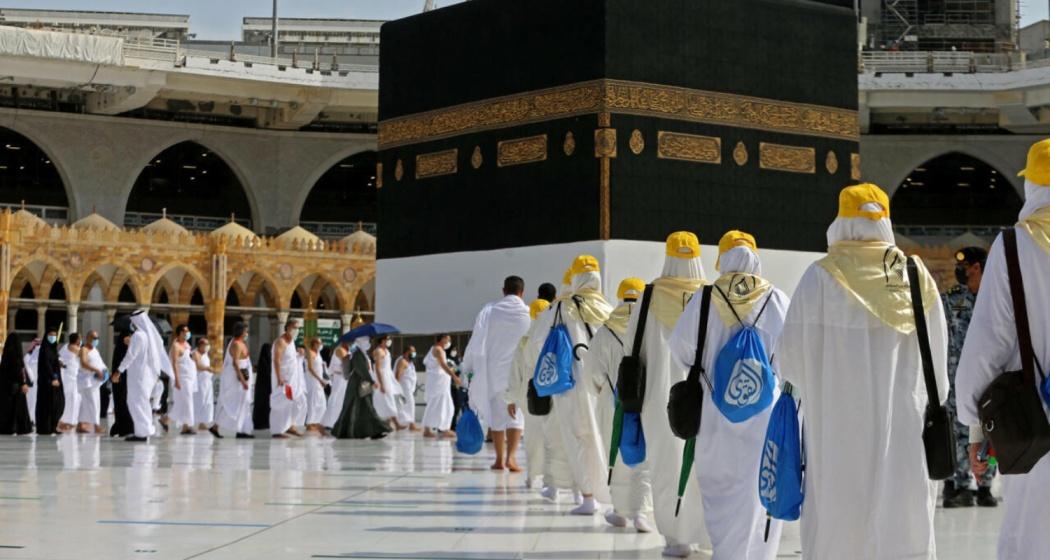
There are high chances that the US may launch fresh strikes on Iran after the conclusion of Eid and the ongoing Hajj pilgrimage in Saudi Arabia.
The economic burden on the Iranian population is at an all-time high — a perfect recipe for internal unrest. Food inflation has skyrocketed while unemployment has surged to record levels.
If the US proceeds with a ground invasion alongside airstrikes, it could spell disaster for Iran’s territorial integrity. The US and Israel have reportedly been exploring the possibility of balkanising the country, similar to what happened in Syria, Iraq, Sudan, Yemen and Libya.
While armed groups challenged governments in those nations, the strategy against Iran may involve different tactics but the same end goal.
The United States has a strong stated reason to act — tracking down and destroying Iran’s enriched uranium stockpile, which remains a major red line for Washington.
Risk of wider conflict
Any ground operation would be extremely daunting. US forces could suffer heavy casualties, reminiscent of the Vietnam War.
Iran, despite being militarily weaker, is prepared for a prolonged asymmetric conflict, relying on its decentralised command structure and ability to turn the entire region into a battlefield.
The odds of Iran attacking neighbouring countries in a fresh escalation are quite high, though this strategy could backfire as regional powers have already begun bolstering their defences.
Saudi Arabia, in particular, has significantly strengthened its military capabilities. Pakistan has deployed nearly 8,000 Special Forces personnel, along with a squadron of JF-17 fighter jets, air defence systems, anti-drone units, engineers and large stockpiles of ordnance to protect the kingdom.
Pakistani officials have stated that Islamabad could deploy up to 80,000 troops in case of any emergency.
This level of Pakistani involvement sends a clear signal that any fresh US-Israel military strike on Iran could be far more intense and prolonged than before.
Another round of escalation involving Iran, Israel and the United States could also bring two long-standing ideological adversaries — Israel and Pakistan — face to face for the first time in more than 78 years. If that happens, the consequences for global peace and stability would be immeasurable.
While Iran and the United States continue diplomatic manoeuvres, it increasingly appears that both sides are simply buying time to prepare for a major and potentially destructive new phase of conflict.
Economic fallout and India’s concerns
If the conflict reignites, the already fragile global economy could slip into a deep recession, leaving scars far worse than those witnessed during the Covid-19 pandemic.
According to various economic estimates, the Iran-US war has already caused losses exceeding $350 billion for Iran and around $120-150 billion for the US and its allies in direct military spending, disrupted trade and higher energy costs.
A more catastrophic scenario involves nuclear fallout. If Iran were to detonate or lose control of its nearly 63 per cent enriched uranium stockpile during strikes, or if the US accidentally triggers an explosion at one of the nuclear sites, radioactive contamination could spread across the region.
Such an event could affect several South Asian and Southeast Asian countries, potentially causing long-term health crises, including increased cancer rates among millions of people.
A more realistic and balanced approach would involve the international community, particularly major powers like China and Russia, pressing for a mutually acceptable solution. India has a unique opportunity here.
As one of the few countries with strong bilateral ties with the US, Iran, Israel and the broader Gulf region, New Delhi could play a constructive mediation role.
This would not only help de-escalate the crisis but also significantly raise India’s geopolitical profile on the global stage.
For India, the stakes are particularly high. Nearly 80-90 per cent of its oil and energy supplies come from the Gulf region. The country cannot afford to remain a passive observer.
Since the war broke out on February 28, India’s economy has slipped from the fourth to the sixth largest in the world, largely due to surging energy costs and supply disruptions. Any fresh escalation could push the country into serious economic trouble.
The coming days will be critical. Whether diplomacy finally prevails or the region slides back into open conflict remains to be seen.
One thing is clear — the cost of failure will be paid not just by Iran and the US, but by the entire global community.
By Waseem Ahmad Ganie

 Follow us