
Trending:
Death with dignity
Though the landmark judgment came as a huge relief for those who want to exit this world with dignity instead of prolonging the suffering by extending the life support system in an incurable vegetative condition, there are also genuine apprehensions over possible misuse of this provision. The sick and elderly people can become vulnerable to the devious plans of their greedy relatives eyeing for properties. Follow us
News Arena Network - Chandigarh - UPDATED: April 5, 2026, 01:25 PM - 2 min read
The right to death with dignity is no less important than the right to live. The recognition of an individual’s right to exercise bodily autonomy is a sign of maturity in any evolved society.
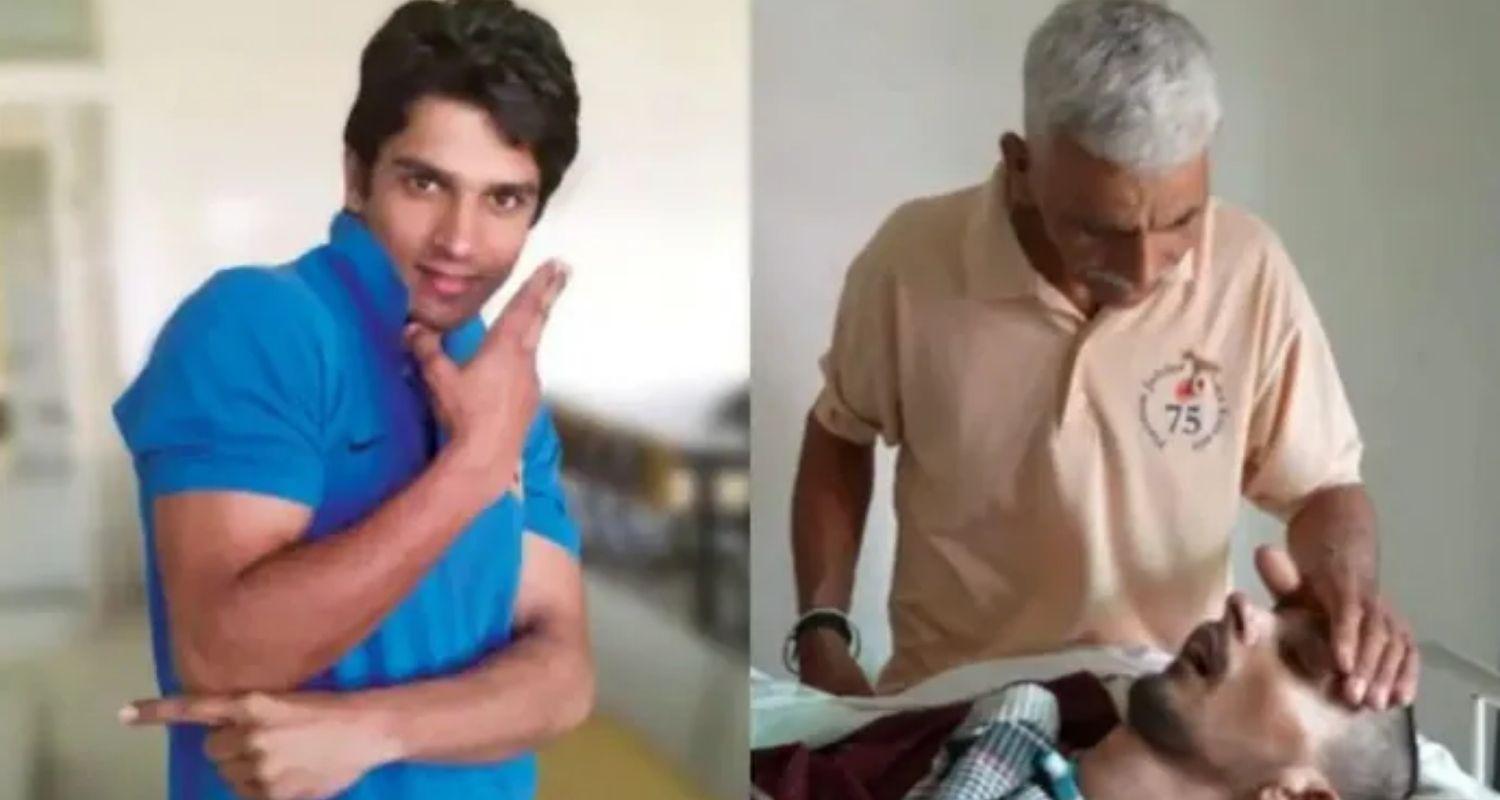
Harish Rana, a vivacious teenager from Ghaziabad, suffered severe head injuries when he slipped and fell from the fourth floor of his paying guest accommodation in 2013.
He has been in a coma since then.
Rana’s parents left no stone unturned to provide him the best treatment, but to no avail. With no chance of recovery, he remained in a vegetative state.
Nearly 13 years later, his case has become India’s first judicially approved instance of passive euthanasia—an act of withdrawal or withholding of life-sustaining treatment to allow a patient with no reasonable prospect of recovery to die naturally.
Thirty-two-year-old Rana breathed his last at AIIMS in New Delhi on March 24, nearly two weeks after the Supreme Court, in a landmark judgment, allowed withdrawal of artificial life support to him in a ‘humane manner’ as he has been languishing in a vegetative state for more than a decade.
The doctors had already concluded that there was no chance of recovery and that the life-sustaining treatment would no longer be in the patient’s best interest. The apex court noted that Rana was kept alive only through clinically administered nutrition via 'percutaneous endoscopic gastrostomy' tubes.
Both the primary and secondary medical boards that the SC had constituted last year agreed that the continuation of the treatment merely prolonged biological existence without any possibility of recovery.
Complex ethical dilemma
In a culturally sensitive and complex society like India, the debate surrounding euthanasia raises several ethical and legal questions. Not surprisingly, making laws on euthanasia or assisted dying is fraught with several dilemmas. For any government, the issue presents a minefield of ethical dilemmas.
However, the harsh reality is that thousands of patients are stuck in vegetative state with absolutely no hope of recovery, burdening their families emotionally and financially. The absence of a law on euthanasia complicates the situation for the terminally ill patients and their families.
For Rana’s family, the trauma has been heart-wrenching. His parents kept unwavering vigilance on his health and cared for him in his darkest hours. However, with no improvement in his condition despite best efforts by doctors, they had to make the toughest choice of their life. They approached the court, seeking euthanasia for their son to liberate him from the agony and suffering. One can imagine the agony they would have undergone during this period.
Exit with dignity
The right to death with dignity is no less important than the right to live. The recognition of an individual’s right to exercise bodily autonomy is a sign of maturity in any evolved society. There is a growing consensus now among the judiciary that forcing patients to remain in an irreversible vegetative state may undermine human dignity.
There is a strong case for evolving a national policy on euthanasia in accordance with the spirit of the constitution that recognises the rights of terminally-ill patients.
Euthanasia or active voluntary euthanasia is legally permitted in several countries including Australia, New Zealand, Canada, Belgium, Colombia, Ecuador, Luxembourg, the Netherlands, Portugal and Spain. These countries allow medical professionals to actively administer life-ending medication, usually under strict conditions for terminal or unbearable illness.
Last year, the British House of Commons passed a legislation—the Assisted Dying Bill—signalling a major turning point in the country’s approach to individual rights at the end of life.
Also read: In a first, Supreme Court allows passive euthanasia
The legislation gave terminally ill adults the legal right to choose the timing and manner of their death. This is an issue that sits at the uneasy intersection of personal dignity, medical ethics, and societal responsibility. The final approval by the British Parliament suggests that society is slowly recognising the need to uphold dignity in death.
At its core, the debate boils down to the sanctity of choice versus the sanctity of life. Individuals facing imminent death should have the right to decide how their final days unfold. To deny this is to risk trapping people in drawn-out, degrading circumstances where suffering outweighs hope.
Historic verdict
In India, the Supreme Court delivered a historic judgement in March 2018, giving a legal nod to “Living Will”, which empowers individuals of sound mind and health to leave explicit instructions in advance about the medical treatment to be administered when they become terminally ill and can declare in advance that their life must not be prolonged if they slide into a vegetative state. They can authorise any relative or friend to decide, in consultation with medical experts, when to pull the plug.
In a follow-up to the progressive move, the apex court, in January 2023, removed the condition that mandated a magistrate's approval for withholding of life support to a terminally ill person.
In fact, the SC apex court had pulled up the Centre for failing to enact a law on passive euthanasia in accordance with its 2018 judgement upholding the right to death with dignity. In order to make the guidelines on ‘Living Will’ more workable and less cumbersome, the top court has done away with the provision of getting magistrate’s approval for withdrawing the life support to a terminally ill person. The document will now be signed by the executor of the ‘Living Will’ in the presence of two attesting witnesses, preferably independent, and attested before a notary or Gazetted Officer.
The 2018 verdict, allowing passive euthanasia, recognised the right to die with dignity as a fundamental right in the spirit of Article 21.
Genuine apprehensions
While seeking to find a balance in the relationship between life, death and morality, the court rightly pointed out that burdening a dying patient with life-prolonging treatment would be destructive of his or her dignity and in such a situation individual interest has to be given priority over the State interest.
Though the landmark judgment came as a huge relief for those who want to exit this world with dignity instead of prolonging the suffering by extending the life support system in an incurable vegetative condition, there are also genuine apprehensions over possible misuse of this provision. The sick and elderly people can become vulnerable to the devious plans of their greedy relatives eyeing for properties.
The Supreme Court has effectively addressed these fears by putting in place robust set of safeguards by involving multiple medical boards comprising several experts and judicial officers to prevent the misuse.
The court also wanted a medical board to determine whether the patient in a vegetative state could be revived or not. And, the relatives of a patient who has not written a living will can now approach high courts asking for passive euthanasia. The important fallout of having the system of living will is that it would free the family members and doctors of the moral dilemma on how long to continue the life support system in clinically irretrievable cases.
The possibility of a small section of people misusing certain provisions of a law should not be a valid ground for rejecting the idea altogether. The right to die with dignity is an intrinsic facet of the right to life guaranteed under Article 21.
