It is not the first time that some prominent and influential leaders have left the Aam Aadmi Party. Since all the seven people who deserted and defected to the Bharatiya Janata Party are sitting Rajya Sabha MPs, it has felt exponentially explosive and impactful. All of them were ‘nominated’ by the AAP itself.
The AAP ‘had’ 10 MPs in the Rajya Sabha. With seven having decided to join the BJP, they will not come under the ‘Anti-Defection Law’, since their number is more than two-thirds of the total strength of the party in the Rajya Sabha. Even if they had fallen short of the two-thirds proportion, they would still have survived the ‘Anti-Defection Law’ for the obvious reason of having joined the ruling party, to which the Chairman of the House belongs.
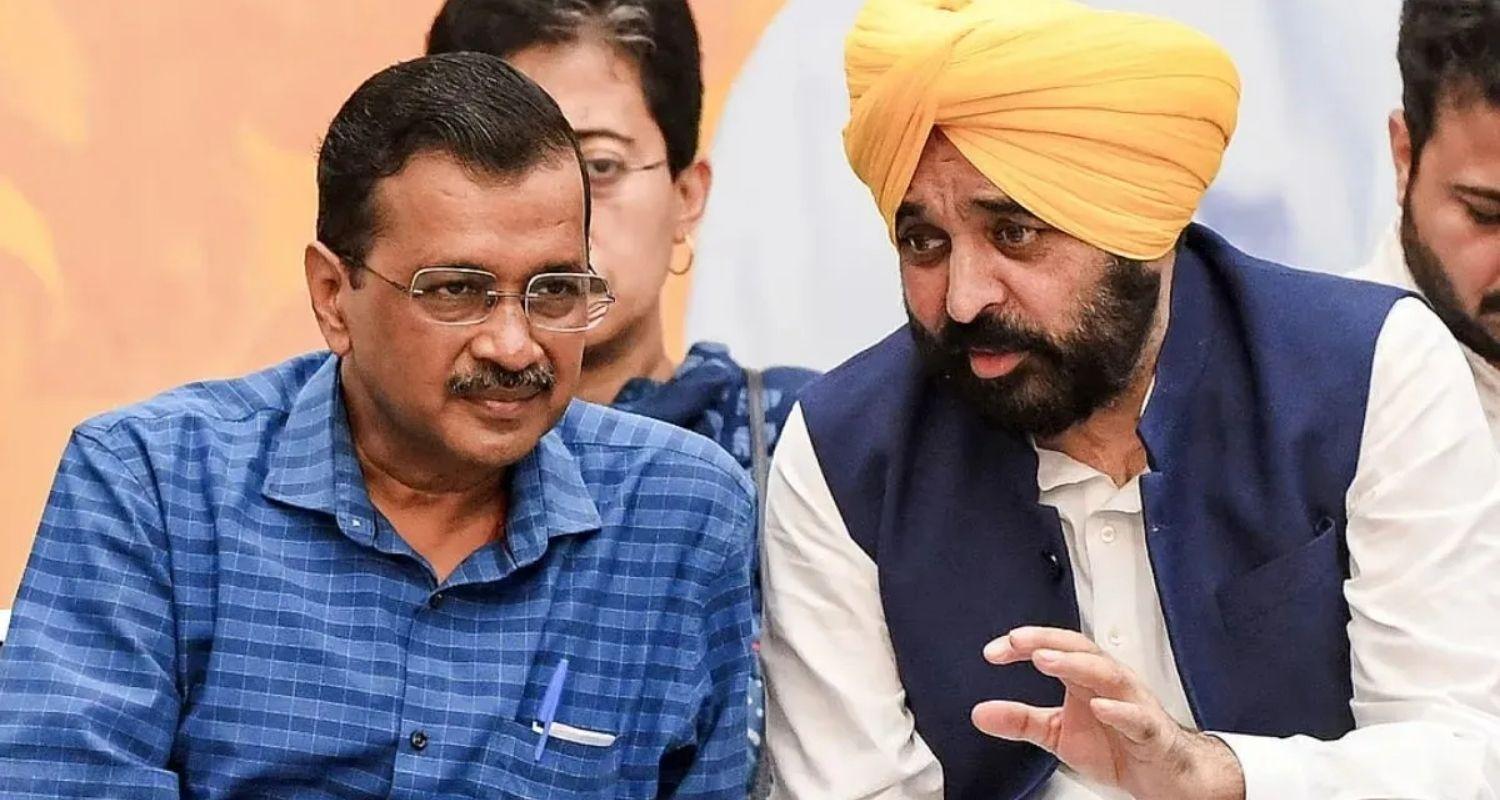
AAP supremo Arvind Kejriwal and Punjab Chief Minister Bhagwant Mann’s reaction that these seven MPs and the BJP have “betrayed” Punjab and that the Punjabis will never forgive them does not hold any ground. Nor do such protestations resonate anywhere in Punjab, not even among the AAP cadres.
Punjabis in general, and the AAP cadres in particular, had felt “betrayed” the day seven MPs were ‘nominated/fielded’ by the AAP four years ago from Punjab. Except for Sandeep Pathak and Raghav Chadha, none of them had any political background. For that matter, both Pathak and Chadha were outsiders and not from Punjab.
Of the remaining five, three, including Sanjeev Arora, Ashok Mittal and Vikramjit Singh Sahney, were big businessmen with deep pockets. It was widely alleged and believed across Punjab and outside that these three MPs were ‘nominated/fielded’ for particular considerations ahead of the party’s Gujarat elections that required huge expenditure. Obviously, these three people did not have any ideological commitments. Rather, they did not have any commitments at all towards the party or the people of Punjab. They struck the “deal” with whatever “resources”, for their own exclusive personal interests.
The “deal” was mutually lucrative for both parties. Such “deals” usually come with an expiry date, which the AAP must have realised now.
Sanjeev Arora quit the Rajya Sabha midway in 2025, although reluctantly, as he was made to contest the Ludhiana West by-election, which he won. He was appointed a minister and given charge of three of the most important ministries in the government — Industries, Power and Local Bodies. After he recently faced Enforcement Directorate raids, his future political course of action has also come under speculation. Ashok Mittal was also raided by the ED before it raided Arora.
After Arora resigned from the Rajya Sabha, there were speculations that Arvind Kejriwal might himself replace him. He declined — a decision he must be regretting now in hindsight. Instead, the AAP ‘nominated/fielded’ Rajinder Gupta, another “big moneybag”, who does not have any history, record or contribution to public life. Gupta has also resigned from the AAP and is supposed to join the BJP. He is known for having “cordial” relationships with every party, without exception.
The other two people that the AAP ‘nominated/fielded’ for the Rajya Sabha include Balbir Singh Seechewal, an environmentalist, and Harbhajan Singh, the popular Indian cricketer. These nominations, if done in the normal course, would have won accolades from people. But these were overshadowed by the nomination of the big ‘moneybags’. While Seechewal, as of now, continues to be with the AAP, Harbhajan, according to Raghav Chadha, has also resigned from the AAP and will be joining the BJP.
The AAP, in its 14-year lifespan, has seen many desertions/exits, which were primarily attributed to the way of functioning of its supremo Arvind Kejriwal. They include Kumar Vishwas, Prashant Bhushan, Yogendra Yadav and Ashutosh, just to name a few. All of them had unparalleled contributions towards building the AAP. None of them has joined any other political party. Although Yadav has aligned with the Congress from time to time, he has not formally joined the party.
The seven who left the party and joined/joining the BJP actually did not have any reason. People like Pathak, Chadha and Swati Maliwal had been rewarded by the party for their contribution, and their deserting the party, for whatever reasons, will be difficult for them to justify. Even Harbhajan defecting to the BJP is surprising. He had been specially honoured by the AAP for his contribution to cricket and his international reputation.
For MPs like Ashok Mittal, Vikramjit Singh Sahney and Rajinder Gupta, it hardly makes any difference whether they are with the AAP or the BJP or any other party, as long as their business interests remain safe and they do not face difficulties such as “investigations and inquiries”. Of course, questions could and would have been raised about the “secret” of winning the confidence of the AAP and its leader that they were considered for Rajya Sabha nominations despite having no prior experience of political or public life. They chose to avoid any possibility of such questions and treaded the path already taken by many before them.
There is already considerable buzz in the public domain about the reasons for their “managing” the Rajya Sabha nominations. Parallels were drawn with similar nominations/elections of ‘then’ big businessmen and industrialists like the “legendary” Vijay Mallya and later KD Singh, whose “credentials and qualifications” for getting “elected” to the Rajya Sabha were hidden from no one.
What the AAP will need to worry about now is that the “mass exodus” of its Rajya Sabha MPs to the BJP can trigger a similar exodus of MLAs in Punjab as well. In Punjab, these MLAs have multiple options and not just the BJP alone. Also, an overwhelming majority of these MLAs have no ideological commitment towards the AAP. They were either picked randomly or had joined from other parties.
If people like Raghav Chadha and Sandeep Pathak can desert the same party of which they were founding members, others can always do so when their stakes are far less and when Assembly elections are drawing closer, leaving no scope for a by-election. The group of “seven deserters” may not hold much influence on the ground in Punjab, but they can certainly trigger a similar exodus there as well.
No matter how much power they may have enjoyed, a significant number of AAP MLAs have one grievance or another — enough for them to look outside, especially when inducements, temptations, persuasions and, of course, pressure become irresistible. That is what the AAP should be concerned and careful about.
After all, it is not just the AAP and Manish Sisodia who know the art of ‘Saam, Daam, Dand, Bhed’ in politics. There are many more, and probably better experts in this “skill”.
Also read: MP exodus unlikely to alter AAP, BJP fortunes in Punjab

 Follow us