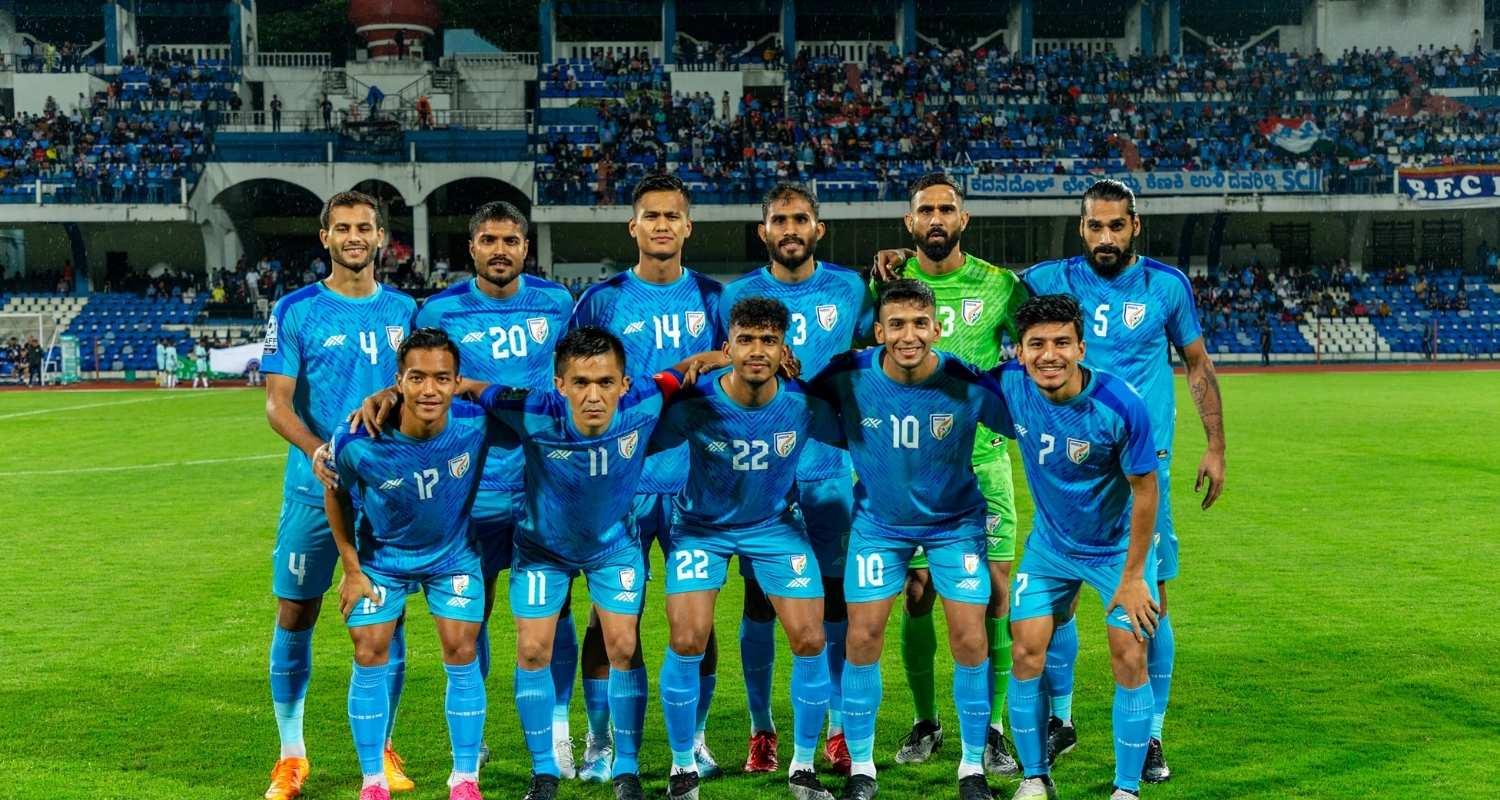
India’s soccer team has never qualified for a FIFA World Cup tournament since 1950.
Yet a staggering 59 per cent of Indians watched Spain and Argentina slug it out on the pitch. This is not where India’s soccer irony ends. This is where it begins.
Every four years, the FIFA world cup brings this very paradox to the fore. As per IPSOS survey, a staggering 59 per cent of Indians watched the finals, with Argentina commanding a strong backing. It credited several factors with contributing to a large audience—high anticipation shaped by strong players, late-night viewing and weather uncertainties.
It’s a well-documented fact that cricket is followed like religion in India, clocking in roughly 610 million. Statistically, soccer comes a distant second. A 2025 KPMG report estimated a whopping 300 million football viewers in the nation.
Despite the 300 million football fans, the Indian Super League has a different story to narrate. Struggling viewership has made football a commercially challenging investment, risky even.
When it comes to FIFA, Zee Entertainment has secured the rights to all the tournaments straight up till 2034 for over a whopping $30 to $35 million. Compare this to Indian Super League media rights for the 2025-26 season and it fetched a measly Rs 9 crore with FanCode securing the broadcast rights. The valuation took a sharp hit from the last two seasons when the media rights were secured for a total of Rs 550 crore. The gap is telling and so are the numbers.
The league itself has been a victim of prolonged commercial disputes, with several clubs contemplating the possibility of a permanent shutdown. The political repercussions involving Sports Ministry and All India Football Federation have taken their share of the toll on the football ecosystem.
During an appearance at a literature festival, former Indian striker Bhaichung Bhutia partly put the onus on the viewers, apart from the national sporting bodies. “When it is family viewing time, why would you tune into soap operas or other dramas, and not watch sports instead. That is how the sporting culture is developed.”
Indian football fans have always done justice to global soccer icons. Lionel Messi’s three-day India tour being the most recent case in point. While a Cristiano Ronaldo or a Manchester United in the English Premier League scores on the viewership metric, Indian soccer fails. During Messi’s India tour, Bhutia too rued how Indian fans and corporate sponsors are willing to spend massive amounts of money on global stars but often fail to channel even a fraction of the same financial backing into domestic sports.
Also read: Spain neutralised Messi: Former Indian footballers
Several professionals from the fraternity have opined that there is potential for Indian fans to redirect their attention to local talent, but while there is potential, there is no plan for the same. First and foremost, the nation needs a structural mechanism to build local talent; the one masses widely connect with. A sport needs stars, it needs a successful league and the eyeballs will follow.
So far, India’s football attention is largely directed overseas. Reportedly, Indian viewers spent 4.9 billion minutes watching the English Premier League in 2022. That figure was 88 per cent higher than in 2021.
When the politics takes over, the sport suffers
Allegations of infrastructural flaws in the workings of All India Football Federation (AIFF) have surfaced every now and then. With the most recent instance being of former India coach Stephen Constantine opining how Indian football is in “free fall” while calling for sweeping structural reforms. Constantine, who served as the head coach of the Indian national team from 2002 to 2005 and 2015 to 2019 is widely credited with taking the team to its historic high in the FIFA rankings.
The bureaucratic rules too stand in the way, with financial considerations being a strong factor. Indian football teams—both men and women were withdrawn this year from Asian Games 2026 despite qualifying. Scheduled to take place in Japan’s Aichi-Nagoya from September 19 to October 4, both Indian football teams are set to miss out the games after failing to meet Indian sports ministry’s selection criteria which permits only national teams ranked among Asia’s top six to participate in the Asian Games. The move garnered significant attention on social media, with the ministry facing backlash over how players need adequate exposure and chances. Defending the decision, Sports Minister Mansukh Mandaviya stated that the games were not “an exposure tour” and they will only sign in on teams with prospects of delivering medals.
The world's most populous country has been out of the world’s most popular sport for over half a century now. Unfortunately, it is neither due to lack of talent nor due to lack of viewers but literally everything else.
By Manpriya Singh

 Follow us