In a war, everyone loses—even the winners. The loss of lives, resources, relations have found a generous space and place in books, cinema and art. However, the same cannot be said of the environmental impact of war. The carbon footprint left behind by any military endeavour gets lost in the loud newsroom discussions around power-drunk leaders and fighter jets.
A new study turns down the background noise on geopolitics and brings attention to the environmental cost of war collectively faced by mankind. Military exercises and maintenance doesn’t just involve staggeringly large defence budgets, but a carbon footprint whose repercussions extend to the entire planet.
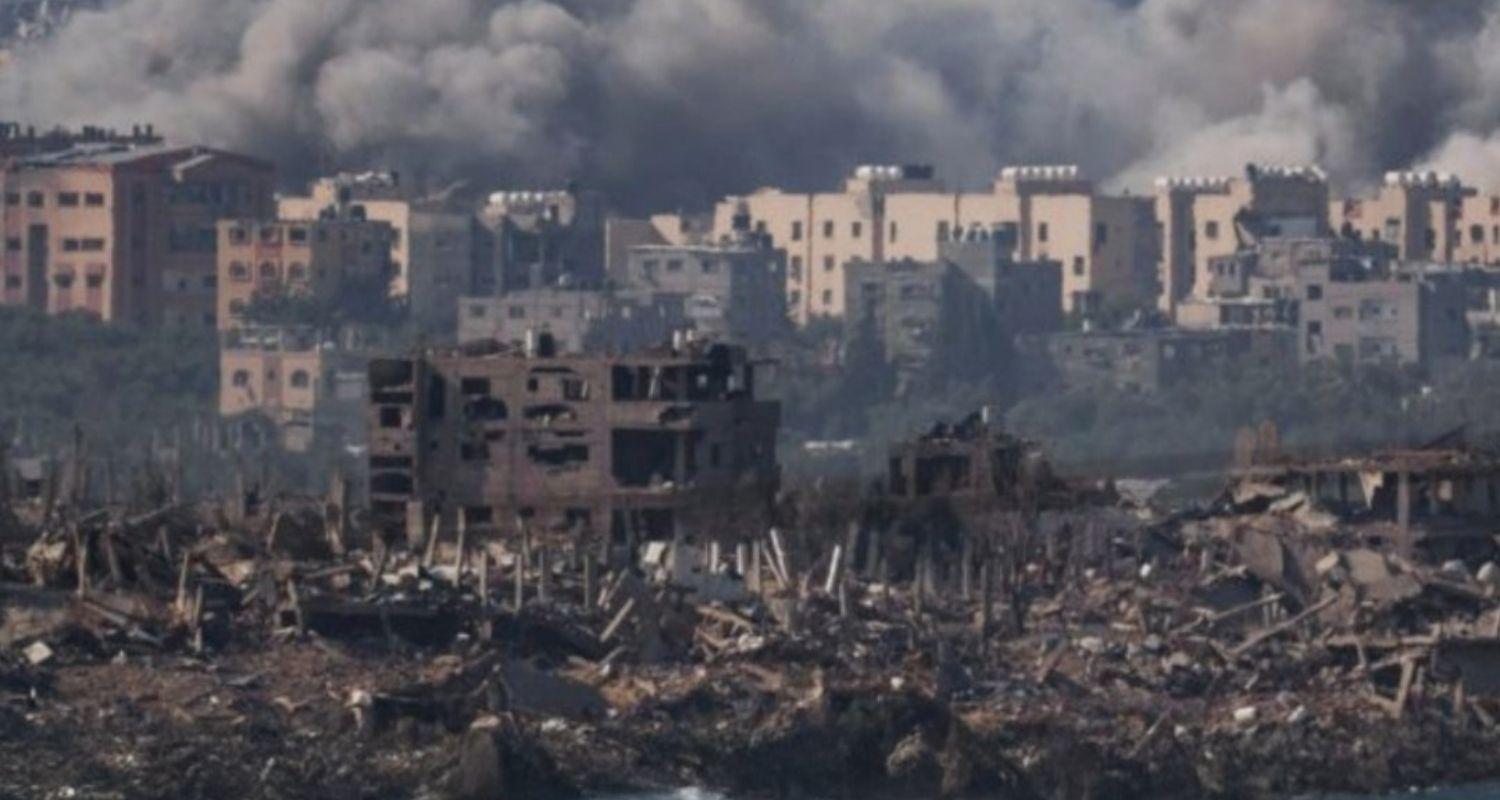
According to a report, Israel’s 15-month war on Gaza has caused not just unprecedented loss of lives and infrastructure, but also led to massive greenhouse gas emissions due to all the war-related activities — estimated to be higher than what as many as 36 countries emit in an entire year.
The findings of the study titled War on the Climate, published by researchers from Queen Mary University of London, Lancaster University, among others, are an eye-opener. The report published in the Social Science Research Network also makes an attempt to quantify the carbon footprint of war. “These calculations point to the urgent need for increased visibility and mandatory reporting of military emissions for both war and peacetime,” said the authors. It further says that the war’s direct carbon toll was measured at 1,898,330.9tCO2e — generated by aerial bombardment, ground assaults, weapons, vehicular and ammunition movement.
As if the huge civilian death toll was not grave enough, climate loss accelerates the cost of war and the entire humankind and future generations pay for it. This hasn’t been the only report or study to have firmly pointed at the environmental hazard that military maintenance and defence budgets entail.
As per another report by the Conflict and Environmental Observatory, the CO2 emissions of the largest militaries are greater than many of the world’s countries combined. It also estimates that militaries are responsible for 5.5 per cent of all greenhouse gas emissions globally. Furthermore, it also attempts to quantify the impact of military conflicts. As per the report the “first three years of Russia’s invasion of Ukraine generated 230 MtCO2e – equivalent to the annual emissions of Austria, Hungary, Czech Republic and Slovakia combined.”
War or no war, it’s costing the planet
Even when the militaries are not actively engaged in conflicts or escalation, the entire ecosystem of weapons and war bleeds the planet. Military lands are believed to cover prime and significant areas of roughly 1-6 per cent of global earth surface. The vehicles, aircraft, buildings, systems, infrastructure and maintenance require copious amounts of energy, minerals and metals. Many of these things can never be truly quantified. Furthermore, high intensity active conflicts require and consume vast quantities of resources in terms of fuel, damage and destruction.
No obligation to report ‘conflict emissions’
What is even more unfortunate is the lack of accountability. Military emissions reporting to the UN Framework Convention on Climate Change is poor. As per United Nations, in 2023 alone, over 170 armed conflicts were recorded. By the end of the year, nearly 120 million people worldwide were forcibly displaced due to persecution, conflict, violence and destruction.
According to the World Health Organisation (WHO), by 2023, more than 97 percent of Gaza’s underground water (once sweet and fit for consumption) was unfit for drinking. Apart from the depleted water tables, toxic infiltration of soil, land and water, the U.N agencies estimate that the war in Gaza has created more than 40 million tons of rubble. This contains human remains, asbestos, hazardous material and unexploded ordnance, thus making it almost impossible to negate the environmental damage for a very long time.
As concerning as the statistics is the lack of legal implications. Current UN climate reporting laws and obligations are voluntary in nature, thus making it non-mandatory for countries to report their military emissions separately. It’s time for urgent policy review, for countries to be made accountable for the real cost of wars.

 Follow us