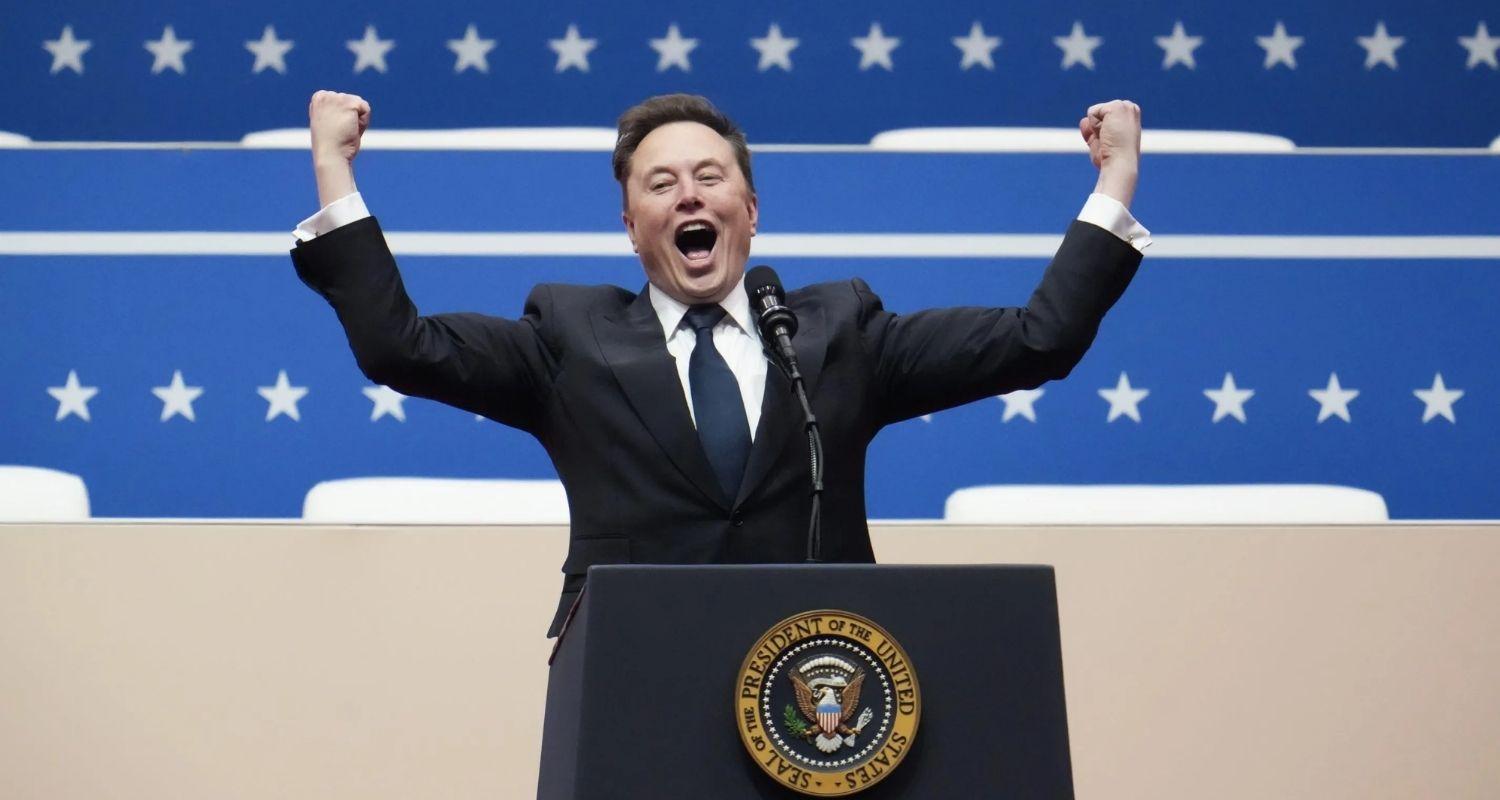
Last month, SpaceX shares went public and Elon Musk hit a milestone that was unimaginable a decade back. The tech billionaire further moved to a four-comma net worth comprising one trillion dollars and those from the power corridors of politics, business and technology could be seen digitally tripping over each other to congratulate him. What many celebrated as a reminder of the human and economic feat, others treated it as a wake-up call of widening inequalities. Senator Bernie Sanders called it an “absurdity,” while Sen Ed, D-Mass, Markey called it, “disgusting,” adding, “While working people struggle to get by, the billionaire class is becoming the trillionaire class.”
Senator Elizabeth Warren did take notice of Musk’s trillionaire status, but not before drawing attention to inhuman comparisons through a social media post, adding how, “a typical American household would have to work more than 11 million years to make Elon Musk’s level of wealth.” Comparisons that tech influencers, space industry advocates and Wall Street insiders shrugged off.
What is being dismissed as a battle of the perspectives, is in fact an omen of the grass root reality—the widening wealth gaps have triggered anti-billionaire sentiments across the globe.
What’s accelerating this sentiment?
Unprecedented concentration of wealth and inflation. Those at the forefront are human rights activists, labour coalitions, climate organisations and young adults adversely affected by the business practices and policies of the billionaire class.
Anti-billionaire activism gains momentum
Last year, Labour Day witnessed hundreds of protests organised across the United States as part of the national "Workers Over Billionaires” momentum. The mass action aimed at calling for the protection of the social safety nets such as social security, funding of public schools, healthcare, and housing amid other demands. The rallies, flooding the streets of multiple cities in the US and social media alike, had one sentiment running through every rallyist—enough of the exploitative billionaire club.
This year, Zohran Mamdani’s win as a mayor of NYC was largely interpreted as a concrete form of anti-billionaire sentiment. Throughout his campaign, the 34-year-old Democrat came steady and saddled with deeply resonating promises of less inflation, more equalities. “I don’t think we should have billionaires,” he said during a television interview knowing fully well, it would be a statement he’d have to defend during every appearance, campaign and interview.
Also read: Musk set to be world’s first trillionaire as SpaceX raises $75B
Poverty is not just a statistic, it is a reality of millions and by that measure, a failure of taxation policies and political structures existing around the world. According to the World Bank Global Poverty Report, in 2025 approximately 800 million people worldwide faced extreme poverty, while surviving on less than $3 per day. While economists have painstakingly explored the vicious circle of poverty, no one has spoken enough about the equally vicious circle of wealth—where those with billions have access to power and policy, while it remains vicious for those outside of the loop.
In 2025, billionaire wealth reportedly grew by 2.5 trillion, with a substantial portion of it coming from untaxed inheritance rather than entrepreneurship. A 2026 report by Oxfam International quantifies the ever increasing inequality among haves and have nots. The billionaire wealth jumped by over 16 per cent in 2025 and reached its highest level in history—$18.3 trillion. The unequal growth has accelerated ever since the Pandemic. Reportedly, the billionaire wealth increased by 81 per cent since 2020. The unequal power structures don’t just exist in terms of net worth but compound in ways unimaginable. It further highlights how, “billionaires are 4000 times more likely to hold political office than ordinary people.”
The report titled “Resisting the Rule of the Rich: Protecting Freedom from Billionaires” also flags concerns about how the “super-rich are securing political power to shape the rules of our economies and societies for their own gain and to the detriment of the rights and freedoms of people around the world.”
In 2020, Kenyan activist and co-ordinator for the Fight Inequality Alliance, Njoki Nejhu went to the World Economic Forum in Davos, with one specific purpose—to tell the truth to those in power and how it was time for the billionaire class to be abolished. Holding the ultra-wealthy responsible for unequal wealth and climate crisis, she once said in a post, “Solutions cannot come from billionaires because they are the problem.”
Last year, during an acceptance speech for an award, Billie Eilish asked a room full of wealthy elite, including Mark Zuckerberg, “If you are a billionaire, why are you a billionaire.” The American singer-songwriter backed up her message with the announcement that she was donating $11.5 million from her last tour to organisations working for global hunger and climate change.
When humour speaks a thousand words
What is the way out? Oxfam has called on governments to prioritise inequality reduction plans, to effectively tax the super-rich, to reduce their power, and to insert stronger firewalls between wealth and politics. While the finishing line stays out of bounds, there is a starting point in sight. If only those in the power corridors pay heed.
They do respond to trolls, however. Memes mocking Jeff Bezos post this year’s MET Gala and Mark Zuckerberg post the Metaverse in 2022 and shaming them for surfeit of wealth and lack of morals flooded the net and continue to do so. Till the issues receives the gravity it deserves, or a resolution, there is humour to fall back upon, or simply come to terms with.
By Manpriya Singh

 Follow us