By VIMAL SUMBLY
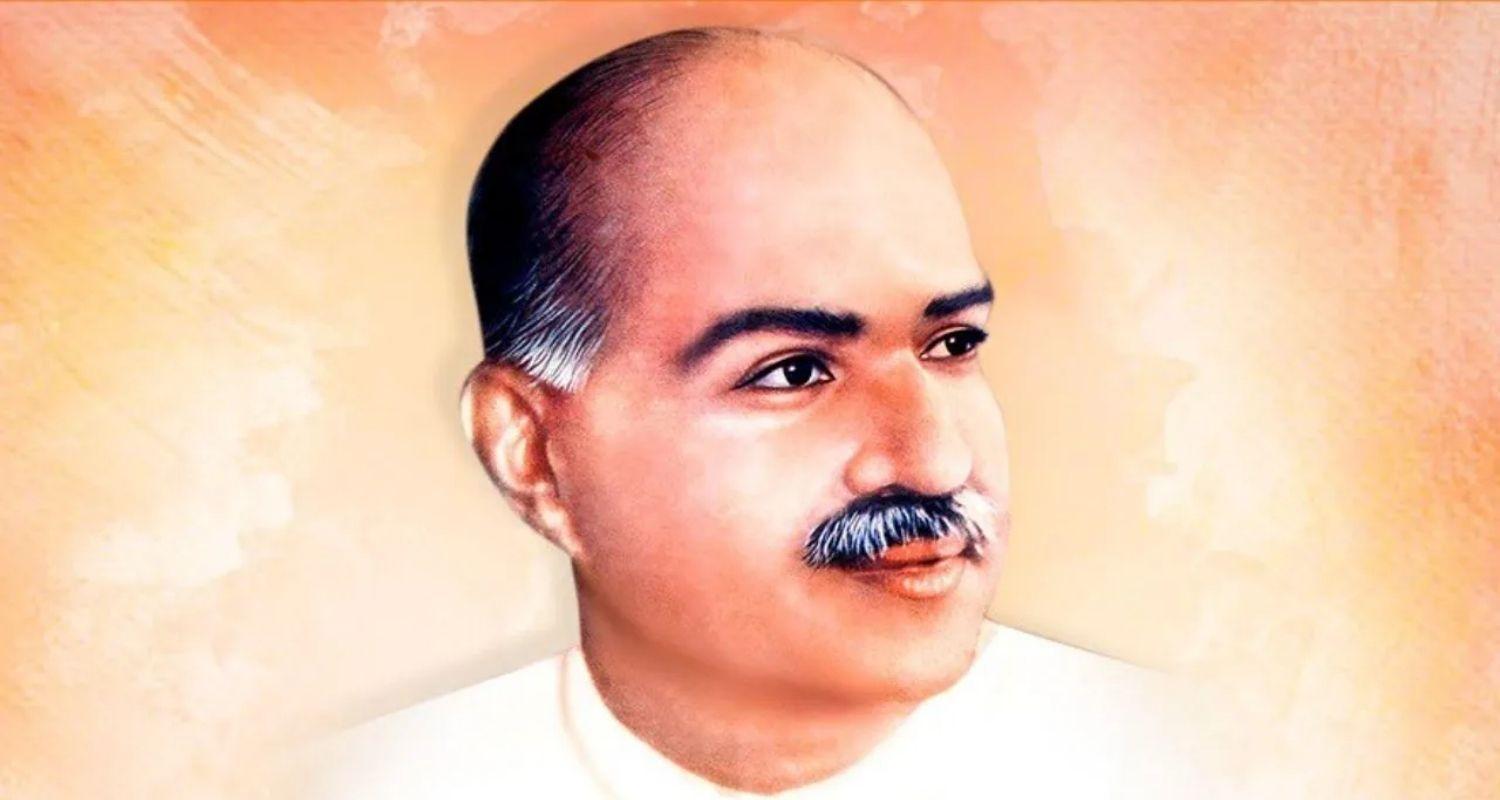
Shyama Prasad Mukherjee is founder of the Bharatiya Janata Party. The foundations of the mammoth edifice of the BJP, that stands tall and towering today, was laid down by Mukherjee in 1951. He had formed the Bharatiya Jana Sangh on October 21, 1951, which was later rechristened as the Bharatiya Janata Party in 1980.
But Mukherjee remains one of the lesser known leaders of the BJP, despite being its founder. June 23 is his death anniversary. He died in the custody of the Jammu and Kashmir government on this day in 1953 after defying the permit system that was in place for entering the state.
His strong belief in nationalism continues to be the BJP’s leitmotif till today. He was the one who opposed “special status” to the state of Jammu and Kashmir and laid down his life fighting against it. Yet, Mukherjee remains far lesser known as compared to many others, both within the BJP as well as outside.
Interestingly, the BJP has been giving preference and precedence to Sardar Patel, the first Deputy Prime Minister and Union Home Minister, crediting him for uniting India after Partition. Compared to Patel, Mukherjee gets just token attention from the party he founded 75 years ago, which has been ruling the country continuously for 12 years now and is in power in 22 states.
This is not to suggest that Patel had any less contribution, particularly when it came to uniting the princely states. He is deservingly described as the ‘Ironman of India’.
Mukherjee was a brilliant academician and holds the world record of being the youngest Vice Chancellor. He was appointed the Calcutta University Vice Chancellor at the age of 33. He later started his political career with the Akhil Bharatiya Hindu Mahasabha. It is under his leadership that the Mahasabha formed coalition governments along with the All India Muslim League in Bengal, Sindh and North West Frontier Province before the Partition of the country.
Mukherjee distanced himself and eventually parted ways with the Hindu Mahasabha in the aftermath of the assassination of Mahatma Gandhi by Nathuram Godse. He strongly disapproved of the assassination and condemned it.
After India became independent, Pandit Jawaharlal Nehru inducted Mukherjee into his first cabinet as the Minister of Industry and Supply (modern day Ministry of Commerce And Industry). However, he resigned from the cabinet protesting against the Nehru-Liaquat Delhi Pact of 1950 related to resettlement of refugees, which he thought did not do justice to the Hindu refugees.
After the then princely State of Jammu and Kashmir duly acceded with India under the Indian Independence Act, for some unexplained reasons the state was provided special status under the Article 370 of the Indian Constitution.
The state was allowed to have a separate Constitution along with the Indian Constitution, a separate flag and the head of the government was designated as “Prime Minister”, unlike the rest of the country where they were designated as chief ministers. The Governor was designated as “Sadar-e-Riyasat” (that roughly translated to President of the state). Mukherjee had said such provision will lead to balkanisation of the country.
Under this arrangement, any Indian citizen from the rest of the country needed a special permission to enter Jammu and Kashmir. This obviously nourished a feeling of “exclusiveness” among a section of people in the state. While a large section of the people, particularly those living in the Jammu region were also opposed to it, majority of those living in the Kashmir region supported the provision.
Mukherjee resisted and defied the idea of “restricted” entry into the state for the people from the rest of the country, besides different designation for the chief minister, separate flag and separate Constitution. He launched the campaign for “Ek pradhan, ek vidhan, ek nishan” (one head of the state, one Constitution and one flag) in Jammu and Kashmir like in the rest of the country.
On May 11, 1953, Mukherjee defied the special law of Jammu and Kashmir trying to enter the state without a permit. He was arrested in Lakhanpur at the border between Punjab and Jammu and Kashmir. He was put in jail where he passed away under mysterious circumstances. The cause of his death was said to be heart attack.
While the permit system for entry to Jammu and Kashmir was removed, it took about 72 years for the country to visualise his dream of removing all obstacles in the complete integration of the state of Jammu and Kashmir with India. On August 5, 2019, the BJP, the party he had founded in 1951, repealed the Article 370.
It is strange and ironic that not many people know that the founder of the BJP was Shyama Prasad Mukherjee. Despite the BJP’s unambiguous and categorical position against regional identities, Mukherjee appeared to remain in the background, probably because his state Bengal took a long time to accept and embrace the BJP.
Ideally, Mukherjee should have the same place in the BJP as Pandit Nehru or Sardar Patel have in the Congress as the party is identified with them. But in case of the BJP, Mukherjee remains on the margins only. Before Prime Minister Narendra Modi and Amit Shah, the BJP was mostly identified with Atal Bihari Vajpayee and Lal Krishna Advani. All these leaders have made immense and obviously much more contribution towards building the BJP than Mukherjee, but that does not negate the fact that he was the founder of the party.
It is intriguing that when the BJP can glorify Sardar Patel to such levels, despite him having been a Congressman who had banned the Rashtriya Swayamsevak Sangh in the aftermath of Mahatma Gandhi’s assassination, why can’t it treat its founder the same way, if not better.
Not that Mukherjee is completely forgotten, but he deserves much more than token remembrances through customary social media posts remembering his “balidan” (sacrifice).
With the BJP now in power in West Bengal, the party should consider erecting his memorial in Kolkata, the city he was born in, like the party has built up Sardar Patel’s memorial, the Statue of Unity in Gujarat.
That will be a befitting tribute to the party’s founder. And he deserves it indeed.

 Follow us