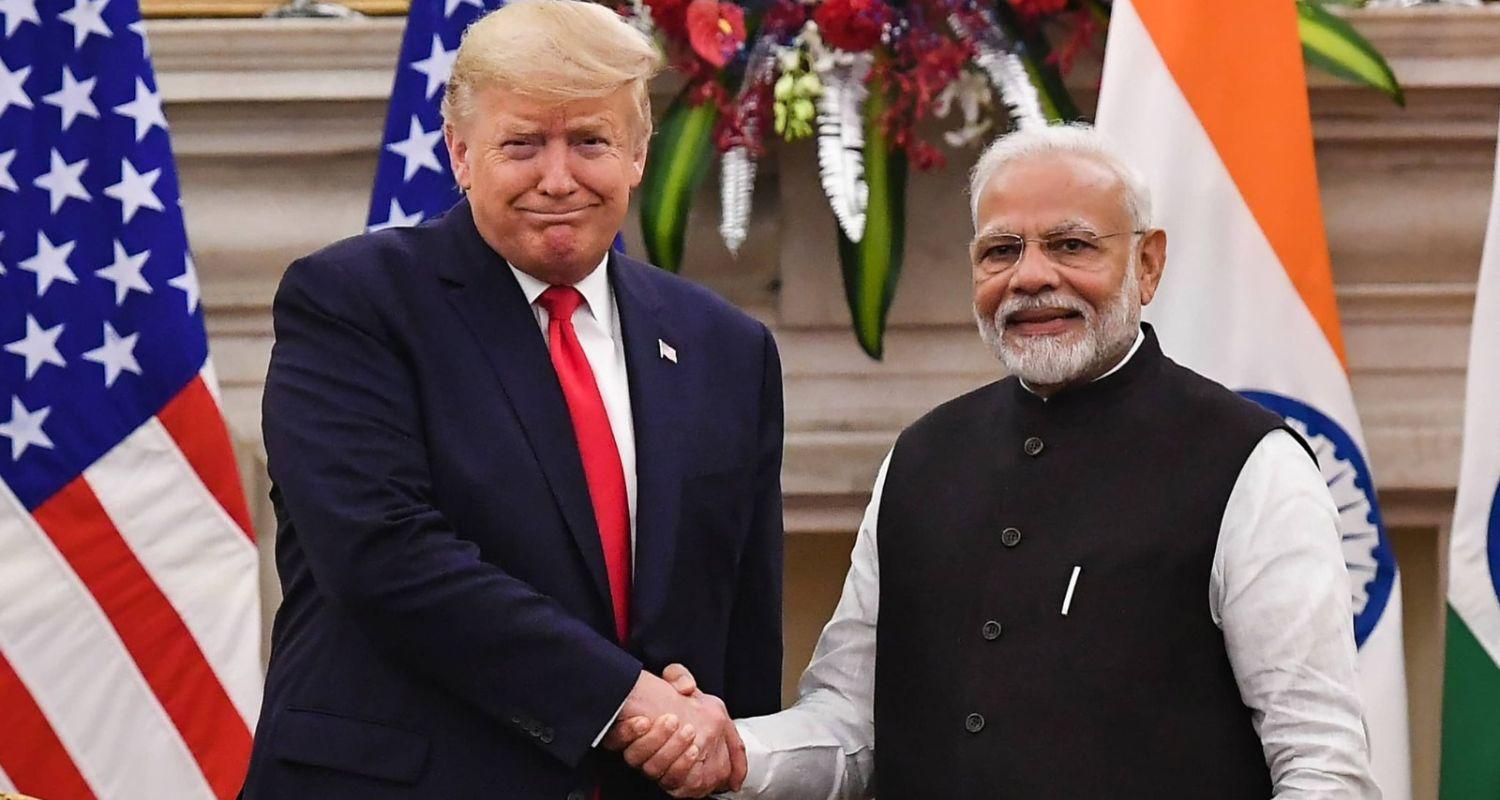
The year 2025 proved to be a challenging and rewarding one for the country. Despite multiple odds including terror and tariff attacks, the country navigated the turbulent and stormy waters quite successfully even after facing several betrayals from friends and foes alike. India remains a fast growing economy and is ranked among the top countries in the global power index.
When Donald Trump was elected the US President for the second term last year, there was great expectation and optimism across India that the Indo-US friendship will further get strengthened. Added to that was the appointment of Marco Rubio, a great friend of India, as the Secretary of State, who as a Senator had brought in a legislation, seeking special status for India and bringing it at a par with Israel on security matters.
Sadly, the expectations were belied. Trump proved to be highly unpredictable and unreliable. Two important developments took place after Trump assumed presidency. India suffered a terror attack in Pahalgam in Kashmir in April this year. The attack was preceded by a vitriolic speech by Pakistan Chief of Army Staff Asim Munir just 15 days before. There was no doubt about who the perpetrators of the terror attack were and what was the motivation and instigation.
India took retaliatory measures and hit back at the terror camps deep inside Pakistan in clinical strikes, like it has done in the past. India did not attack any civilian and military installations and conveyed this to the Pakistan army also. However, the Pakistan army attacked Indian civilian areas in Poonch leading to several casualties and then India hit back hard and fast, including the airbases, thus forcing Pakistan to seek an immediate ceasefire.
The US did not show any interest initially. The US Vice President JD Vance said on record that the US did not want to interfere. In fact, he was in India when the Pahalgam terror attack took place. Once Pakistan approached India for a ceasefire, Trump for his ambition to get the Nobel Prize for Peace announced in advance that India and Pakistan had reached a ceasefire. Trump did not realise the domestic implications such an announcement will have in India for the government.
The principal opposition party, the Congress seized the opportunity to corner the Prime Minister Narendra Modi seeking his clarification about Trump’s claims of ending the war. Modi maintained his grace and dignity. He did not want to annoy or embarrass Trump over his claims of brokering peace between India and Pakistan. But, eventually, Modi did comment that there was no third party involved in peace, which was a subtle and indirect snub to Trump.
The second betrayal India suffered was in terms of the tariff the US President imposed on imports from India. Initially, he imposed a 25 per cent tariff, which he raised to 50 per cent making India’s import of Russian oil an excuse. Despite these punitive tariffs, India registered an impressive growth rate of 8.2 per cent in the last quarter against all doomsday predictions.
The government of India has handled the challenges deftly by diversifying the export markets. India signed Free Trade Agreements with the United Kingdom, New Zealand and Oman. It is in negotiations with the US government also for rationalising the trade. The government deserves the credit for not succumbing to any bullying, pressure and tariff blackmail to surrender the country's interests, particularly of the farmers as the US is keen to export farm products to India.
While the marginal impact of the US tariffs has been felt in certain sectors and led to loss of jobs, the overall economic situation has been managed and handled well as is evident in the 8.2 percent growth rate in the latest quarter.
The year 2025 was indeed challenging for India, more so when a trusted ally like the US under Trump not only let the country down, but tried to build up an alternate relationship with the country's arch rival Pakistan. Trump is believed to have been tempted by some business interests of his family and friends in rare earths and crypto currency, which have been guaranteed by the army chief Asim Munir.
Otherwise also, India has stabilised and strengthened its position on the global stage becoming the fourth largest economy in the world. As already mentioned, India has improved its growth rate, which it has consistently sustained for last several years with multiple measures. This has become possible with increased domestic demand, which is the result of improved economic conditions of people and their buying power. The International Monetary Fund (IMF) has placed India among the major and fastest growing economies of the world, and revised its forecast for 2025-26, upwards.
Prime Minister Modi, notwithstanding the domestic criticism, has helped rank India among the top most countries in the global power index, which signals growing strategic influence of the country. Besides, the country has sustained strategic autonomy about its diplomatic affairs, without compromising its own strategic interests.
The year has indeed been a challenging one for the country due to tariffs and terror attacks, and yet the country has moved forward while maintaining an impressive economic growth, domestic stability and rising ranking in global power index. There are likely going to be more challenges ahead in 2026, with hostile neighbourhoods in both the east and the west. But, for sure, nothing is going to deter India’s march ahead under the leadership of the Prime Minister Narendra Modi.

 Follow us