By VIMAL SUMBLY
Recently, there have been some demands, including from a senior BJP leader, for granting statehood to Jammu region. It has been met with strong resistance from multiple quarters. And that has been happening for a long time. Every time there is a demand for separate statehood, there is strong opposition from everywhere.
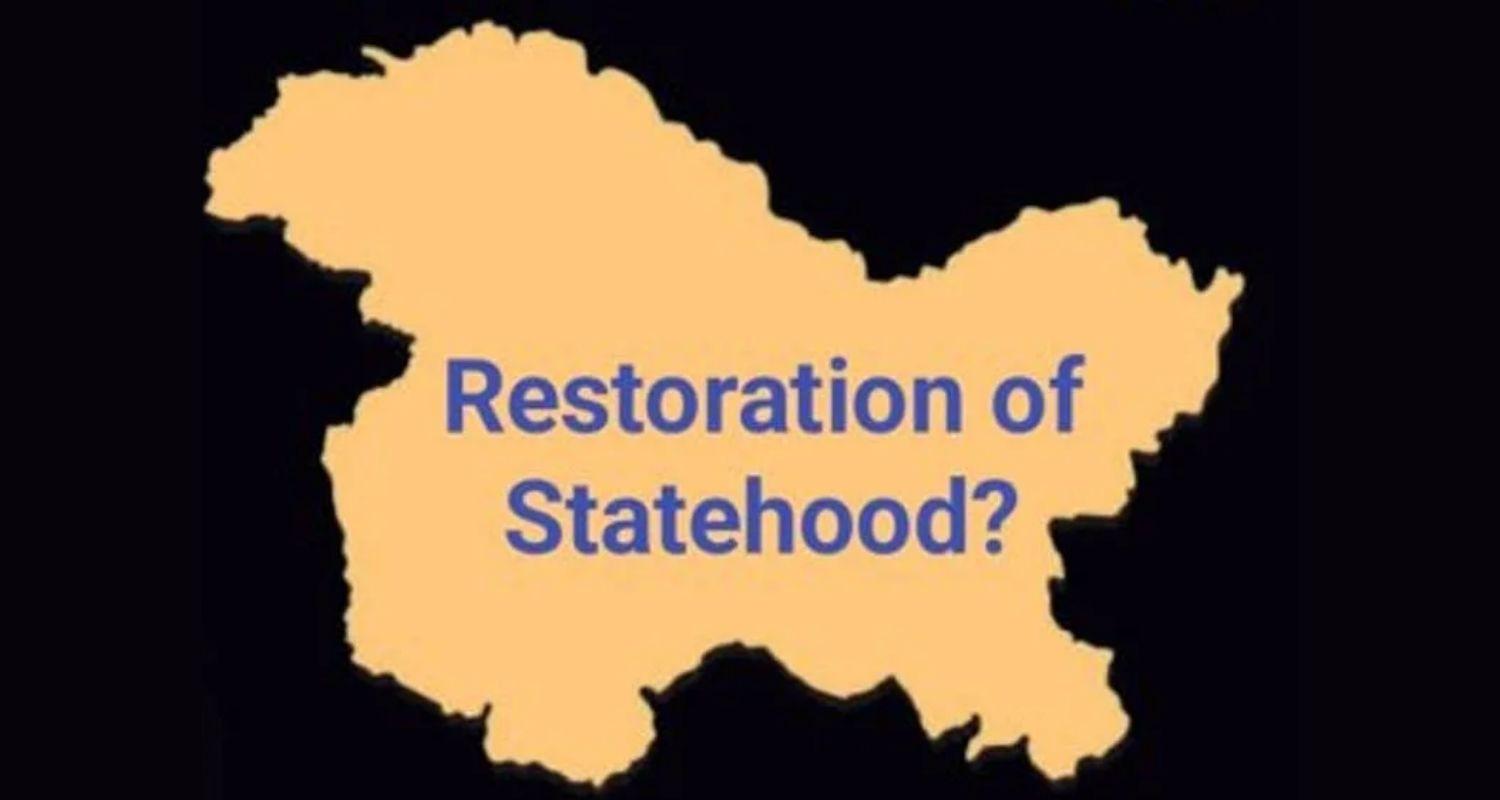
The Union Territory of Jammu and Kashmir has a unique history. From being once an ‘independent’ state with its own ‘sovereign’ ruler, it has now been reduced to a union territory.
The state had multiple diversities in terms of geography, culture, religion and language. Prior to August 5, 2019 it consisted of three diverse and distinct regions of Jammu, Kashmir and Ladakh.
While the Jammu region is Hindu-dominated with Dogri as the main language, which resembles the Punjabi language, the Kashmir region is dominated by Muslims who speak Kashmiri language, which is completely different from the Dogri language. Ladakh region has Buddhist majority with Ladakhi as the main language. Even climatically the three regions are quite different from each other.
After the Independence in 1947 and the State’s accession with India, the power shifted from Jammu to Kashmir region. While prior to 1947, it was the Dogra rulers from Jammu region who ruled over the entire state, after 1947, it was the Kashmir region and its leaders led by popular leader Sheikh Mohammad Abdullah, grandfather of current Chief Minister Omar Abdullah, who assumed power. His entire politics was based on anti-Dogra plank. Although the Dogra administration had a lot of Muslims in it, the Dogra rule was still identified with “Hindu” rule, as the rulers happened to be Hindus.
After the power shifted to Kashmir, discrimination started against Jammu region with a vengeance as also against Kashmiri Pandits in Kashmir. Although the Dogra rule was not known to be oppressive, yet the Kashmiri rulers remained quite vengeful towards Jammu region.
It was actually a feudal rule where the subjects were treated in a feudal way irrespective of the religion they belonged to. An average Dogra family was no better than an average Kashmiri family, under the Dogra rule. But that did not prevent the Dogras from being subjected to vengeful discrimination after the Dogra rule ceased to exist.
The Ladakh region remained completely ignored and marginalised. As it would geographically remain cut off from the rest of the country for almost half a year, due to inaccessible roads, Ladakh region was literally a “godforsaken land”.
After sustained discrimination over a long period, the people of Jammu and Ladakh started demanding separation from Kashmir. While Jammu demanded separate statehood, Ladakh sought union territory status.
In August 2019, Ladakh was made a Union Territory, in response to the long-pending demand of the people of the region, Jammu continued to remain attached with Kashmir and is now part of the Union Territory.
Also read: Omar Abdullah perfects the art of political pragmatism
The spontaneous outrage and anger over the admission of 42 Kashmiri Muslim students, out of a total 50, in the first batch of the Shri Mata Vaishno Devi College of Medical Excellence was the expression of a long-simmering rage within the people of Jammu region.
In fact, the admissions manifested the long and historical pattern since Independence when people of Jammu region and non-Muslims were thoroughly discriminated against. The people’s grievance was more for the massive 94 per cent Muslim students in a Hindu institution. Had there been less students, say about 10 or 12 out of 50, there would have been no outrage and protests.
But the people of Jammu region saw a pattern in the admissions that they had been suffering for such a long period of time. This led to outburst and outrage so much so they celebrated the closure of the college than to let those who always discriminated against them grabbing what, they thought, was their legitimate due.
Even in terms of political representation that eventually leads to political power, Kashmir had an edge over Jammu region. Ideally, there should have been a balance of power between the two regions, but there is none. Although the population difference between Jammu and Kashmir regions is not much, Kashmir region has 47 Assembly segments, while Jammu region has only 43. In terms of the Parliamentary constituencies also, while Jammu region has only two, Kashmir has three despite a vast geographical area. While Jammu region covers an area of 26,293 square kilometres, the Kashmir region covers 15,948 square kilometres only.
Every time there is a demand from people and public representatives of Jammu region, it is countered with an absurd argument that this will mean encouraging secessionist and separatist tendencies in Kashmir. Normally, the people of Kashmir region should not have any problem with Jammu region getting separated, but still they oppose it. This is obviously because Kashmir region, given its political dominance, ends up with the lion’s share from the state’s resources.
There is also a misconception that the demand for separate state for Jammu region is communal in nature. Jammu region has a Hindu majority with 65 per cent Hindus, 31 per cent Muslims and 4 per cent Sikhs. This argument is being put forth by only those who themselves practice communal and sectarian politics. Jammu region in itself has geographic, religious, lingual and cultural diversities.
The demand for separate statehood to Jammu region is worth considering. Sooner, the better.

 Follow us