
Trending:
Karnataka Hate Speech Bill: A double-edged weapon?
The provisions of the Bill appear like a cure that is worse than the disease. Experts have warned that such a law could be misused by political parties across the spectrum, because one party's hate speech could be another party’s political propaganda and vice versa. Follow us
News Arena Network - Chandigarh - UPDATED: January 14, 2026, 01:48 PM - 2 min read
Any action that restricts fundamental rights, particularly freedom of expression, necessarily falls within the ambit of judicial review.
The thin line between freedom of speech and ‘reasonable restrictions’, as enshrined in the Constitution, should not be allowed to be weaponised by governments to suit their narratives.
Any attempt by the authorities, irrespective of the party in power, to appropriate sweeping powers to impose curbs on free speech would amount to setting a dangerous precedent.
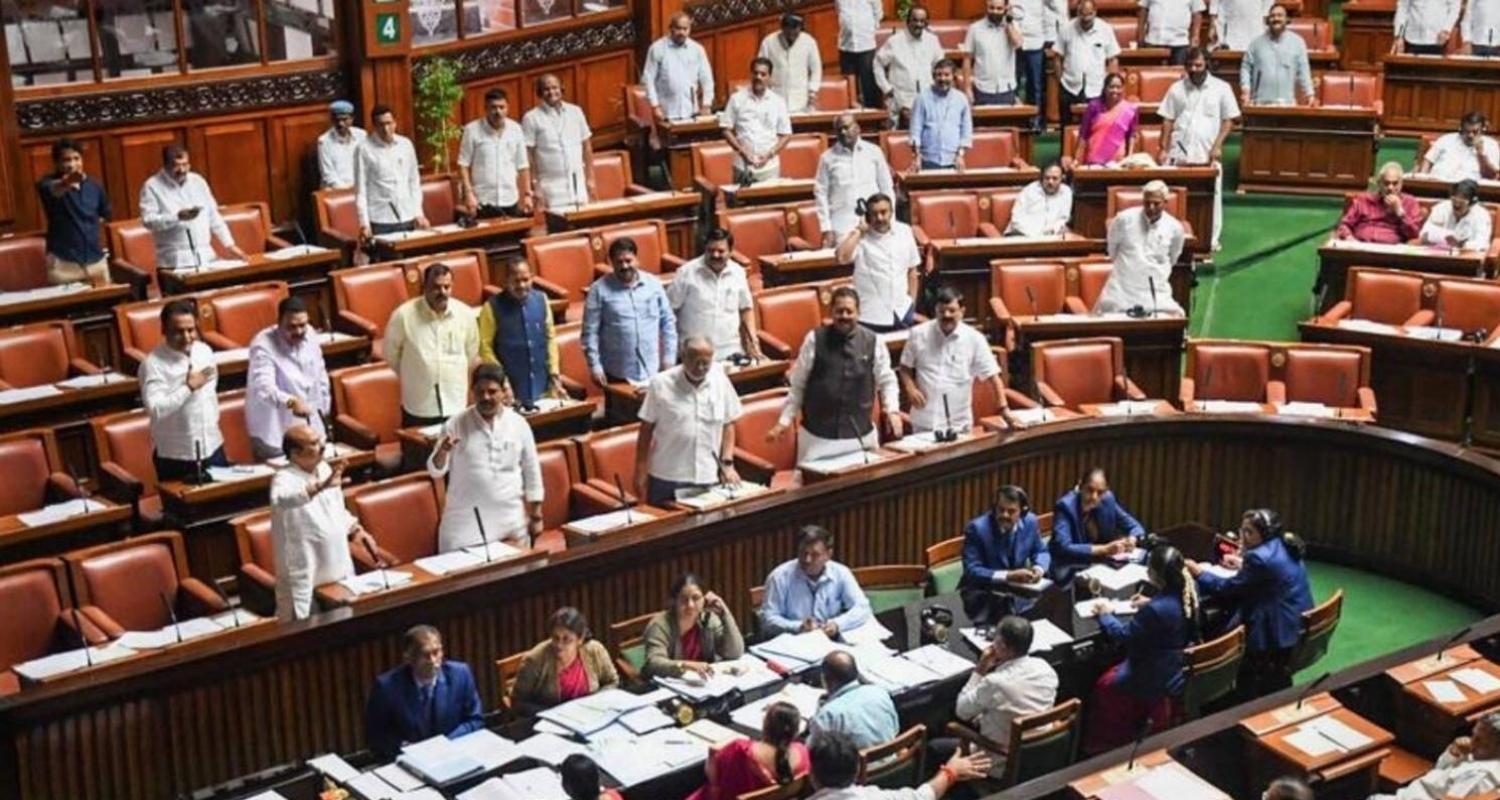
The Karnataka Hate Speech and Hate Crimes (Prevention) Bill, 2025, recently passed by the Assembly and the Council, raises more questions than it answers. While the overall objective of the legislation, the first such stand-alone experiment in the country, appears lofty, a closer look at the provisions raises disturbing questions about the government’s overreach in regulating the public discourse.
While there should be no second opinion about the need to punish the peddlers of hatred, the manner in which a social problem is sought to be addressed often matters as much as the intent behind it. Hate crimes happen in India, not because of the absence of laws but because of the loopholes in their enforcement.
Sweeping powers
Freedom of speech and expression form part of the fundamental rights guaranteed by the Constitution. Democracy would be in peril if dissent and diversity are snuffed out from the public sphere. Dissent, disagreement and debate are the essential ingredients of a successful democracy. It is for this reason that the Karnataka government’s hate speech legislation has drawn flak from civil rights groups and Opposition parties.
The Bill is currently awaiting the Governor's assent to become a law.
The provisions of the Bill appear like a cure that is worse than the disease. The legislation gives sweeping powers to the government, which can be easily misused.
It is, at best, a band-aid that avoids a deeper consideration. In fact, it carries the danger of being used to criminalise the very people it seeks to protect. The proposed law defines “hate speech” and “hate crime” in broad and loose terms while proposing stringent punishments.
The Bill blurs the line between hate speech and hate crime. Hate speech should be prosecuted because it can lead to violence, but the current wording treats communication itself as a hate crime even when no violence follows.
Experts also cite a 2015 Supreme Court ruling that laws criminalising speech must be precise, not vague or overly broad, to avoid a "chilling effect" in which people self-censor for fear of prosecution.
The Bill is ostensibly aimed to “curb and prevent dissemination, publication or promotion of hate speech and crimes, which cause disharmony, hatred in the society.” It would effectively mean disempowering the citizens vis-a-vis the government.
The proposed legislation gives excessive discretion to senior police and administrative officers to decide what speech falls under the law, raising the risk of conflicts of interest, especially when the government is being criticised.
The critics argue that its broad definitions could be misused to suppress free speech, drawing comparisons to the unconstitutional Section 66A of the IT Act.
As per the proposed legislation, which goes beyond existing Central laws in several ways, punishment for committing a hate crime ranges from one to seven years of imprisonment with a fine of Rs 50,000, while repetitive offences will attract a minimum of two years imprisonment, extendable up to 10 years, along with a fine of Rs 1 lakh.
Why another law?
One wonders what is the need for another law when the existing provisions of the Bharatiya Nyaya Sanhita (BNS) already deal with incitement to violence, hurting religious sentiments and prejudicial speech acts against marginalised groups.
In April 2023, the Supreme Court had directed all states and union territories to register cases against those making hate speeches without waiting for a formal complaint to be filed. What the Karnataka government is trying to deploy is a potentially dangerous instrument to address a complex social and political problem. The state government, however, argues that existing criminal laws are inadequate to address the complexities of modern hate speech, particularly online vitriol.
No doubt, the communal hatred, amplified by social media, is a big threat to the country’s secular fabric. Fostering peaceful coexistence of the diverse sects and sections of society is crucial for India’s image globally as its voice gains credence in diplomatic and geopolitical affairs.
Also read: K'taka Guv withholds assent for anti-hate speech bill
At a time when identity politics has been weaponised on all sides, the challenge before the governments is to curb the social menace without undermining constitutional freedoms in the process. We are living in times when one man’s freedom of expression is another man’s blasphemy; one man’s tradition is another man’s superstition; one man’s fringe is another man’s mainstream.
Legal experts argue that when a law treats the mere communication of offensive or hateful ideas as a criminal act, without a clear requirement of incitement or resulting harm, it crosses into dangerous territory. Criminal law is used to punish acts that threaten public order or safety, not to police people’s opinion or regulate moral boundaries.
Unless the legal limits and the scope of intervention by the executive are clearly defined, the enforcement is bound to be misused by those in power. Selective application of the law could become the norm.
While the Congress government in Karnataka has defended the proposed legislation, saying it is intended to curb elements that disturb social harmony, incite communal violence, and threaten law and order, it needs to address the red flags being raised by the civil rights activists and the opposition parties.
Experts have warned that such a law could be misused by political parties across the spectrum, because one party's hate speech could be another party’s political propaganda and vice versa.
Constitutional limitations
While state governments have Constitutional authority to legislate on subjects that fall under the State List for maintaining law and order, they should not, however, come in conflict with Central legislations.
Under Article 19 of the Constitution, citizens are granted essential freedoms. The Supreme Court has consistently upheld freedom of expression in several landmark judgments in the past. It had clearly stated that governments have no authority to impose restrictions beyond those specified in Article 19(2), and any such attempt would render the law invalid.
Any action that restricts fundamental rights, particularly freedom of expression, necessarily falls within the ambit of judicial review.
The BNS already has provisions to deal with hate speech (Section 196) and the Bharatiya Nagarik Suraksha Sanhita (BNSS) has specific provisions which detail how such an offence will be investigated, tried and punished.
The Karnataka Bill is effectively trying to amend the BNS and BNSS without actually doing so. Though worded differently, the essence of the offence in the Bill and the BNS are the same. This creates a situation where the Union law and state law are in conflict with each other.
In such a situation, clause (2) of Article 254 of the Constitution comes into play and the state’s law gives way to the Union law, unless the President gives approval to the state law.
