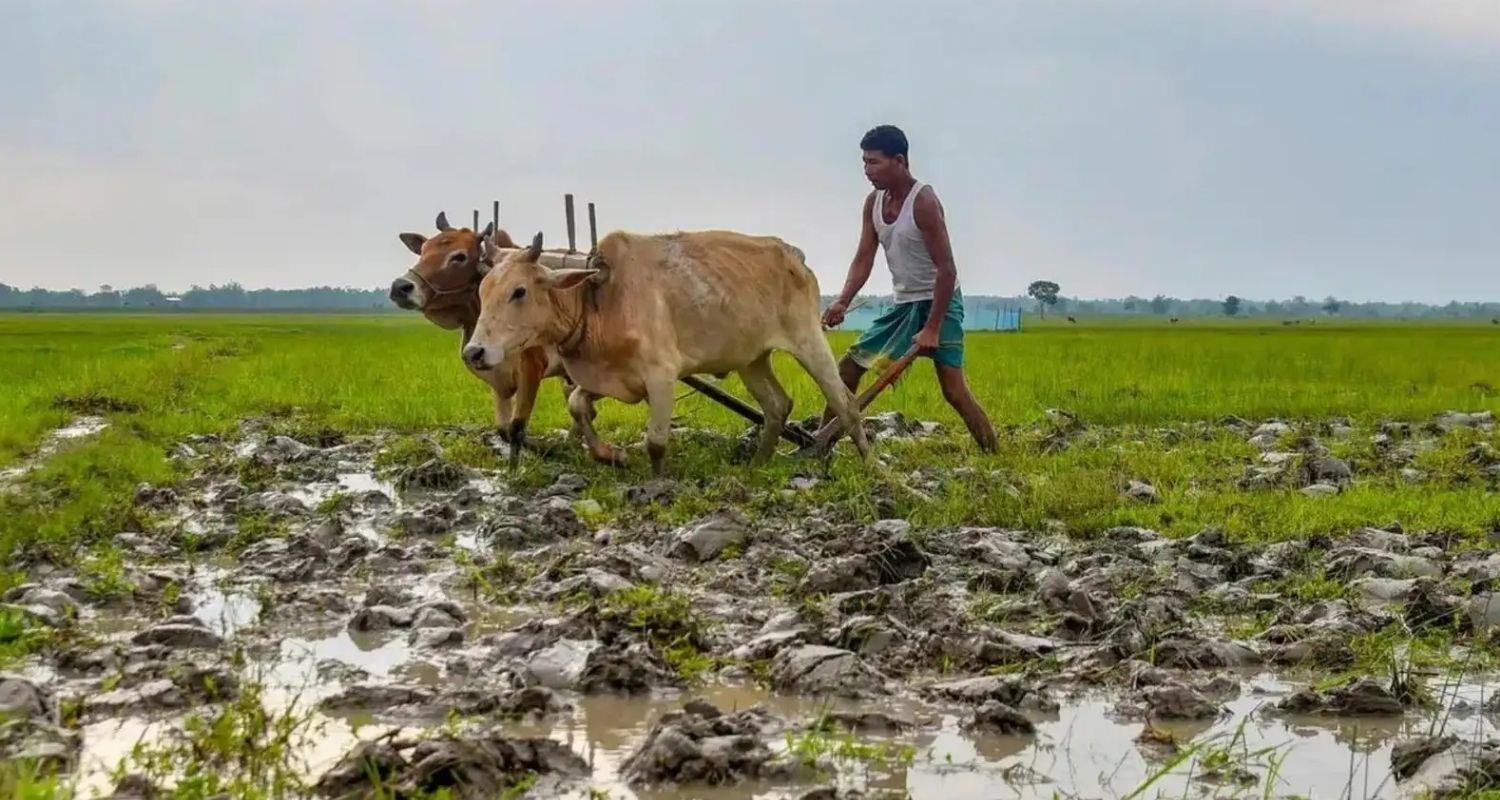
The Central government has launched Khet Bachao Andolan, a campaign aimed at promoting balanced fertiliser use, soil test-based nutrient management, and reducing farmers' dependence on chemical inputs.
On paper, the initiative appears aligned with global sustainable agriculture goals. Awareness camps and seminars are being rolled out across districts, with Krishi Vigyan Kendras (KVKs) and state agriculture departments directed to mobilise at the grassroots level.
But a growing number of voices from the farming community and opposition quarters are asking a pointed question: Is this a genuine agronomic reform, or is it a carefully crafted diversion to mask a deeper crisis?
Farmers in India already know that for them agriculture is not a new science. Farming families have cultivated their lands for generations, developing an intimate, lived understanding of soil behaviour, seasonal patterns, crop needs, and input management. Many farmers, particularly those who have survived multiple crop cycles, pest outbreaks, and climate shocks, carry practical knowledge that no seminar can replicate or inculcate.
Forcing veteran farmers to sit through awareness programmes in the sweltering summer heat does not just seem tone-deaf, it is, to many, deeply insulting. Reports from the ground suggest that attendance at these camps has been thin and reluctant.
Farmers are busy people. When the sun is blazing and the agricultural calendar demands attention, asking them to gather in a tent to hear lectures about soil testing is, at best, poor timing, and at worst, a deliberate imposition.
The actual question is where are the fertilisers? Here lies the crux of the controversy. The ongoing conflict involving Iran has significantly disrupted global supply chains of critical fertiliser inputs. Urea, DAP (Di-Ammonium Phosphate), and potash—the backbone of Indian agricultural productivity—depend on global trade routes and raw material sources that have been impacted by regional geopolitical tensions. Availability has tightened. Prices have surged. And at the farm gate, the shortage is being felt.
In this context, the timing of Khet Bachao Andolan raises uncomfortable questions. When fertilisers are not adequately available in the market, launching a high-decibel campaign telling farmers to use less fertiliser appears suspiciously convenient. Critics argue that the government is essentially dressing up a supply failure as a policy virtue—repackaging scarcity as sustainability.
Also read: India-US trade deal: Farmer concerns and impact on agriculture
The government machinery has been pressed into service to promote this “scheme”. The Krishi Vigyan Kendras (KVKs) and agriculture departments being pillars of rural outreach as they have been mandated with research dissemination, crop demonstration, farmer capacity building, they remain vital and resource-intensive.
Diverting this machinery towards conducting mandatory awareness camps on fertiliser reduction, particularly when the kharif season approaches, means that genuinely urgent agricultural work may be getting side-lined.
Field officers, already stretched thin, are under pressure to show numbers—camp attendance registers, photographs, reports—without meaningful farmer engagement.
This box-ticking approach not only wastes public resources but also erodes the credibility of institutions that farmers genuinely depend upon.
To be fair, the argument for balanced fertiliser use is not without scientific merit. Decades of indiscriminate chemical fertiliser application has degraded soil health in many parts of the country. Soil test-based farming does improve long-term productivity and reduce input costs. These are well-established agronomic facts.
However, the right message delivered at the wrong time, for the wrong reasons, loses all credibility. If the government's intention is genuinely to reform farming practices, it must first ensure adequate fertiliser supply to meet immediate crop needs, conduct awareness programmes after the sowing season and not during it, involve farmers as partners, not as passive audiences, back soil-testing initiatives with accessible labs, quick turnaround times, and subsidised services, be transparent about supply constraints and what steps are being taken to address them.
Trust, not tactics, will work. The farmers are not naive. Generations of dealing with moneylenders, middlemen, weather uncertainty, and government promises have sharpened a certain political instinct in rural India. When a programme arrives exactly at the moment a commodity is scarce, and asks people to want less of that very commodity, the dots are not hard to connect.
The Khet Bachao Andolan may carry a worthy long-term vision. But for it to succeed, or even to be taken seriously, the government must first address the immediate ground reality: farmers need fertilisers, not just awareness.
Sustainable agriculture is a goal worth pursuing, but it cannot be used as a shield to deflect accountability for supply failures. When policy is shaped by crisis management rather than genuine intent, it is the farmer who bears the cost—and ultimately, it is the farmer who will deliver the verdict.
A cross section of farmers and agriculture experts News Arena India spoke to raised questions about the timing of the scheme. They maintained that a balanced policy response must acknowledge both the merits of soil health initiatives and the legitimate concerns around fertiliser availability.

 Follow us