The Government of India has convened a special session of the Parliament on April 16, 17 and 18. The official agenda of the special session is the amendment to the Women’s Reservation Bill, which was otherwise passed in September 2023. That time it was announced that the bill would come into force from the 2032 General Elections after the census was completed. However, now the Government of India understandably proposes to introduce the women reservation in legislative bodies, parliament and assembly, from the 2029 General Elections.
The opposition parties have sounded alert and concern that the Government of India might push through the “Delimitation of the Parliamentary Constituencies” by amending the Article 82 of the Constitution of India. This is reportedly being done to increase the number of parliamentary and assembly constituencies by 50 per cent.
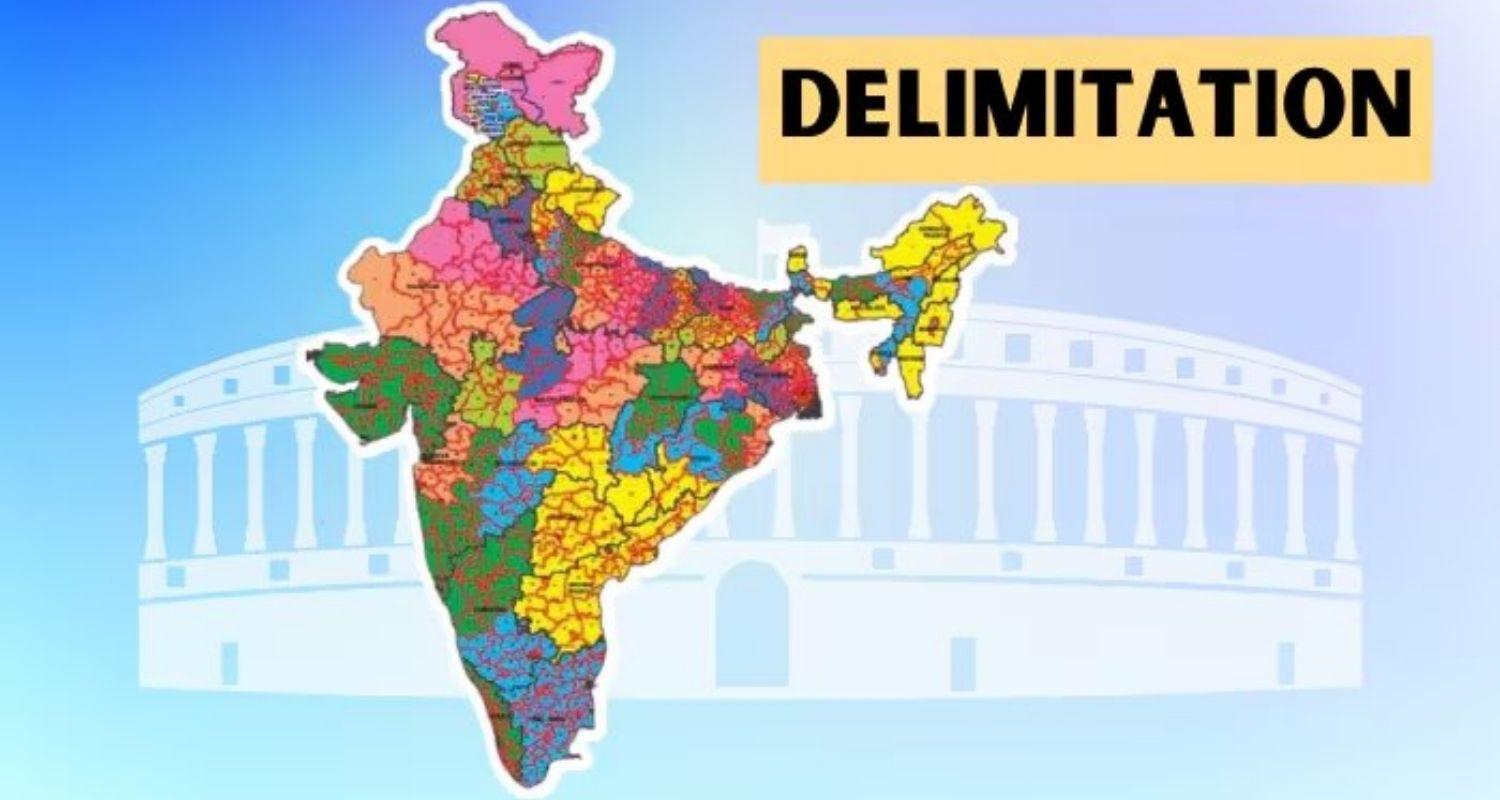
Delimitation has two aspects. One is redrawing the boundaries of a parliamentary or an assembly segment across the country. The last exercise was done in 2002 and it came into effect from the 2009 General Elections. There was no change in the number of constituencies.
The second aspect is to increase the number of both parliamentary and assembly constituencies across the country. The last time the number of parliamentary constituencies was increased from 494 to 543 in 1972, based on the census of 1971.
However, in 1976, during the emergency, the Government of India through the 42nd constitutional amendment put a freeze on the number of constituencies, both the assembly as well as the parliamentary. This was done with a view that those states, which had controlled the fertility rate and population growth, should not be penalised and those who had failed to do so should not be rewarded with an extra number of constituencies.
While in the case of assembly segments, it will not lead to much power imbalance between the states as the increase of number of the seats will be restricted within the particular states only; in case of the parliamentary constituencies it would definitely lead to serious imbalance as the states having lesser population growth will have lesser increase in the number of seats.
Even to a certain extent the increase in the number of assembly segments, although independent of others, can also have an impact beyond the state during the time of Presidential elections as the elected members of the legislative assemblies constitute the electoral college. States with larger population and larger assemblies will obviously have more say in electing the President.
But what is of more concern is the number of parliamentary constituencies each state will get. That concern has already been addressed by Prime Minister Narendra Modi, saying no state will have reduced representation in the parliament as was initially rumoured. Earlier it was being said delimitation will be done on the basis of population numbers which would mean those states which had reduced the population could get lesser parliamentary constituencies than the existing ones. That is not the case.
Also read: Women’s reservation won’t alter state seats: PM Modi in Assam
According to unofficial reports, the government proposes to increase the number of assembly and parliamentary constituencies in each state “proportionately” by fifty percent. This will not disturb the overall “existing ratio” of seats between the states. For example, while UP has 80 parliamentary constituencies currently, its number will go to 120. Similarly, Tamil Nadu has 39 parliamentary constituencies, its number will go to 60. The overall ratio will remain the same no matter how much increase is in the number of seats.
The problem with the opposition parties like the Congress, DMK, TMC and others is that BJP-dominated states like UP, Bihar, Madhya Pradesh etc will have “proportionately” more number of seats in the future delimitation, while the states dominated by the opposition like Kerala and Tamil Nadu will have lesser number of seats increased. Fact is, only the “number of seats” will increase but the “proportion/ share of seats” for each state will remain the same.
The opposition parties are using the same argument that was used in 1976 when the number of parliamentary constituencies was frozen. That was a genuine argument that the increase of the seats should not be on the basis of the increase in population. That is the right thing to do.
Under the proposed delimitation now, “population” of a particular state will not be the basis of the number of parliamentary constituencies it will have, but the “existing number” of seats. So, no matter how much the population of the states like UP and Bihar may have increased and that of Kerala and Tamil Nadu may have decreased, their “proportion” of share of seats in the parliament will remain the same. Rather, the states with lesser population will have an advantage of having proportionately more number of seats with lesser population. Decreased population will not be any disincentive for them.
When the opposition parties like the Congress are trying to use the argument that it will lead to “federal imbalance”, it is wrong. If there is any “federal imbalance”, then it is already existing, under the current proportion of seats in the parliament. The proposed delimitation will only lead to an increase in the total number of seats in the parliament and will not disturb the “existing proportion”. Hence, there is no reason for raising any hue and cry.
Some of the parties like the Samajwadi Party in Uttar Pradesh may not find the idea of opposing the increase in seats very attractive. Because, they will feel benefited as their footprint, since it is state specific only, can increase in the legislative bodies, be it the parliament or the assembly.
Yes, the Congress will have a problem, as long as it remains organizationally weak in more populous states like UP and Bihar. Increase in number of seats will further weaken its proportionate share and strength, while conversely it will increase the strength of its rival, the BJP.
Just because the delimitation will currently benefit the BJP does not mean it must not be done. With increase in population, there is increase in the number of voters. Indian parliamentarians already have huge constituencies with lakhs of people to cater to. There is definitely a strong case for increasing the number of representatives in the parliament and the assemblies.
The Congress, by opposing the delimitation, is only betraying its defeatist mind-set assuming that the BJP will always remain strong and it (the Congress) will always remain weak. If it is BJP today, it may be the Congress or some other party tomorrow, which will emerge stronger in states like UP and Bihar.

 Follow us