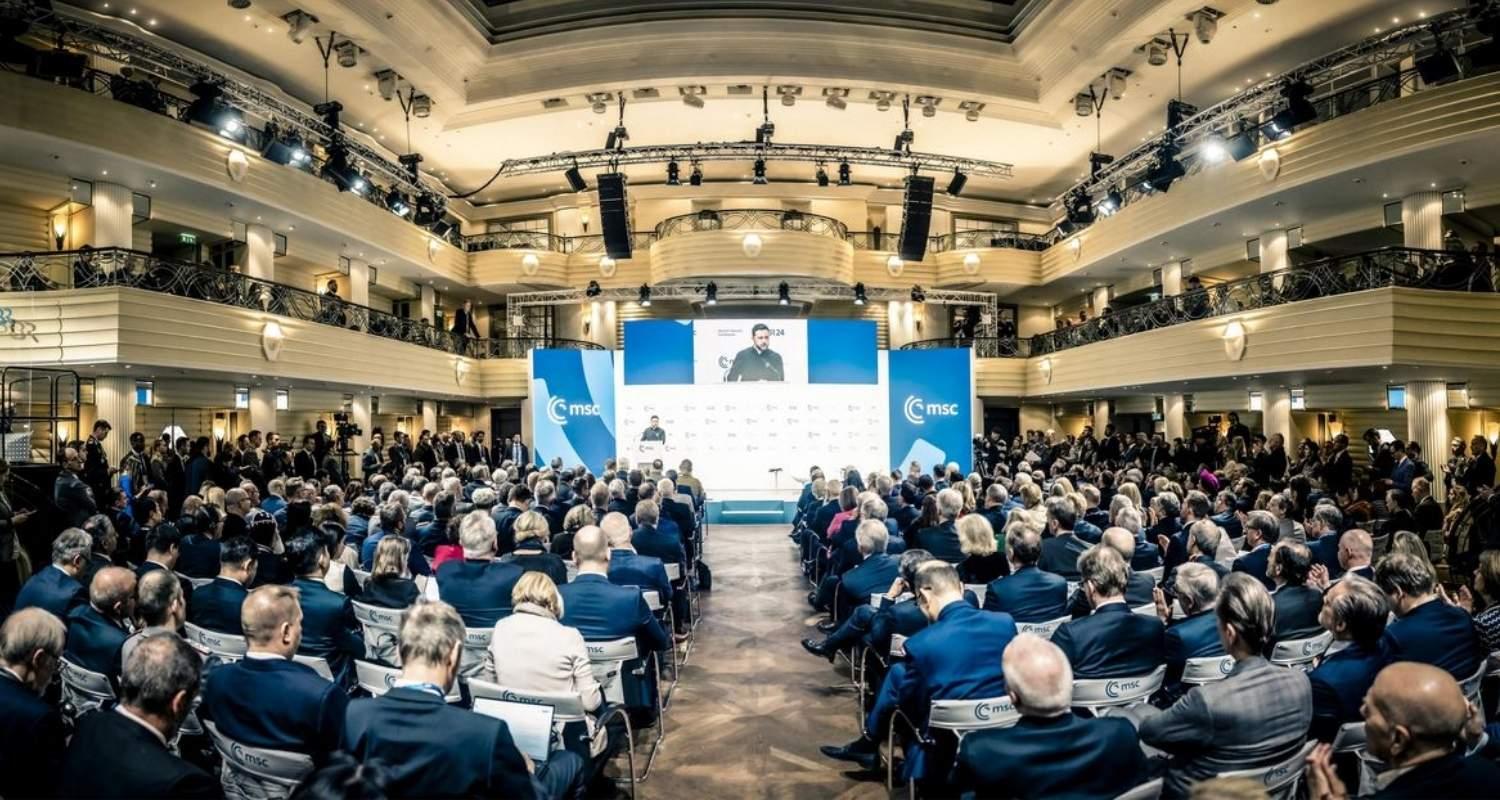
The Munich Security Conference ended in a diplomatic brawl between US Secretary of State Marco Rubio and EU High Representative Kaja Kallas, who traded barbs over the defence of collective civilisation.
The three-day event concluded on Sunday with Rubio calling on the EU and the West to save a common civilisation, while Kallas retorted that the EU does not need American saving.
Ukrainian President Volodymyr Zelenskyy urged Europeans to agree on a date so that Ukraine could technically become a member of the bloc in 2027, though the appeal gained little traction among some member states.
What did Rubio say that angered Kaja Kallas?
Rubio declared the US had no interest in being “polite and orderly caretakers of the world”, adding: “We do not want allies to rationalise the broken status quo rather than reckon with what is necessary to fix it, for we in America have no interest in being polite and orderly caretakers of the West’s managed decline.”
While EU diplomats listened intently, expecting a different tone from last year’s blistering attack by Vice President JD Vance, tensions between the two sides have swelled over Trump’s constant threats to take control of Greenland.
Although Rubio adopted an unusually softer tone, the message remained clear: the US would not fund, defend, or take an easy stance on Europe—especially regarding its policies on immigration and defence.
Kallas rejected Rubio’s assertions
European Commission President Ursula von der Leyen said she was “very much reassured” about ties with the US after hearing Rubio’s address.
However, Kaja Kallas outright rejected the narrative that the EU needed to be saved from foreign aliens.
She hit back at Rubio, stating, “Contrary to what some may say, a woke, decadent Europe is not facing civilisational erasure”—a reference to a controversial US national security strategy document published last year calling for a reversal of key policies on climate and migration.’
Zelenskyy’s demand
Ukrainian President Volodymyr Zelenskyy said the EU’s departure from peace talks between Russia and Ukraine was a big mistake and that their participation was very important, though Trump has repeatedly warned that their inclusion would mean the US’ exit from mediation efforts.
Merz’s response
German Chancellor Friedrich Merz declared in his opening address that the rules-based order established after World War II was dead due to US policies.
Also read: Munich security conference turned into ‘circus’ over Iran: Abbas
He said the EU needed to take a firm stand and reimagine the world after the US’s withdrawal from treaties and agreements and its reduction of the defence umbrella.
Merz added that Germany was in talks with France over extending the nuclear umbrella after Russia’s top policy advisor and aide to Putin threatened military action and nuclear attack on Germany and the United Kingdom if the war in Ukraine dragged on into next year with the help of the two nations.
Macron’s speech
President Emmanuel Macron focused on a more independent and self-reliant EU in the face of ongoing adversaries and deteriorating relations with the United States.
He said France would take the initiative to extend its nuclear umbrella over the EU if needed, though that would have to be decided collectively by EU states.
Sánchez’s stance
Spanish Prime Minister Pedro Sánchez, positioning himself as an anti-Trump progressive voice, said nuclear deterrence was too risky and unmanageable to avoid conflict. He called for a system built on zero errors to prevent mutually assured destruction.
He described any conflict with Russia—one of the world’s most powerful nuclear-armed nations—as “a gamble that he and his country would not indulge in.”
Von der Leyen’s final remarks
European Commission President Ursula von der Leyen said on Saturday, “It is time to bring the mutual defence clause to life.
The pact is not an option for the bloc but rather an obligation within our own treaty—Article 42(7).”
This comes at a time when the United States recently denied extending its defence umbrella over the EU, which Trump described as a hindrance to Ukraine peace talks.
Article 42(7) of the EU Treaty states that if any member state is the victim of armed aggression on its territory, the other member states have an obligation to aid and assist it by all means in their power.
However, it is not equivalent to NATO’s Article 5, which deems an attack on one an attack on all.
The Munich Security Conference 2026 has exposed deeper fractures in US-EU relations and highlighted prevalent disagreements among EU leadership.
By Waseem Ahmad Ganie

 Follow us