
Trending:
Netanyahu’s war with Iran can metamorphose into World War III
Having left more than six countries—Libya, Syria, Sudan, Iraq, Yemen, and Lebanon—completely destabilised through prolonged conflict and civilisational clashes, Netanyahu’s strategy now culminates in the Balkanisation of Iran to establish Israel as the unchallenged regional hegemon. Follow us
News Arena Network - Tehran - UPDATED: March 5, 2026, 03:34 PM - 2 min read
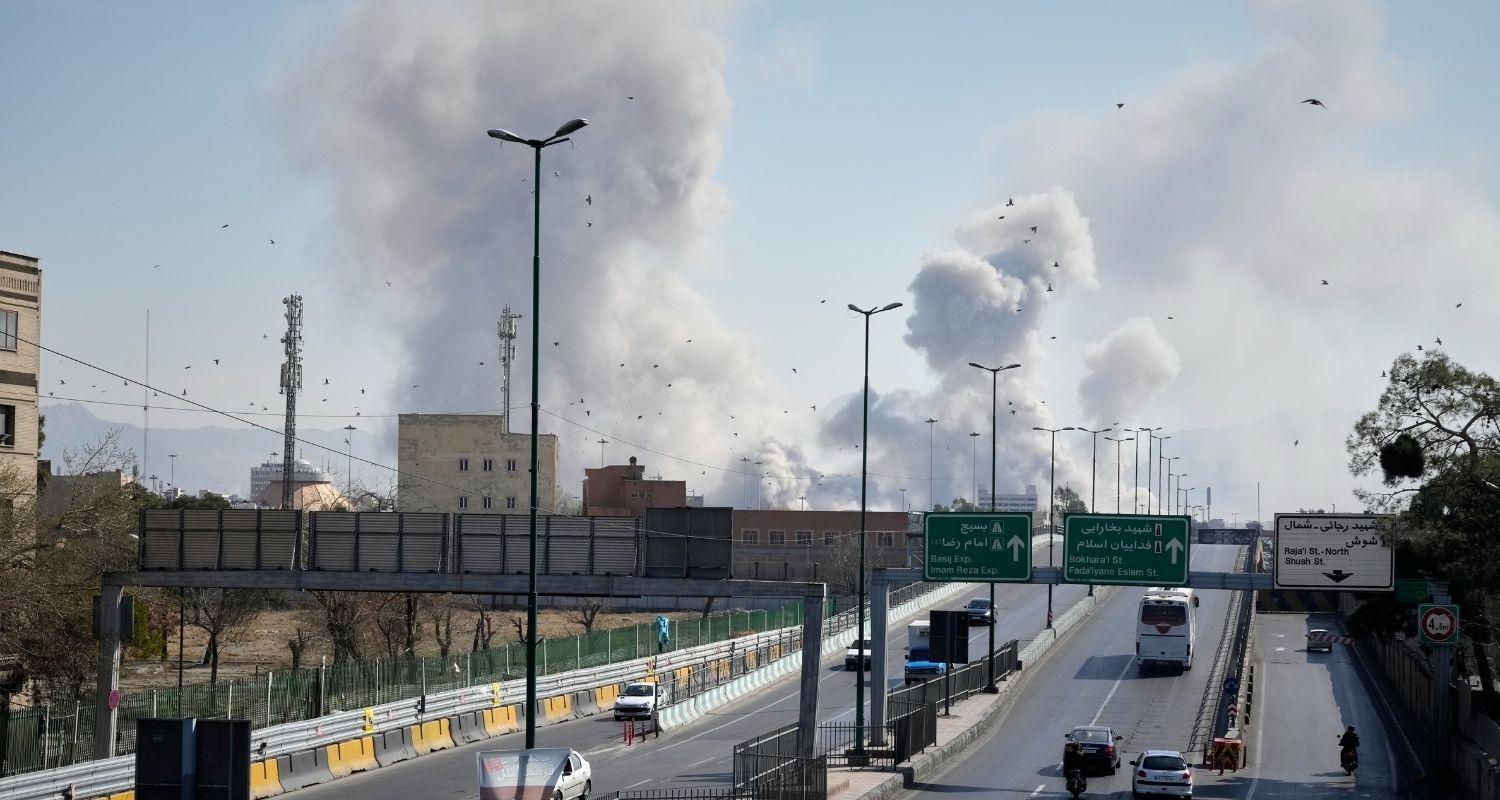
Israeli Prime Minister Benjamin Netanyahu’s long-pursued war against Iran has finally materialised after decades of pressure on successive US administrations, including those of George W. Bush, Obama and Joe Biden.
Having left more than six countries—Libya, Syria, Sudan, Iraq, Yemen, and Lebanon—completely destabilised through prolonged conflict and civilisational clashes, Netanyahu’s strategy now culminates in the Balkanisation of Iran to establish Israel as the unchallenged regional hegemon.
Iran, one of the last major independent Muslim powers standing in the way, was attacked on Saturday by both Israel and the United States. While the fighting is concentrated in the Gulf, the consequences are reverberating across global markets.
Grave miscalculations
According to inside sources, the US Central Intelligence Agency's (CIA) preemptive bombing of Iran represented a grave miscalculation by the Donald Trump administration. Trump was reportedly assured that decapitation strikes would swiftly collapse the regime within days. However, these calculations proved disastrously wrong when Iran rejected ceasefire negotiations proposed through Italy and one other nation.
War of attrition
The strikes on Iran occurred while the US and Iranian negotiators were attempting to resolve a months-long deadlock over Tehran’s nuclear programme.
At the very moment talks were underway, the United States, in collaboration with the Israeli regime, authorised bombing the supreme leader’s office to decapitate leadership and force regime change.
The American administration was likely drawn into the war by Israel without fully understanding Iranian culture, resistance spirit, and deep Persian national pride. Without anticipating the backlash, the Trump administration gave the green light to Israel and joined the strikes.
As many as 48 top leaders, including Ayatollah Ali Khamenei, were killed in the initial strikes. According to Iranian sources, Khamenei—offered asylum by Russia—refused to abandon his people, reportedly volunteering to stay and face martyrdom.
He is said to have told associates he was prepared to die if it would mobilise and galvanise the Iranian people against the US as well as Israel. This decision has proven effective, rallying widespread domestic support.
Trump’s plan has faced massive criticism at home. US lawmakers have accused his administration of responsibility for the deaths of six US service members, the loss of three fighter jets, and billions of dollars in radar and equipment destroyed by Iranian forces.
Also read: Oil price surge exposes a fragile, outdated global supply chain
Global instability
Oil prices have skyrocketed since the war began. Iran has closed the Strait of Hormuz indefinitely and warned that any vessel approaching the strait will be targeted. Countries heavily dependent on oil transiting the strait—China (73 per cent), India (60 per cent), Pakistan (80 per cent), Japan and South Korea (over 50 per cent)—face severe energy crises. Japan and South Korea have warned that their economies could collapse within eight months if the war continues. The strait handles 20 per cent of global oil supply and trade routes.
The closure has already triggered panic in global markets; nearly all major indices have suffered sharp declines.
Iran has stated it will allow only Chinese vessels to pass through the strait in recognition of Beijing’s support, dealing a severe blow to the energy security of India, Japan and South Korea. The blockade also threatens a food crisis in the Middle East, as 80 per cent of the region’s food imports pass through the strait.
Iranian strategy
Iran has targeted US bases in the region, but questions remain about strikes on hotels and civilian buildings in Gulf nations. The rationale appears to be inflicting maximum losses on US personnel relocated to hotels in Dubai, Bahrain, Saudi Arabia and Qatar after US embassies could not accommodate them.
Iran may also target desalination plants in Israel and Gulf countries hosting US bases if it faces an existential threat. The Middle East relies heavily on desalination for fresh water; destroying these facilities could cause more deaths from thirst than from direct combat.
Iran possesses a vast arsenal of first-to-fourth-generation missiles—including older 1980s-era systems as well as the latest Fattah I & II, Sejjil, Emad, Khorramshahr and Kheibar series—plus over 100,000 Shahed I and Shahed II drones with ranges exceeding 2,500 km.
The critical question is not merely how Iran will respond, but what Israel and Gulf nations will do once their air defence systems—expected to deplete within a week—are exhausted, leaving them vulnerable to Iranian hypersonic ballistic and cruise missiles.
Israel and US strategy
Both Israel and the United States initially claimed that decapitating leadership would empower the Iranian people to overthrow the regime. However, the killing of more than 165 schoolgirls has severely undermined those aspirations and fuelled widespread hatred toward Israel and the US—ironically providing moral and popular support for the regime to endure the assault.
Donald Trump was likely briefed on a shock-and-awe strategy for rapid decapitation and regime change. Yet, Iran’s decentralised command structure has surprised US planners, who have so far failed to offer a convincing justification for the attacks, while Iran continues to mount effective resistance despite 100 per cent Israeli-American air superiority.
The coming days will be decisive for global markets, the Middle East, Israel, and US bases in the region. Ultimately, both sides will likely return to the negotiating table. Several Gulf States have reportedly urged Russian President Vladimir Putin to press Iran to resume talks.
Any attempt at forced regime change in Iran would likely prove lengthy, extremely bloody and prohibitively costly, leaving the Middle East permanently destabilised for generations.
Even if external powers succeed in toppling the current leadership, the resulting power vacuum could lead to a dangerous consolidation of Shia militias under a unified command structure—potentially mirroring the rise of ISIS but with far greater resources, ideological cohesion and regional reach.
Such an outcome would guarantee years, if not decades, of intensified sectarian conflict, proxy warfare, and terrorism across Iraq, Syria, Lebanon, Yemen, and beyond.
The ongoing war must end as quickly as possible—not only for the sake of the conflicting parties, but for the entire global economy.
(By Waseem Ahmad Ganie)
