
Trending:
One year of Donald Trump
Donald Trump’s second, non-consecutive term has been marked by executive overreach, revived alliances, military interventions and tariff diplomacy, reshaping US politics and global geopolitics within a year. Follow us
News Arena Network - Chandigarh - UPDATED: January 17, 2026, 02:55 PM - 2 min read
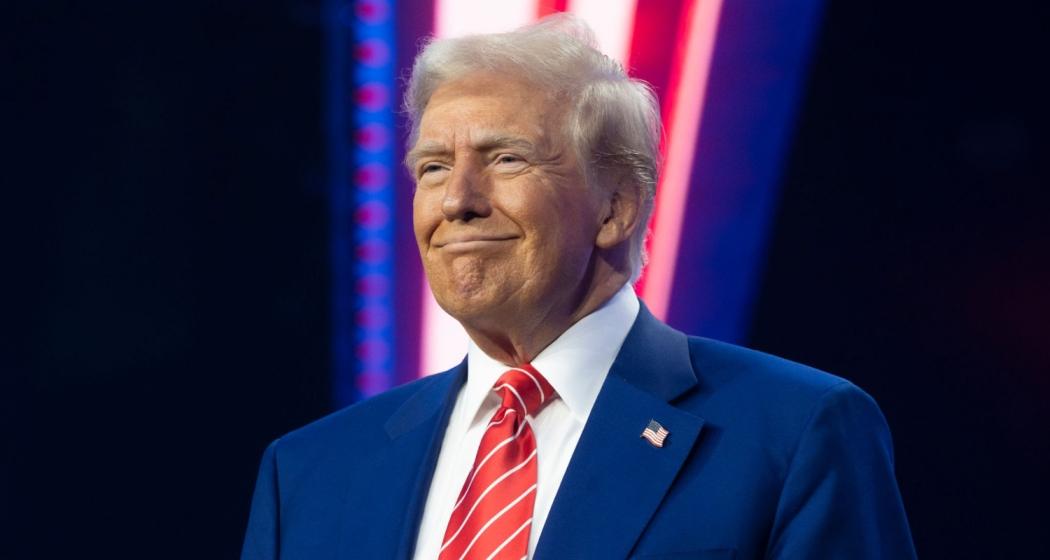
A file photo of the President of the United States, Donald Trump.
On January 20, the world will have completed one year of Donald Trump’s second, non-consecutive term as President of the United States. The ceremonial moment feels like a distant memory—not because the inauguration occurred long ago, but because so much has happened since. Almost upon taking over—indeed, overtaking—the Oval Office, Trump signed a flurry of executive orders, including withdrawing from the World Health Organisation, eliminating diversity programmes, ending birthright citizenship, and pardoning nearly 1,500 individuals involved in the violent storming of the US Capitol. The impact has been sweeping, affecting everything from climate change to immigration.
Musk — Once upon a time, First Buddy
Elon Musk, meanwhile, appears to have come full circle with the White House and is once again rekindling relations with the President. “Had a lovely dinner with POTUS and FLOTUS last night. 2026 is going to be amazing,” the Tesla CEO wrote, sharing a photograph taken at Trump’s Mar-a-Lago residence in Florida in the first week of January. His endorsements have recently extended to Trump’s military forays and regime-change ambitions in Venezuela—an outcome that would have seemed unimaginable just six months ago, when Trump and Musk’s bromance turned bitter and highly public, spawning a wave of satirical memes.
During that period, Musk—the Republican Party’s largest donor in the 2024 election campaign—became a fixture at the White House, earned the moniker “First Buddy”, and headed DOGE (Department of Government Efficiency), tasked with cutting federal spending, before becoming an ousted and unwelcome guest. “Elon may get more subsidies than any human being in history, by far, and without subsidies, Elon would probably have to close up shop and head back home to South Africa. No more rocket launches, satellites, or electric car production, and our country would save a FORTUNE. Perhaps, we should have DOGE take a good, hard look at this? Big money to be saved!” Trump wrote on Truth Social.
The exchange of attacks was matched on the other side, with Musk launching a posting spree on X, criticising Trump’s handling of the Epstein files.
Also read: Stop chasing names, start listening to Epstein’s victims
Epstein files — Trump’s nemesis?
The Epstein files have loomed like a proverbial sword over Trump’s presidency and served as a weapon in the arsenal of his fiercest critics. Pressure intensified after his friend-turned-foe-turned-frenemy, Musk, posted: “Time to drop the really big bomb. Donald Trump is in the Epstein files.”
Since then, the 79-year-old President has struggled to quell the uproar, including by filing defamation lawsuits seeking $10 billion against Rupert Murdoch and The Wall Street Journal over an article alleging that birthday greetings bearing Trump’s name and a “bawdy” note were sent to the late sex offender.
The political fallout and potential repercussions of the Epstein files have remained embedded in the national political landscape, despite Trump’s repeated attempts at distraction. Trump has dismissed the controversy as a mutual allegation, calling it a diversion. “What this whole thing is with Epstein is a way of trying to deflect from the tremendous success that the Republican Party has,” he said in a press interview.
Military adventures under the Trump administration
Only Donald Trump could vie for a Nobel Peace Prize while bombing seven countries in the same year. In 2025, the United States carried out military attacks against Yemen, Iran, Nigeria, Syria, Iraq and Somalia, with Venezuela emerging as the latest target of the Trump administration.
This stands in stark contrast to just months earlier, when MAGA supporters championed Trump’s claims of peace, global order, and an end to conflicts. During the election campaign, he projected himself as a “president of peace”, later asserting that he had ended eight wars worldwide in 2025.
Tariffs — threat and foreign policy tool
Reciprocal tariff threats have become a defining foreign policy instrument of the Trump administration. While many of these threats remained rhetorical and never materialised, a significant number translated into import duties, overturning decades of US trade and economic policy.
Soon after returning to office, Trump left little room for ambiguity. “The European Union, one of the most hostile and abusive taxing and tariffing authorities in the world, which was formed for the sole purpose of taking advantage of the United States, has just put a nasty 50% tariff on whisky. If this tariff is not removed immediately, the US will shortly place a 200% tariff on all wines, champagne, and alcoholic products coming out of France and other EU represented countries,” he posted in March, signalling the onset of what became known as ‘tariff diplomacy’.
Throughout the year, Trump’s retaliatory measures, tit-for-tat levies and penalty tariffs dominated trade headlines and triggered diplomatic unease. Few countries understand this better than India, which continues to grapple with the collapse of the US–India trade deal and adapt to the 50% tariffs imposed last August. Shifts in economic relations with major US trading partners such as China, Canada and Mexico have plunged global markets into heightened uncertainty.
Geopolitical equations — completely altered
Soon after returning to office, the Trump administration’s withdrawal from the Paris Agreement for a second time and its exit from the WHO signalled a broader turn towards global disengagement. That trajectory has continued with the administration’s announcement of plans to withdraw from 66 international organisations focused on climate change, peace, democracy and public health.
These moves align with Trump’s belief that issues such as climate change, labour rights, immigration and diversity are “woke” initiatives. Meanwhile, the President appears to be hardening his stance in the second year of his second term. Threats to take over Greenland “the hard way”, justified on Arctic strategic grounds, are already reshaping geopolitical discourse. His administration is reportedly considering financial incentives to persuade Greenlanders to join the United States.
Trump’s frequent reversals defy predictable patterns, particularly on national security and trade. The underlying chaos and unpredictability that define his executive decisions and foreign relations have been examined by international relations scholar Daniel Drezner in The Toddler in Chief: What Donald Trump Teaches Us About the Modern Presidency. The book chronicles Trump’s short attention span and temperamental behaviour, describing him as “the petulant child”.
Only this child, however, controls the levers of the world’s largest military apparatus. He must be handled—but not tamed; circumvented—but not directly challenged.
