
Trending:
Operation Bluestar 42nd Anniversary: A fatal error of judgement
An operation to flush out militants would have been understandable. But the attack of this magnitude is and will always remain unforgivable. Follow us
News Arena Network - Chandigarh - UPDATED: June 4, 2026, 05:28 PM - 2 min read
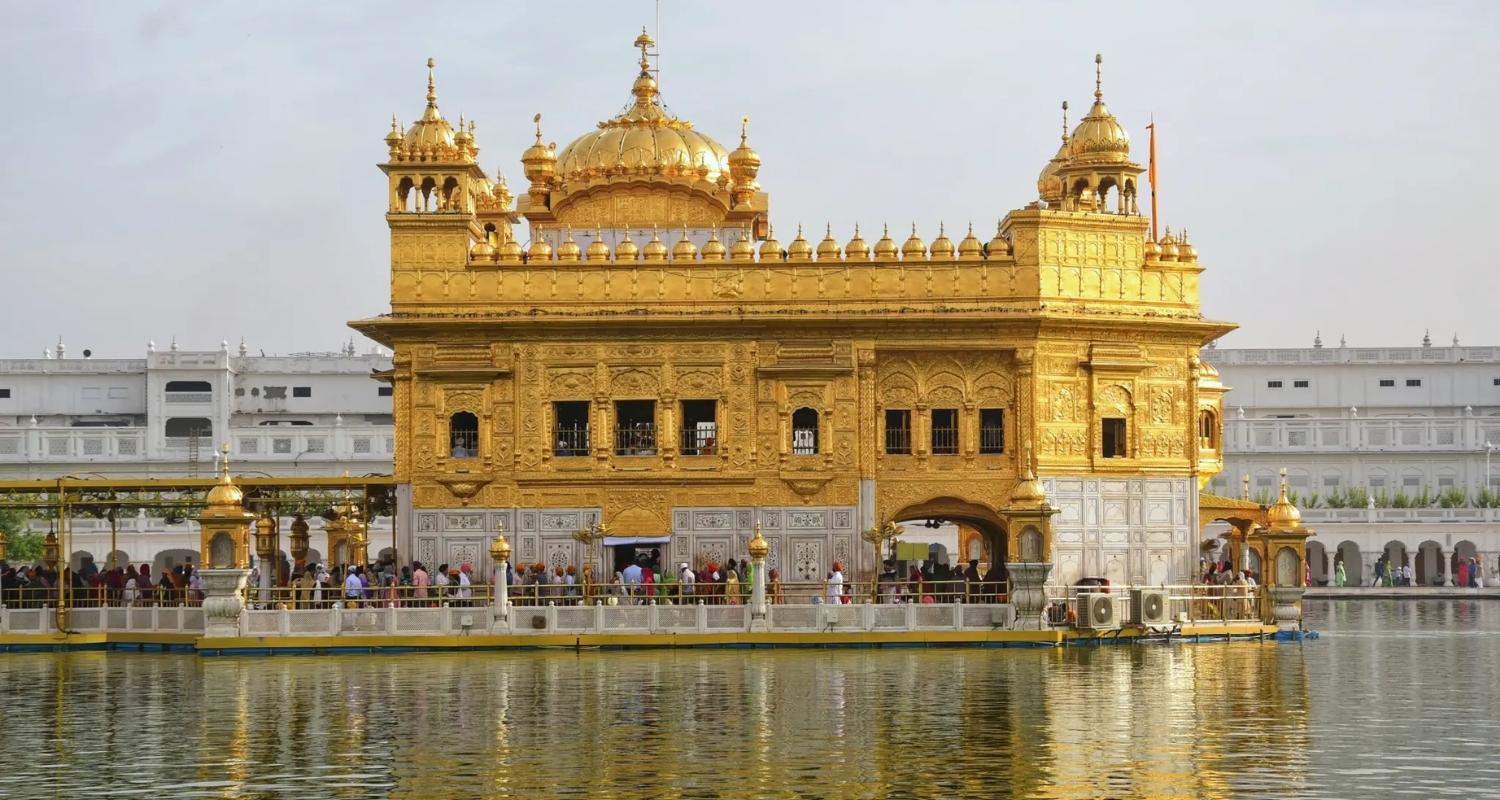
Representational image.
The Operation Bluestar was a fatal error of judgement that the government of India committed in 1984, by launching Indian Army on the holiest of the Sikh shrines, the Harmandir Sahib in Amritsar. While the Sikhs have moved past, the scars remain. Nobody in his/her wildest imagination would have ever thought that the country’s own Army would launch such a grievous assault on one of the holiest shrines and that too at such a scale that tanks would be rolled over the complex. That was unimaginable. An operation to flush out militants would have been understandable. But the attack of this magnitude is and will always remain unforgivable.
Then Prime Minister Indira Gandhi, on whose orders the Operation Bluestar was carried out, paid with her life, literally. She was gunned down by her own Sikh bodyguards in revenge for the devastation caused to the Golden Temple during the Operation Bluestar. As a consequence, thousands of innocent Sikhs were killed in revenge in different parts of the country, most of them in Delhi. It was something unprecedented with one event of immense tragic enormity following the other.
This is also a fact that Indira Gandhi had never imagined that the Operation Bluestar would lead to such destruction and devastation. According to Jagmeet Brar, a former Congress parliamentarian, who is now with the BJP, Gandhi was deeply upset and angry over what had happened during the Operation Bluestar. She also realised that nothing could undo the deep and grievous hurt caused to the Sikh sentiments across the globe. The hurt and the scars still persist. These will never go.
Also read: Annamalai quitting is not good news for BJP
The Operation Bluestar was actually Pakistan’s revenge against India for Bangladesh. No doubt the ‘operation’ was executed by the Indian Army, it was the Pakistan government which created a situation and trapped the government of India to do what it should never have done. There were some fatal errors of judgement that grievously went against the government of India.
After all, the Army operation was not the only option, which could have been exercised to flush out the militants from Harmandir Sahib. The Punjab Police, under the leadership of legendary cop KPS Gill did flush out militants during ‘Operation Black Thunder’ without firing a gunshot even. That time, the police indeed had the past experience at hand which prevented the situation going 1984 way, yet in hindsight it can be safely said that the loss could have been averted in 1984 also.
Punjab has always been restive from the times immemorial, even before the advent of the British. Sikhs confronted the Mughals. They confronted the British also. After partition of the country, there were multiple grievances, some genuine and some perceived.
Pakistan’s military dictator Gen Zia ul Haq, himself a Punjabi, born in Jalandhar and having got educated in St Stephen's College Delhi, knew the Punjabi psyche quite well. Like everyone else in Pakistan, he was also seething and singing in humiliation of the Bangladesh defeat at the hands of India. Everyone in Pakistan wanted revenge.
He seized the chance that Punjab offered him. Again, the problem in Punjab was originally home grown, partly due to the Congress-Akali confrontation and partly because of the intra-party rivalries within the Congress, which saw Sikh preacher and militant leader, Sant Jarnail Singh Bhindrawale to take the centrestage in Sikh politics.
As Punjab was not only contagious with Pakistan, rather much of it remains in Pakistan, and with porous borders, Zia entrusted the Inter Services Intelligence (ISI) with the job of training the alienated Sikh youth in militancy. Besides, heavy weaponry was smuggled into Punjab, eventually finding its way into the Golden Temple.
Being an army general himself, Zia must have visualised the situation, probably much better than the Indian political leadership. It was a win-win situation for him. Over a period Zia had established proper connection and communication with the militant leaders. He had reportedly convinced them that in case India launched an Army attack on Golden Temple, the Pakistani army would attack India along the Punjab borders. Sant Bhindrawale is reported to have been quite confident that the government of India would not launch a military attack on Durbar Sahib, which had turned into a hideout for him and a few hundred militants. He was also convinced that in case India went ahead with the military operation, the Pakistan army would attack India.
It is obviously difficult to imagine what went inside Sant Bhindrawale’s mind when Operation Bluestar was launched. He was reportedly given an offer to surrender, which he declined. He apparently remained convinced till the end that the Pakistan army would attack India, which it never did. For him, the betrayal by Pakistan was greater than that by the government of India. With the government of India he had already closed all the channels of communication. He indeed was expecting some action, may be not at this scale.
At the same time, he appeared to have been convinced and confident that come what may, Pakistan army will attack India, as it had to avenge the Bangladesh defeat. But Zia proved to be too cunning to be taken at the face value. He actually did not need to involve his own army, even if he had committed or someone on his behalf had done so, as his purpose was solved. The Indian Army had attacked the holy shrine of the Sikhs, one of the most patriotic communities of the country. The community was completely alienated now with a genuine sense of betrayal and hurt.
What else would have Zia wanted that the same Indian Army ended up killing Gen Shabeg Singh, the hero of Bangladesh War, that India had won just 13 years ago. And just within that short span, one of the great heroes of the war had turned into a ‘villain’. That is only one of the many tragedies that Operation Bluestar will always be remembered for. It reminds of famous Urdu poet Muzzaffar Razmi’s iconic couplet, ‘Yeh jabbar be dekha hai, tareekh ki nazru ne, lamhon ne khatta ki thi, sadiyoon ne sazza paayi’.
