
Trending:
PM Modi: The enduring force of Indian politics
Prime Minister Modi did not “inherit” the government from colonial rule. In stark contrast, he rose from the ranks. He did not have any political pedigree. Coming from a humble family background, he toiled hard from a grassroots worker to the top most political position, first in the state of Gujarat and later in the entire country. Follow us
News Arena Network - Chandigarh - UPDATED: March 23, 2026, 05:34 PM - 2 min read
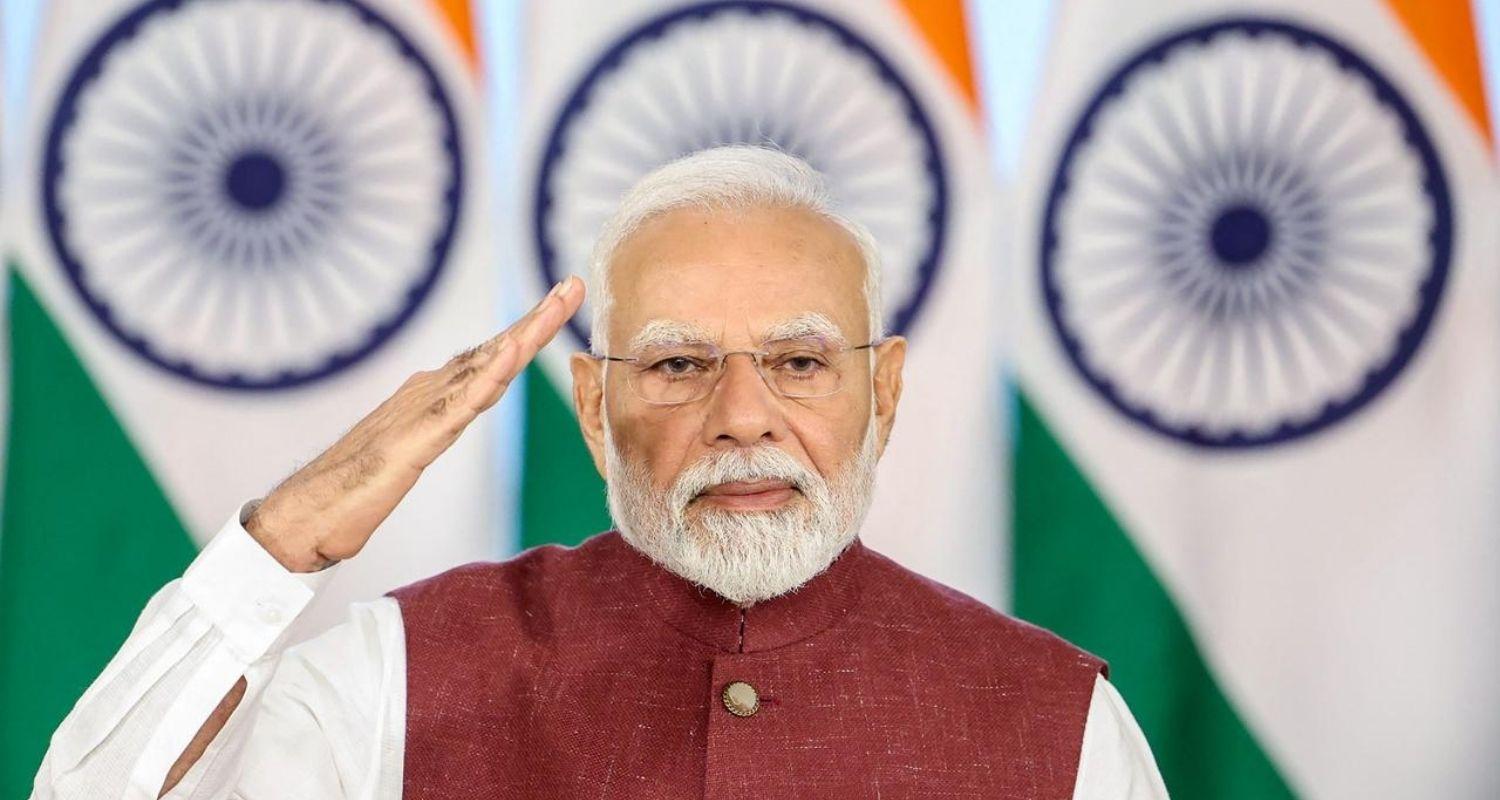
Prime Minister Narendra Modi on Sunday achieved the unique distinction of becoming the longest-serving elected head of the government in the country. This combines his tenure as the Gujarat Chief Minister and Prime Minister of the country. This is something unparalleled in contemporary history anywhere in the world.
Modi overtook former Sikkim chief minister Pawan Kumar Chamling, who served as the longest and elected head of the government for 8930 days. This is just a statistical parallel. Otherwise, there is no comparison between the chief minister of a smaller state like Sikkim and that of a large state like Gujarat and the Prime Minister of a country of 1.4 billion people.
Most of the Prime Ministers of the country have a distinct record and distinguished contribution towards nation building, but Modi stands apart. Pandit Jawaharlal Nehru laid down the foundations of a modern democratic India with a scientific temperament. India’s soft power that is seen through the successful professionals heading Google and Microsoft are the products of the same IITs that were conceived and set up by Nehru. That is just a small example of Nehru’s contribution. The democratic India we are living in today is his great legacy.
Indira Gandhi, the other longest serving Prime Minister of the country, inherited her father’s legacy. Her contributions also remain unparalleled. From nationalising the banks and scrapping the privy purses and dividing Pakistan into two parts, also does not have any parallels in history. Creation of Bangladesh had long-term positive consequences of India, as Pakistan realised that any misadventure towards India will prove to be suicidal.
Then there was Prime Minister PV Narsimha Rao, who saw the economic transformation of the country from a controlled towards a liberal economy. Rao also deserves credit for setting in the processes for restoring political process and eventually peace in Punjab and Jammu and Kashmir.
Prime Minister Modi did not “inherit” the government from colonial rule. Nehru had the advantage of becoming the Prime Minister for the first time, without any elections. No doubt he later got successively elected with regular mass and popular mandates, he really did not have any challengers or competitors. His only competitor, Sardar Patel, who may have proved to be a challenger later, died soon after the independence.
Indira Gandhi simply inherited the great legacy of her father. But she undoubtedly rose to the occasion and proved herself to be the most deserving leader for the job.
Narsimha Rao was actually an accidental Prime Minister, who rose to the position due to the tragic assassination of Rajiv Gandhi in a suicide bomb attack carried out by the LTTE.
Modi, in stark contrast, rose from the ranks. He did not have any political pedigree. Coming from a humble family background, he toiled hard from a grassroots worker to the top most political position, first in the state of Gujarat and later in the entire country.
Modi rose against all odds. Immediately after he became the Chief Minister of Gujarat, the state witnessed the worst communal riots following the burning alive of several karsevaks at Godhra railway station. It had barely been a few months that he had taken over as the Chief Minister when the riots broke out. But that does not prevent his critics from blaming him, some accusing him of failure, some even connivance. He was refused a visa by the US till the time he became the Prime Minister of the country.
Before he became the Chief Minister, Gujarat was like any other state. He set up a unique model of governance in the state that became famous as the “Gujarat Model”. Under his leadership the state saw unbound progress and development and it was this “Gujarat Model” he had built up, that brought him to the limelight. So much so, by 2014, while he was into the 12th year of being the Chief Minister, India awaited his arrival as the Prime Minister.
Also read: Modi: Marathon man of statesmanship
The BJP specially picked him up to be the prime ministerial candidate of the party. In India, normally the prime ministerial candidates are not announced in advance, even if they may already be “understood” to be so. Modi was announced as the prime ministerial candidate and he delivered. Under his leadership, it was for the first time after 40 years that a single party could win absolute majority on its own in the Parliament. The BJP crossed the 272 mark and won 282 seats.
What followed was strictly according to the anticipation and expectations Modi had generated across the country. There indeed was a feel good factor. While the economy continued to grow and strengthen, Modi’s leadership provided political stability in the country. It was after over three decades that the people felt that there was a stable government in the country, which would last for five years.
The confidence in his commanding leadership has grown so much that even when the BJP fell short of absolute majority in the 2024 General Elections, people felt confident as Modi, who by now had emerged to be a strong and a towering leader, can lead a minority government and still provide stability. He is heading the NDA government with absolute majority and support of 292 members, much above the 272 mark.
Modi has mostly had a smooth run till the last year. He boosted the morale of the nation by not taking things lying down. After the February 2019 Pulwama terror attack, he ordered surgical strikes deep inside Pakistan to destroy the terror training camps. Earlier it had been done in retaliation for the Uri attack. Only last year, India carried out another surgical strike after the Pahalgam terror attack. Modi has ensured that any terror attack from across the border will not be taken lying down and would be reciprocated and retaliated with greater force.
Modi’s only and probably the toughest challenge came from US President Donald Trump when he imposed stringent tariffs on the country. Although India was no exception as Trump imposed those tariffs on every country, even his strongest allies, yet the opposition in India tried to target Modi, while taunting him about his friendship with Trump. The US President has repeatedly been insisting that Prime Minister Modi is his “good friend”.
Another challenge came when the US and Israel attacked Iran. It was a very difficult choice to make for any prime minister of the country. On one side is Israel, now a trusted and reliable friend and the US and on the other side is a traditional friend like Iran. Prime Minister Modi observed a silence, which Congress leader and foreign policy veteran Shashi Tharoor described as “responsible statecraft”.
It is quite difficult to imagine someone in his place to continuously remain so popular after being Prime Minister for 12 years and that too of a huge country with 1.4 billion people.
It is not just Modi who deserves to be the Prime Minister, more than that India deserves a leader like him, especially under the current circumstances when everything is in flux and nothing seems to be certain or stable.
