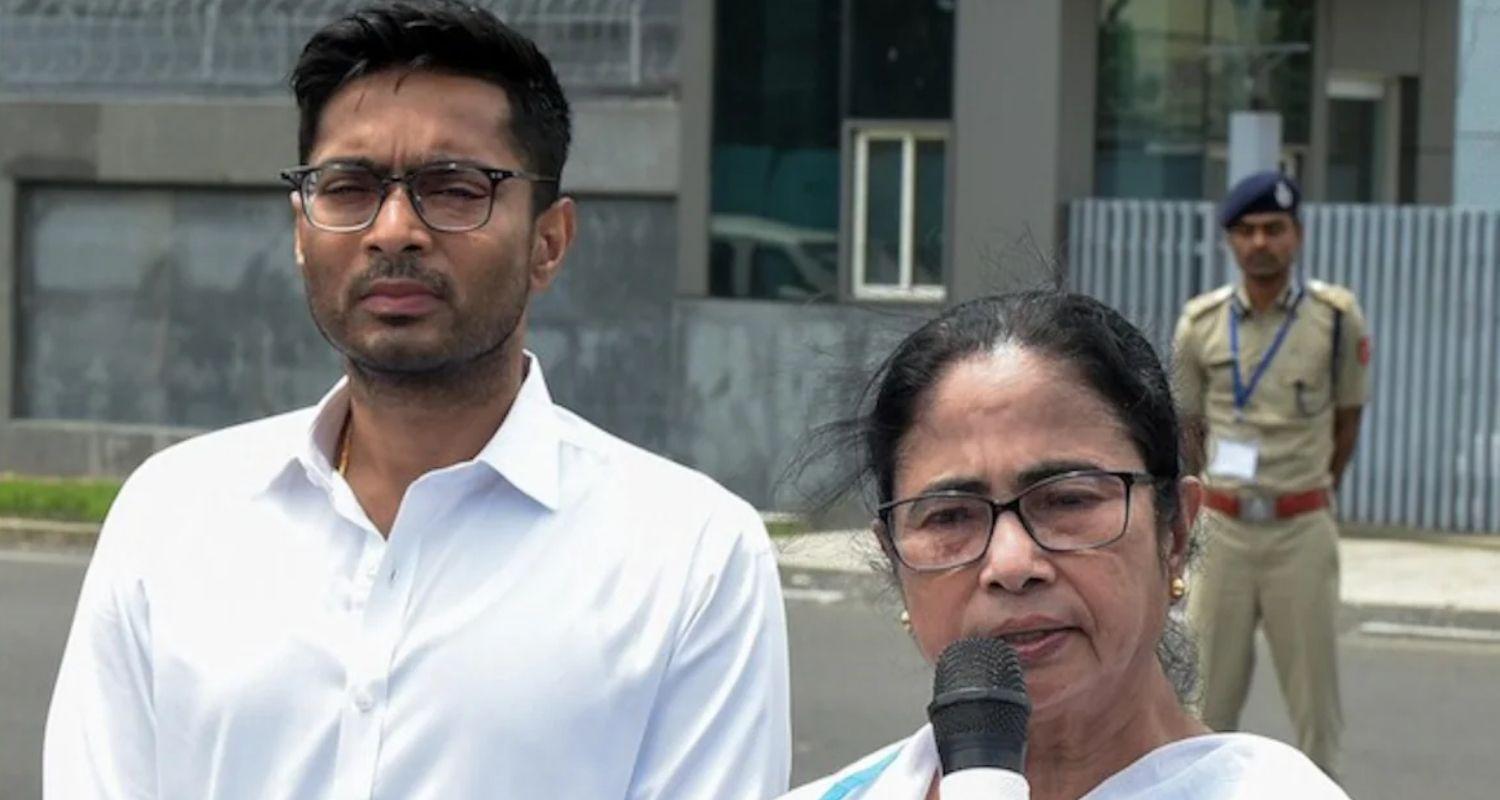
In politics, anger can be momentary, even theatrical. Disillusionment, however, is far more dangerous—it is slow-burning, deeply internalised, and ultimately decisive. West Bengal’s Assembly election results appears to have been shaped less by immediate outrage and more by a profound, accumulated frustration with governance.
When Mamata Banerjee first assumed the Chief Minister’s office in 2011, she embodied resistance. After 34 years of Left Front regime, remembered in the public imagination by stagnation and bureaucratic inertia, she represented disruption—an accessible, grounded leader who promised to restore dynamism to the state. Her ascent was not solitary. It was bolstered by broader national political currents and alliances, including support from Sonia Gandhi. Yet, the symbolism of her victory rested on something deeper: hope.
Fifteen years later, that hope appears to have curdled into disenchantment.
A significant section of the electorates began to perceive a widening gap between promise and performance. The critique is not only about governance deficits—such as poor industrial growth, persistent unemployment concerns, or uneven institutional development—but about a perceived shift in political culture. The leader, once seen as accessible, emerged as insulated. Centralised decision making, and allegations of administrative opacity and intolerance of dissent gained traction in public discourse.
The role of TMC’s general secretary, and Mamata’s nephew, Abhishek Banerjee complicated this.
Corruption charges also had a major role in shaping public sentiment. Scandals like Saradha and Rose Valley and later recruitment controversy gave an impression that systemic irregularities had penetrated many layers of administration.
The 2016 Assembly elections, though bringing the ruling party back to power, showed cracks. The combined vote share of the opposition forces, specifically the Left-Congress combine, demonstrated that the discontent was consolidating. But the Lok Sabha elections of 2019 proved to be the wake-up call. The ruling party’s setbacks showed that its once mighty electoral machinery was no longer invincible.
In response, the party resorted to professional political strategists, especially the consultancy firm Indian Political Action Committee (I-PAC) headed by Prashant Kishor. Campaigns like “Didi Ke Bolo” tried to re-establish the direct connect with voters. These initiatives helped to repackage the leadership’s image, but critics argue that they also represented a shift from grassroots political engagement to data-driven electoral management.
This change had its repercussions. Traditional local leadership, it was claimed, had been undermined, and political mediation was increasingly reliant on centralised analytics rather than organic community networks. Such a transition could have generated an estrangement in a state where politics has traditionally thrived on interpersonal engagement from tea-stall debates to neighbourhood mobilisation.
Also read: All eyes on Bengal
At the same time there was also an additional layer of complexity in the form of powerful district-level leaders rising and falling, often accused by their foes of being too independent. These figures had once been central to consolidating political control, but their prominence also fuelled narratives of localised concentrations of power and alleged abuses of power.
The scrutiny has increased further in the years following the 2021 elections. Public statements, administrative decisions and responses to crises were examined, sometimes with a jaundiced eye. The education recruitment row and handling of sensitive law-and-order situations became the fodder for opposition criticism and public discourse.
In the backdrop of this, the opposition re-calibrated its strategy. Other leaders like Suvendu Adhikari, who had been part of the ruling establishment earlier, used their organisational experience to challenge the incumbent more effectively. The opposition, with the backing of the national leadership including Amit Shah, sought to broaden its base through targeted mobilisation and ideological consolidation.
Crucially, the electorate’s response suggests that political narratives alone do not determine outcomes—credibility does. Over time, a section of voters appears to have concluded that governance had become overly centralised, insufficiently responsive, and disconnected from everyday concerns. Whether this perception fully aligns with administrative reality is secondary; in democracy, perception often becomes political truth.
The phrase “change of the change” captures the symbolic weight of this moment. It reflects not only a shift in power but also a cyclical pattern in Bengal’s political history: long periods of dominance followed by abrupt, decisive transitions. Such shifts are rarely driven by a single factor. They emerge from a convergence of governance fatigue, organisational weaknesses, opposition strategy, and, above all, public mood.
For the incoming political dispensation, this moment carries both opportunity and warning. The same electorate that once elevated Mamata Banerjee, and later turned against her, will judge its successors with equal scrutiny. Disillusionment, once set in motion, does not easily dissipate; it simply seeks new targets.
For the outgoing leadership, the verdict offers an opportunity for introspection. Political longevity depends not merely on electoral arithmetic but on sustained public trust. Rebuilding that trust requires more than rhetoric—it demands structural reform, accountability, and a renewed engagement with the very electorates that once formed the bedrock of support.
West Bengal, with its rich political consciousness, has once again demonstrated that no mandate is permanent. Power, in the end, is conditional—granted by the people, and just as decisively withdrawn.
The message is unmistakable: hope can win elections, but only credibility can sustain them.
By Pranab Mondal

 Follow us