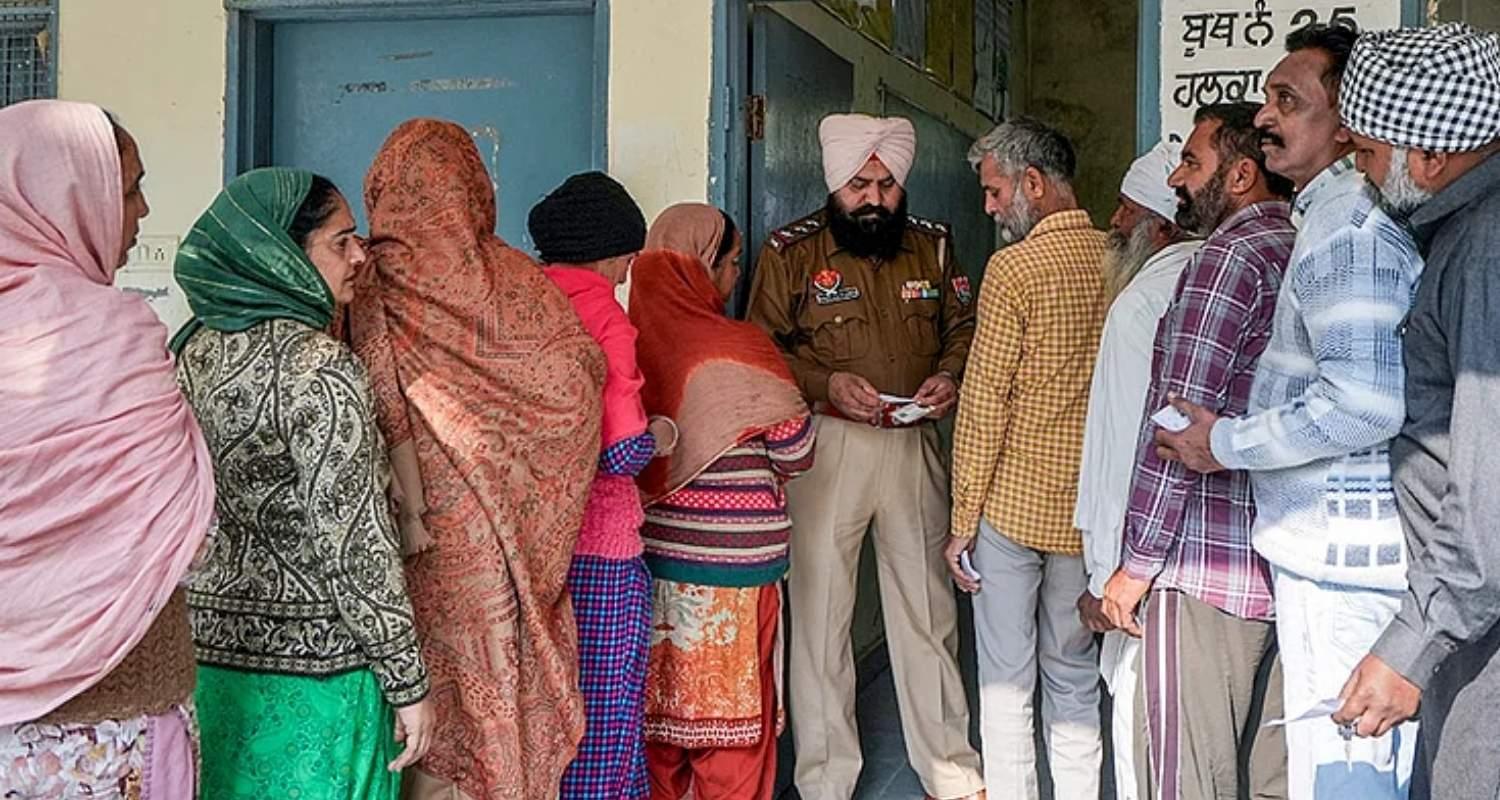
Four mainstream political parties in Punjab, including the ruling Aam Aadmi Party, principal Opposition party the Congress and two other Opposition parties, Shiromani Akali Dal and Bharatiya Janata Party appear to be “feeling good” about the rural polls results with each one of them interpreting the same their own way to suit their respective narratives of “good performance”.
While the AAP won 218 of the 346 zila parishad seats, Congress won 62, Shiromani Akali Dal 46, BJP seven, BSP three and others 10.
On the face of it, this is indeed an impressive performance by the ruling party. However, given the allegations of misuse of police and other official machinery, the Opposition parties are questioning the credibility of the victory.
Besides, the alleged audio clip of the then Patiala SSP directing his junior staff how to prevent the Opposition candidates from filing the nomination papers has also raised doubts about the credibility of the elections. But it is not for the first time that the ruling party has used the official machinery to its own advantage. This has been happening always in Punjab. The AAP’s predecessors in the government were no different either.
Although in Punjab, the rural body or local body elections are heavily tilted in favour of the ruling party and have no impact on the Assembly elections, the AAP has been playing up the “victory” ahead of the Assembly elections that are scheduled in one year from now in February 2027.
Similarly, the AAP’s performance remained equally “impressive” in the block samiti elections also where it won 1529 of the 2834 seats. The Congress won 611, SAD bagged 449, BJP claimed 73 and BSP won 28. Independents got 144 seats.
Discounting all other factors, including the allegations of misuse of power or manipulations, the AAP did apparently emerge as a decisive winner. Given the expertise the party has in using the multiple media platforms, whether social or mainstream, it did build up a strong narrative in its favour suggesting that it was certain to return to power in 2027 Assembly elections.
The AAP government is expected to provide the promised Rs 1,000 every month to every woman in the state. The party expects that it will help swing the elections in its favour. Whether that will actually happen, only time will tell. But for the time being, the AAP has got a breather and a consolation that it continues to remain ahead of all other political parties in the state.
Interesting development in these elections has been that the Shiromani Akali Dal, which came third in terms of the seats, both in zila parishad and block samitis, has been claiming to have got second position. Party chief Sukhbir Badal claims that since his party contested fewer seats than the Congress, its strike rate was better than it (the Congress) hence it had a rightful claim to number two position.
His claims notwithstanding, it does not matter much whether the party stood second or third in these elections as the difference was not very substantial, but what is important is that the party has started finding acceptability among the rural voters, its traditional support base that it had lost in the aftermath of the sacrilege and police firings. The party won the block samiti elections from Bargadi, which was the centre of protests against sacrilege and from where the decline of the Akali Dal started.
Also read: AAP sweeps Punjab zila parishad polls
Besides, the rival faction headed by former Akal Takht acting Jathedar Giani Harpreet Singh could not offer any resistance to the parent party. Barring the Dakha area, where Akali MLA Manpreet Singh Ayali commands a lot of influence, the rebels did not show any impressive performance anywhere.
Even for the parent party, the performance was restricted to just two districts of Bathinda and Muktsar in the Malwa region. These two districts have always been considered as Akali bastions. Otherwise, in the Doaba and Majha regions, the Akali Dal almost drew a blank. In 10 districts it could not win even a single zila parishad seat.
All these factors notwithstanding, the Akali leadership and cadres alike have started “feeling good” about the results. Party president Sukhbir has used an interesting metaphor, comparing his party to dinosaurs, saying it marked the “return of the dinosaur”. This though seems to be a highly misplaced metaphor as the dinosaurs never returned from extinction.
Not to be left behind, the Congress not only countered the claims of the Akali Dal about having got the second spot, it also questioned the genuineness of the AAP’s victory. Punjab Congress president Amarinder Singh Raja Warring claims if all the factors like arbitrary rejections of nomination papers, and forcible victories announced in favour of the ruling party in several seats where the margins were low and the way official machinery was misused, the AAP performance was not much better than the Congress.
Last but not the least, the BJP is celebrating the fact that it has managed to make inroads into the rural areas with seven zila parishad and 73 block samiti seats, which has happened for the first time.
Even otherwise, rural local bodies do not count much as they are not allowed to exercise any powers freely. These offer token consolation to the parties about their performance. Interestingly, each and every party in Punjab appears to be very happy and satisfied with its respective performance.

 Follow us