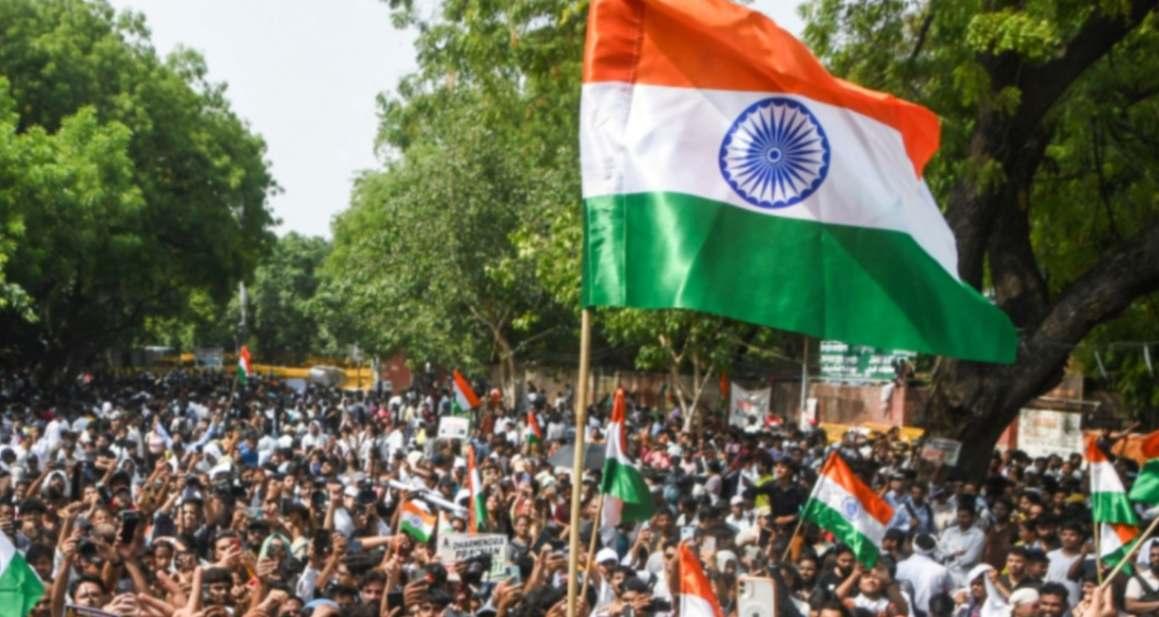
The Cockroach Janta Party (CJP) protest has been called off as the Education Minister in question Dharmendra Pradhan has tendered his resignation, which suggests that he has finally taken accountability for the paper leaks that happened while he was responsible for ensuring a free and fair education system for the youth of this country.
Education is known to be the most powerful weapon that can be used to change the world. Paradoxically, the recent struggle against the system was a fight to save that very 'weapon' using its own power.
Youth were the frontrunners in the quest to seek accountability from those who were responsible for upholding an education system that has unfortunately failed the students.
Since no justification can be enough when it comes to playing with the future of the students— this united people from various walks of life. Protests have been one of humanity’s most vital tools for keeping authority in check. When formal institutional channels appear to be deaf to public grievances, collective action transforms into a public force that decision-makers simply cannot ignore. By bringing individuals together under a shared cause — protests underscore personal struggles — which foster collective identity.
And Indians’ non-violent protests have always cajoled the governments to concede ground.
The nationwide protests by the students over paper leaks brought back memories of the ‘Salt Satyagraha’ from the pre-Independence era to the anti-corruption wave of 2011. It reminded how citizens leveraged strategy, moral weight, and public solidarity to force governments to toe the line.
In 1930, when the British Raj held a monopoly on salt production and levied taxes on a basic survival necessity. Mahatma Gandhi launched a 240-mile march to Dandi to pick up a handful of natural salt— a symbolic action that resonated with both the rich and poor.
When police brutally beat non-violent ‘satyagrahis’ (vis-à-vis lathi charge on the students during the march to the Parliament), it stripped the British Raj (now, PM Modi-led government at the Centre) of its moral legitimacy.
Viceroy Lord Irwin was forced to release Gandhi from prison and sign the Gandhi-Irwin Pact (1931), agreeing to free political prisoners and allow coastal communities to make salt for personal use (the Bharatiya Janata Party government had to ask former Education Minister Pradhan to step down from his position and, reportedly, assented to all the demands put forth by the CJP).
In Independent India, Social Activist Anna Hazare and his movement against corruption had again reminded us that government is by and for the people and not vice-versa.
In 2011, too, following massive financial scandals — such as the 2G spectrum and Commonwealth Games scams — public trust in government transparency hit an all-time low.
Anna sat on an indefinite hunger strike demanding Jan Lokpal Bill— Students and activist Sonam Wangchuk’s hunger strike was in focus this time.
When the government arrested Hazare, public outcry escalated to an extent that the Union Government had to bow to the demands, eventually passing the historic Lokpal and Lokayuktas Act. In a similar vein, the central government’s handling of the recent situation after Wangchuk was forcibly removed from the site of the protest and the brutality unleashed on the students left a blot on the government’s handling of the situation.
It is not surprising that systemic examination paper leaks, zero employment and administrative opacity affected millions of young job aspirants and students. And satyagraha, non-violent, non-cooperation, civil disobedience, mass marches, hunger strikes, silent marches, urban street sit-ins, candle-light vigils have never failed to reclaim the national narrative.
With millions of first-time voters personally affected by cancelled exams, viral campaigns and internet-driven means of shaping the protest — unlike today, the internet and social media were not previously leveraged to unite people during crucial moments — rendered traditional suppression tactics ineffective, thereby bringing the government’s attention to the political cost of inaction.
Protests across different timelines reveal a distinct pattern that has repeatedly obliged governments to negotiate. However, non-violent resistance continues to put the onus back on the State. Excessive force against peaceful citizens almost always backfires on the administration in charge. When protests translate into direct political risk, government concessions become a pragmatic necessity rather than a choice.
Also read: Celebrations break out at protest site

 Follow us