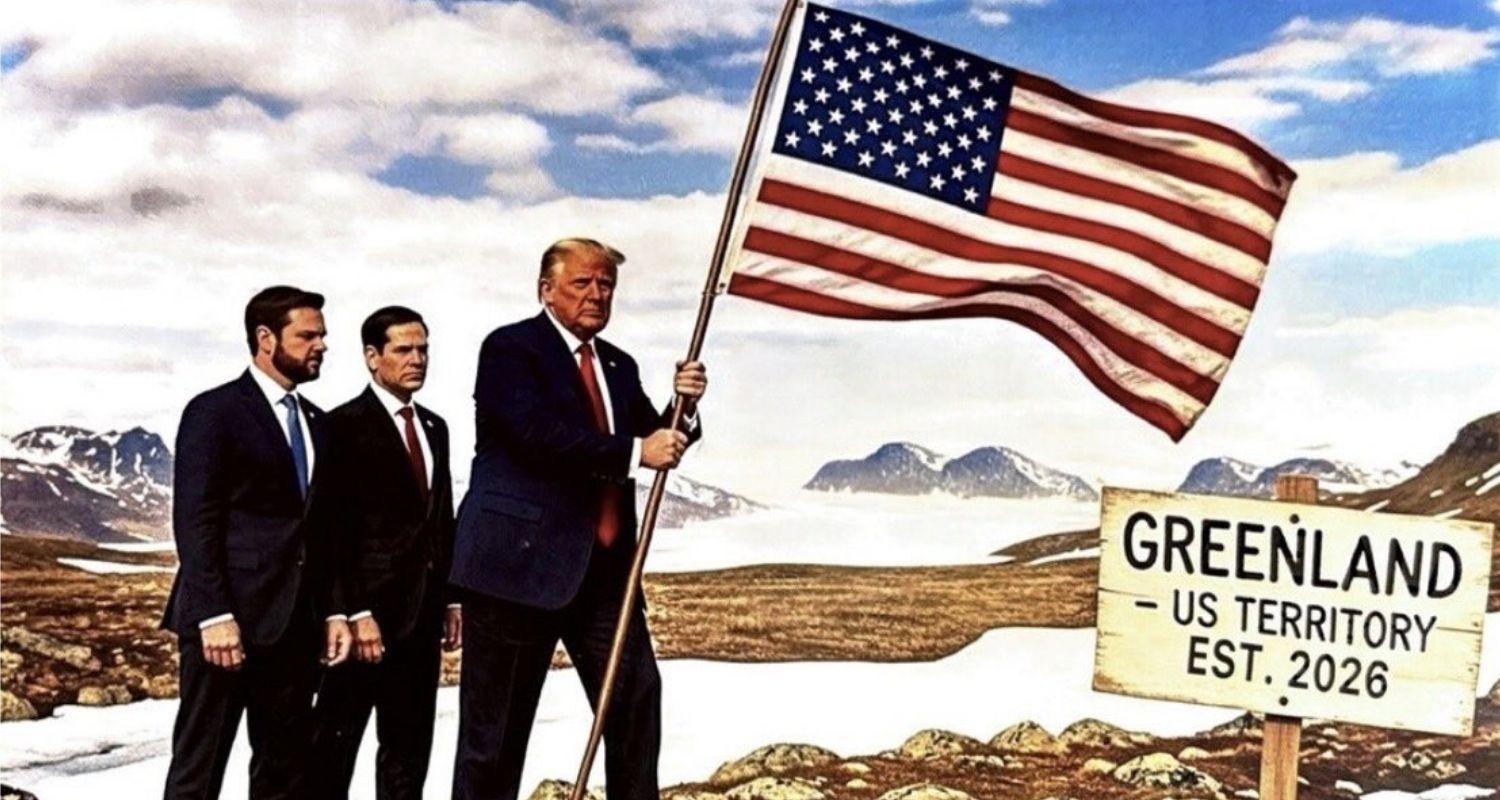
Ahead of his speech at the World Economic Forum in Davos, US President Donald Trump tripled down on a couple of things and Greenland happened to be one of them. Which explains how the international community’s intense and sudden attention to the peaceful Nordic island comes from a place of shock, insecurity and is a result of the impatience originating in the Oval Office. But why does Donald Trump want Greenland is a question that’s been nudging most of the world, while giving a headache to Europe, Denmark and Greenland.
Ambition or obsession?
Trump has always wanted it, recall many political watchdogs, as old reports of him saying so widely circulate on social media reminding that during his first term itself in 2019, the US President expressed his desire to “buy Greenland.” However, Trump’s ‘wish list’ from the first term has turned to ‘warnings’ during his second. Greenlanders and Danes, at the time, scoffed at the proposition, and dismissed it as yet another of Trump’s trademark hyperboles. After all, it was not going to happen, considering that Greenland has been a part of Denmark for close to 300 years. But not this while, and especially ever since the tell-tale signs first made an appearance in December 2024. That is when Trump announced on his social media platform Truth Social, how for the purpose of national security, US control of Greenland was a necessity. The stance and rationale that Trump continues to insist on well into January 2026.
What’s worrying the NATO allies is that the US President has not ruled out the use of military force to tick off his wish list. What’s baffling the rest of the world is how and when did the US President get so single-minded about acquiring the island. In the week ahead of World Economic Forum, the President threatened a 10 per cent tariff hike to “any and all goods” imported from eight European countries, starting February 1 if they opposed his administration’s proposed takeover of Greenland.
But why does Trump want it?
Perhaps it’s the minerals, which has been the most obvious guess tendered by many after the development, although Trump has clearly stated, “We need Greenland for national security, not minerals.” But examples galore on what Trump says is hardly what he means, and what he means can be different from what is eventually followed through.
Also read: Trump’s Greenland gambit now on shaky ground
Billionaire betting big
The most plausible theory widely reported in the US media, claims that the idea to “acquire Greenland” first originated from Trump’s long-time billionaire friend Ronald Lauder, heir to Estee Lauder, who has business interests in the Arctic island. He is not the only billionaire suspected of banking on Greenland’s acquisition, although he is one of the few to have publicly supported the idea of American annexation of the island. “If the people of Greenland want to be part of America, which I hope they do, they would be most welcome,” he said last January.
But is it truly Trump’s fellow Wharton alumnus Ronald Lauder who first sparked his interest in Greenland? So far, both The White House and Lauder have refrained from officially commenting on the investigative reports claiming so, despite multiple requests. As reported in the Danish media, Lauder, the 82-year-old heir to $29 billion cosmetics giant, has recently invested in a Greenlandic freshwater bottling company. His business partners include the likes of Greenland’s Foreign Minister Vivian Motzfeldt’s husband. Lauder is also a member of the Greenland Development Partners, an investment consortium registered in Delaware. Another theory explores the idea of how Trump neither needs the island, nor does he want it, calling the geopolitical ruckus a tactic to distract from the Epstein files and further polarise the American public.
As for the Nordic island, they'd like to return to everyday life comprising sealing, whaling, fishing and hunting and focus on tourism in a peaceful manner. Post Davos, the US President’s tone mellowed but not the speculations as Trump spoke about “a future deal.”
“Based upon a very productive meeting that I have had with the Secretary General of NATO, Mark Rutte, we have formed the framework of a future deal with respect to Greenland,” he announced on his Truth Social media platform.
While the statement simmered down the weeks of mounting tensions between the US and its European allies, it however did not put a lid on the conspiracy theories. With very little being known about the “the framework of a future deal,” was Trump exploring ways of circumventing his way through international law? The statement has raised many eyebrows and led to the obvious guesswork—could he be looking at buying his way through law and people? The flood of questions and speculations remain unanswered, for now.

 Follow us